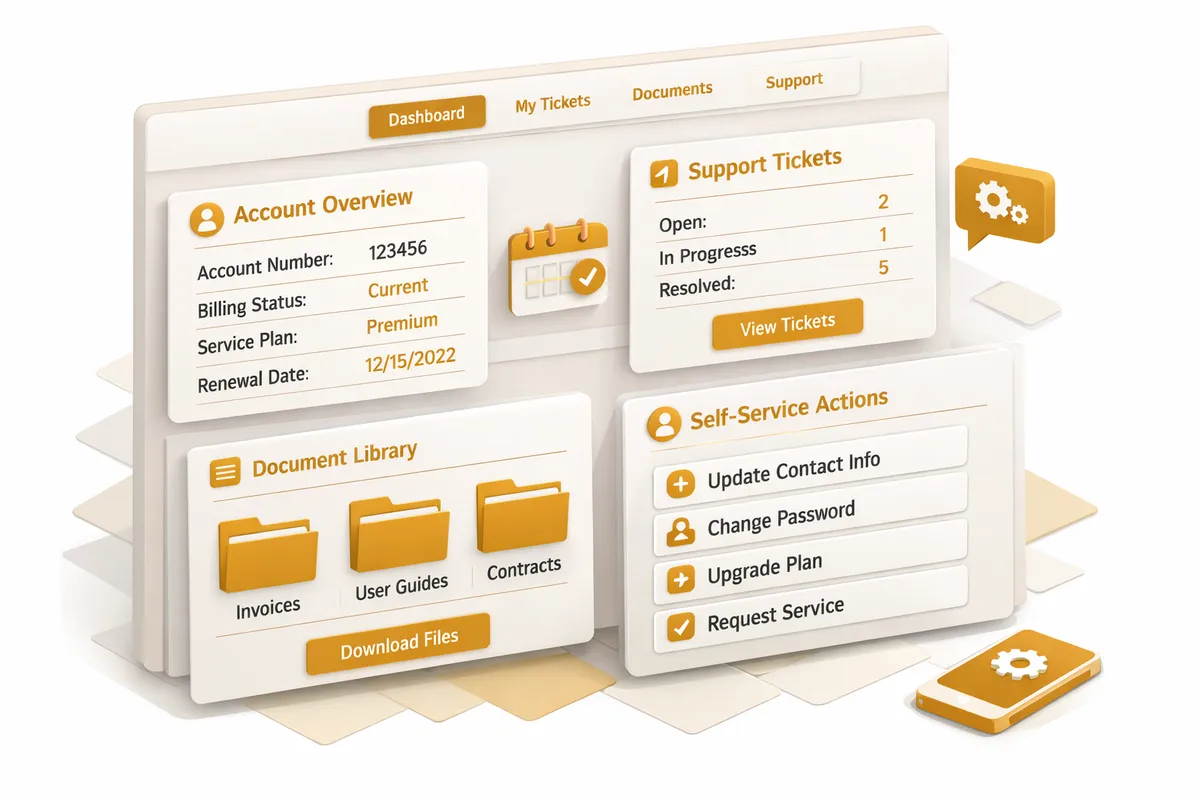
How We Build Customer Portals for Bucktown
We begin by mapping the customer journey from initial purchase through long-term relationship. For a yoga studio near Holstein Park, that journey includes trial visit, membership purchase, class booking, attendance tracking, membership pause or cancellation, and referral. For a boutique on Milwaukee Avenue, it covers first purchase, loyalty program enrollment, order tracking, return initiation, and VIP status progression. Every meaningful customer action becomes a candidate for self-service.
The portal architecture follows a few principles. First, the portal must connect to your existing systems rather than creating another data silo. If your booking data lives in Mindbody and your customer records are in a CRM, the portal surfaces both in one place rather than requiring customers to log into three separate platforms. Second, the portal must be mobile-first. Bucktown's professional clientele manages everything from their phones; a portal that requires a desktop browser will see abandonment rates that make the investment pointless.
The build process runs in phases: core account functionality first, then self-service transactions, then advanced features like document access, messaging, and loyalty dashboards. We test every interaction with real users from your customer base before launch. A design firm client near Armitage Avenue who reviews project files and approves deliverables through the portal needs to complete that workflow without confusion. We watch them do it in testing and fix anything that creates hesitation.
Industries We Serve in Bucktown
Yoga and fitness studios along Armitage Avenue and Milwaukee Avenue use customer portals to give members full control over their memberships without staff intervention. Members pause and resume, upgrade to higher tiers, book classes, track attendance streaks, and access digital content from a single login. The portal reduces the inbound membership management calls that consume front desk time during class transitions.
Boutique clothing and accessories stores on Damen Avenue build loyalty around repeat customers who deserve a better experience than a paper punch card. A customer portal gives loyal shoppers a view of their purchase history, their current rewards tier, available rewards to redeem, and early access to new arrivals. The portal turns transactional loyalty programs into genuine relationships by making the customer feel known.
Independent restaurants with private dining programs near Churchill Field Park manage event bookings, deposit tracking, menu customization requests, and post-event communications through portals built for their venue. Corporate clients booking recurring team dinners can log in to review their reservation history, submit event briefs for upcoming bookings, and access their preferred configuration without starting from scratch each time they call.
Design firms and creative studios in Bucktown's converted loft spaces use client portals for project delivery, file access, and approval workflows. A branding client can log in to review deliverables, leave annotated feedback, approve final files, and download their completed brand assets without a single email exchange. The portal creates a clean record of every project touchpoint that both parties can reference.
Real estate offices on Western Avenue build buyer and seller portals that centralize showing schedules, offer documents, inspection reports, and closing checklists. Clients who can track their own transaction progress require fewer status-check calls and arrive at each milestone already informed. In a neighborhood with high transaction values and informed buyers, the portal signals professional operation.
Coffee shops and specialty food retailers near Pulaski Park that run subscription services, wholesale accounts, or neighborhood delivery programs use portals to let customers manage their own subscriptions: pause delivery, swap products, update their address, or upgrade their plan without a support interaction. Subscription retention improves significantly when customers can make adjustments themselves instead of canceling because contacting the business is too much friction.
What to Expect Working With Us
1. Customer journey workshop. We map the complete lifecycle of your customer relationship, identify every touchpoint that currently requires staff intervention, and prioritize which self-service capabilities would recover the most time and improve the most customer experiences. For a Bucktown boutique with a loyalty program, this session often reveals that membership management and order inquiries account for 60 to 70 percent of inbound customer contacts.
2. Portal design and system connections. We design the portal around your brand, not a template, and connect it to the systems your business already runs. The portal surfaces your data, your customer records, and your workflows, not a parallel system that requires maintaining two sources of truth.
3. Phased rollout with customer onboarding. We launch core features first, gather feedback from real customers, and add capabilities in subsequent phases. We prepare the communication plan that introduces the portal to your existing customer base, because a portal only creates value if customers actually use it.
4. Ongoing iteration based on usage data. Portal analytics tell us which features customers use daily, which ones they ignore, and where they abandon. We review those patterns quarterly and use them to guide what to build next. A yoga studio's portal might reveal that class history tracking has high engagement while the referral module sits unused, pointing to where the next development cycle should focus.