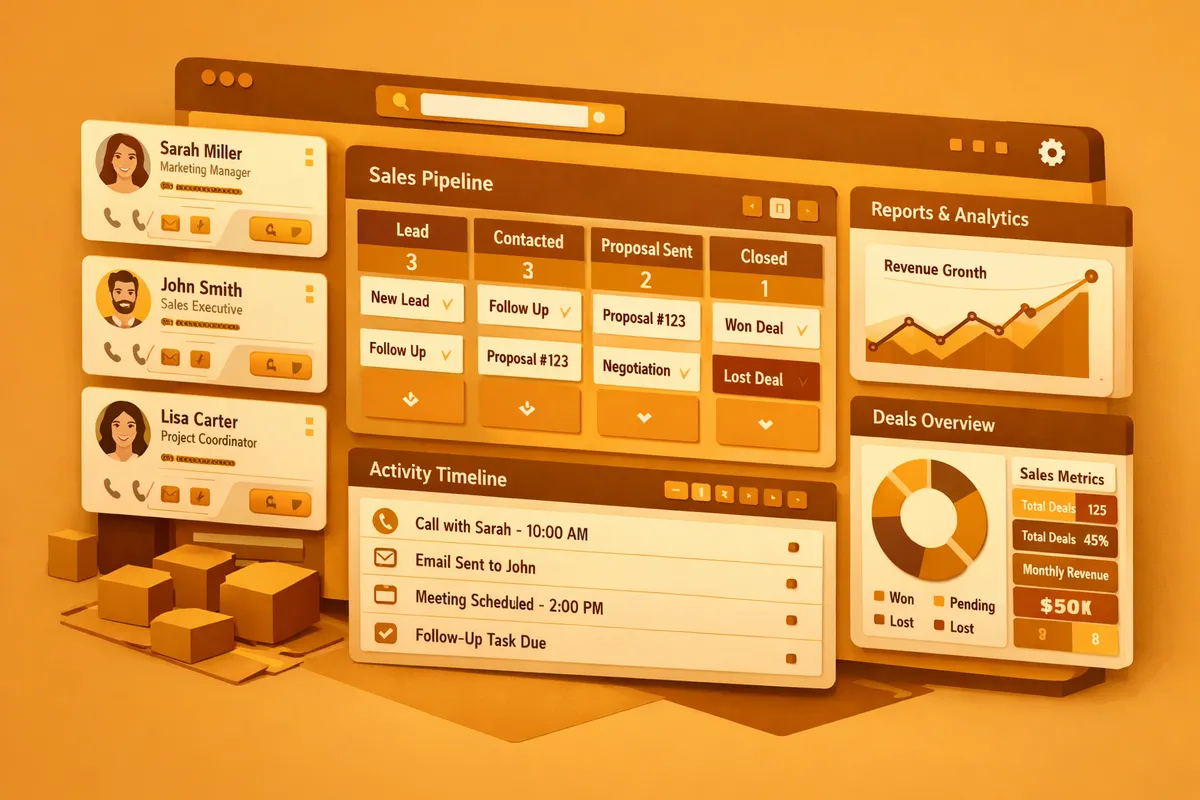
How We Build Custom CRM for Bucktown
Discovery for Bucktown businesses begins by observing how relationship management actually happens before any software is involved. For a Damen Avenue boutique, that means sitting with the owner and watching how she thinks about her customers when a new shipment arrives, what signals tell her who to call, and what she wishes she knew that she currently cannot track. For a yoga studio on Armitage Avenue, it means talking with the studio director and lead instructors about which member interactions matter most and which retention signals they currently catch too late. For a design firm near The 606 trail, it means mapping the full lifecycle of a client relationship from first contact through referral.
From discovery, we design data models that fit each business's specific relationship structure. A Bucktown boutique CRM centers on customer objects with purchase history, preferences, communication logs, and inventory alert triggers. A yoga studio CRM extends booking platform data with instructor relationship notes, retention risk scores, and community milestone tracking. A design firm CRM centers on client organizations, project histories, key contacts, referral chains, and reengagement timing.
We build phased systems. Your team has a working core within eight to ten weeks, and subsequent phases add workflow automations, reporting dashboards, and integrations without disrupting the foundation already in use. We build habits alongside software: structured training ensures your team develops the data entry and review practices that make a CRM valuable over time rather than valuable on day one and neglected by month three.
Industries We Serve in Bucktown
Boutiques and specialty retailers on Damen Avenue need customer knowledge management that captures purchase history by brand and category, style and size profiles, inquiry history for items that were not in stock, and communication logs that let any staff member serve returning customers as if they had been the customer's primary contact for years.
Yoga and fitness studios on Armitage Avenue need member relationship management that extends beyond scheduling platforms. Instructor relationship notes, retention risk tracking by attendance pattern, member milestone recognition, and community health reporting give studios the relationship intelligence that drives retention without the manual effort of tracking it informally.
Design and creative firms working from Bucktown lofts near Western Avenue need client relationship management organized around projects, referral sources, key contacts within each client organization, and the timing of natural reengagement conversations. Tracking which past clients are likely to need follow-on work and which current clients are candidates for expanded scope is the difference between a design firm that grows on referrals and one that spends its energy on new business development.
Independent restaurants that build neighborhood regulars near Holstein Park and Pulaski Park need guest relationship systems that capture visit history, table preferences, celebration occasions, and the communication patterns that make regulars feel like the restaurant pays attention to them as individuals rather than as covers in a reservation system.
Real estate offices operating on Bucktown's residential streets near Churchill Field Park need relationship management organized around buyers, sellers, landlords, and the referral network of attorneys, mortgage brokers, and past clients who generate ongoing business. Pipeline tracking for active transactions is operational. Long-term relationship management for the referral network is strategic.
Coffee shops and neighborhood hospitality businesses with strong regular trade benefit from customer relationship systems that track regulars' preferences and visit patterns, enabling the personal service that turns a coffee shop near Midtown Athletic Club into a community anchor rather than a commodity option.
What to Expect Working With Us
1. Discovery. Two to three weeks of structured observation and interviews with your team. We document every relationship workflow, data requirement, and integration point before architecture begins. For Bucktown businesses, this often means observing peak-traffic moments to understand how relationship knowledge is actually used in real time.
2. Architecture and design. We design the data model, interface approach, integration architecture, and phased delivery plan. You review and approve before development starts. For small Bucktown businesses, we scope tightly to address the highest-value relationship tracking gaps without over-engineering.
3. Implementation. We build in phases. Your team has a working system within eight to ten weeks, with subsequent phases adding workflow automations and reporting without disrupting the core system already in use.
4. Training and iteration. Post-launch adoption monitoring, structured team training, and optional maintenance retainers for feature additions as your business grows into the system and your relationship management needs evolve.