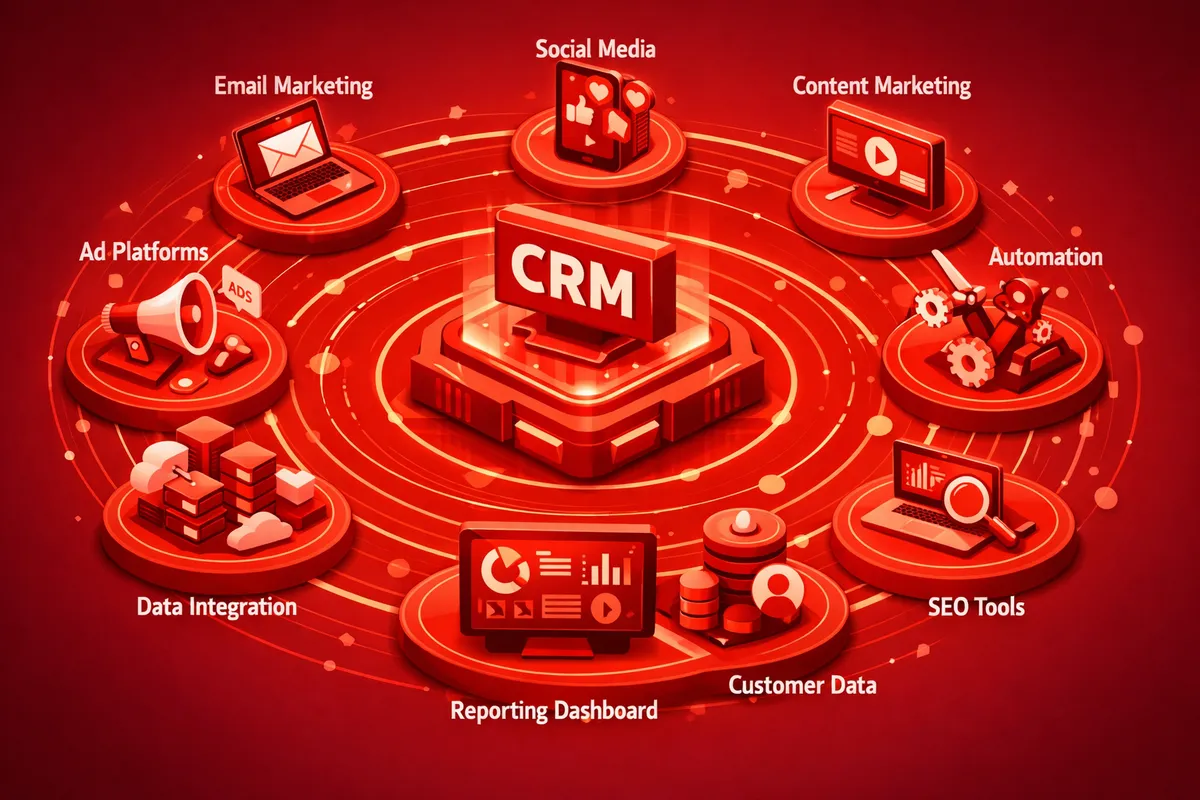
Platform Selection
Bucktown businesses typically operate with three to ten employees and limited technical capacity. Platform recommendations prioritize usability and integration simplicity over feature depth. A platform the owner can manage without an IT department delivers more long-term value than an enterprise system that requires specialist support.
For family businesses, HubSpot Starter provides CRM, email automation, and simple pipeline management in one platform. For retail, Klaviyo remains the standard for Shopify-connected stores. For fitness studios, the booking platform's built-in tools supplemented with Mailchimp or Klaviyo for marketing automation cover the core needs. For professional services, HubSpot or Pipedrive handles client pipeline management and follow-up automation.
Automation Workflows
Bucktown automations lean heavily into lifecycle and seasonal patterns. Family businesses automate enrollment cycles: fall class registration, winter break camps, spring session sign-ups, and summer programming. Each cycle includes announcement sequences, early-bird incentives for returning families, waitlist management, and post-program follow-ups that capture satisfaction and drive re-enrollment.
Retail automation follows the gift-giving calendar and customer lifecycle. New customer welcome sequences introduce the brand. Post-purchase flows suggest complementary items. Seasonal campaigns launch ahead of key gifting periods. VIP recognition rewards the customers whose spending and referral behavior earn preferential treatment.
Fitness automation tracks the member lifecycle from trial to established member to potential churner. Each stage gets different communication. Trial members get class variety recommendations and commitment incentives. Established members get milestone celebrations and social engagement. At-risk members get personalized re-engagement before they cancel.
What to Expect Working With Us
1. Business audit. We assess current systems, data quality, and customer communication gaps across all touchpoints.
2. CRM strategy. Platform recommendation, data architecture, automation plan, and implementation timeline sized to the business.
3. Implementation. Setup, migration, integrations, and workflow building over 3 to 6 weeks.
4. Training and optimization. Team training with 90 days of performance monitoring and refinement.