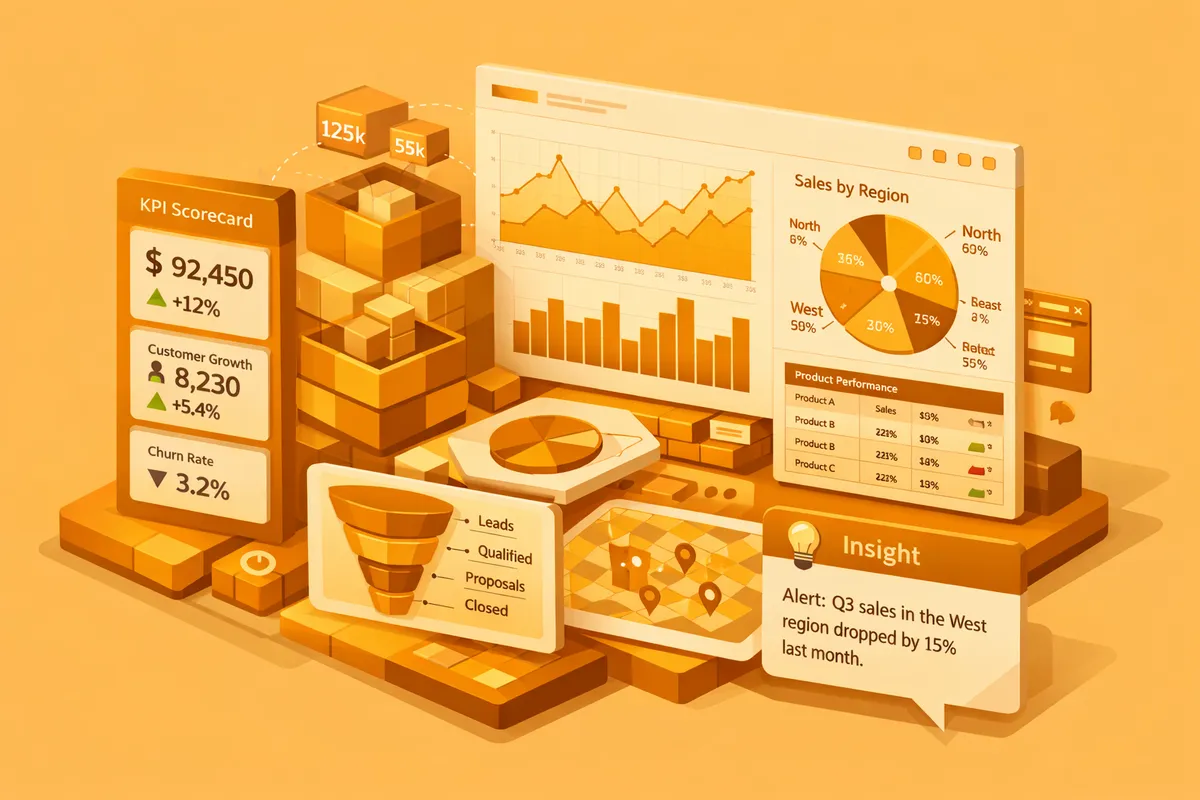
How We Build Business Intelligence for Bucktown
Business intelligence for Bucktown's independent operators starts by asking what decisions you actually make regularly and what would make those decisions better. Not "what data do you have?" but "what did you decide last month that turned out wrong, and what information would have changed that decision?"
For boutique retailers on Damen Avenue, that conversation surfaces questions about buying performance: sell-through by category before markdown, margin by vendor, repeat purchase behavior by product type. The data lives in Shopify or Square. The pipeline connects it to Metabase or Power BI. The dashboard makes it available in a weekly review that takes ten minutes rather than an hour of spreadsheet work.
For restaurant operators near the 606 and along North Avenue, the conversation surfaces labor and food cost efficiency questions that the POS system captures but does not report clearly. The pipeline connects Toast or Lightspeed data to a dashboard that shows cost percentages by day and shift rather than only in aggregate.
For fitness and wellness businesses near Holstein Park and Pulaski Park, the conversation surfaces retention and instructor performance questions that scheduling software captures but does not analyze. The pipeline brings the data together into a member retention and class performance dashboard.
We build iteratively and keep dashboards simple. A Bucktown boutique owner does not need a 20-panel enterprise reporting suite. They need five metrics reviewed every Monday morning that tell them whether the business is moving in the right direction and where to focus.
Industries We Serve in Bucktown
Boutique clothing and specialty retail on Damen Avenue and Armitage Avenue build product performance and buying analytics dashboards that show sell-through rates by category and season, margin by vendor, and the customer behavior patterns that reveal what drives repeat purchase versus one-time transactions.
Independent restaurants and cafes near the 606 elevated trail and along North Avenue build operational efficiency dashboards that track food cost percentage by menu category, labor cost by shift and day of week, and revenue density by table and service period to give operators the data behind menu pricing and staffing decisions.
Yoga studios and fitness operators near Holstein Park and Pulaski Park build member retention and instructor performance dashboards that reveal which class formats and instructors drive the highest student return rates, which price points perform best, and where attrition in the member lifecycle is occurring.
Design firms and creative offices along Armitage Avenue and Western Avenue build revenue concentration and pipeline health dashboards that surface client concentration risk, proposal win rates by project type, and the utilization metrics that determine whether the firm is pricing its work correctly.
Real estate offices in Bucktown's residential corridors build agent performance and transaction pipeline dashboards that show production concentration across the team, conversion rates by lead source, and the closing timeline metrics that reveal where the firm's process loses deals.
Coffee shops and independent food retail near Churchill Field Park and along Milwaukee Avenue build transaction analytics that reveal peak hour patterns, average ticket trends, and the customer frequency distribution that shows whether the loyalty customer base is growing or shrinking.
What to Expect Working With Us
1. Decision audit with the business owner. We spend the first session understanding the decisions you make regularly, the data you currently use, and the questions you cannot currently answer. For a Bucktown boutique owner, this conversation typically reveals three to five decisions made each season on incomplete information. That gap defines the BI scope.
2. Data source inventory and pipeline design. We map your POS, accounting, scheduling, and e-commerce systems and design the extraction logic for each. For Bucktown's small businesses, this is often one or two source systems. The pipeline is built once and runs automatically.
3. Dashboard builds with owner review. We build in focused sprints and review working dashboards with you at the end of each. A boutique owner on Damen Avenue has sharp opinions about what matters in their business. We build dashboards that match how you actually think about it.
4. Training for independent use. We train you to read and use the dashboards we built and to add new metrics when your questions evolve. The goal is that you can answer a new question in your data without submitting a ticket to us.