How We Build Autonomous Workflow Agents for Bucktown
Our agent deployment process begins with a two-week workflow observation phase. We interview your team, review your email and communication history, analyze your scheduling patterns, and document every administrative workflow that consumes meaningful time. For a Bucktown design studio, this typically reveals email patterns around prospect inquiries, project status updates, scope change requests, and invoice follow-ups. For a yoga studio near Pulaski Park, it reveals class registration patterns, membership inquiry patterns, and scheduling coordination patterns. For a boutique on Milwaukee Avenue, it reveals customer service inquiry patterns, product question patterns, and order coordination patterns.
We map these workflows precisely: what triggers each one, what information is required, what the appropriate response or action is, and when a situation falls outside the standard pattern and requires human judgment. This mapping becomes the specification for your agents.
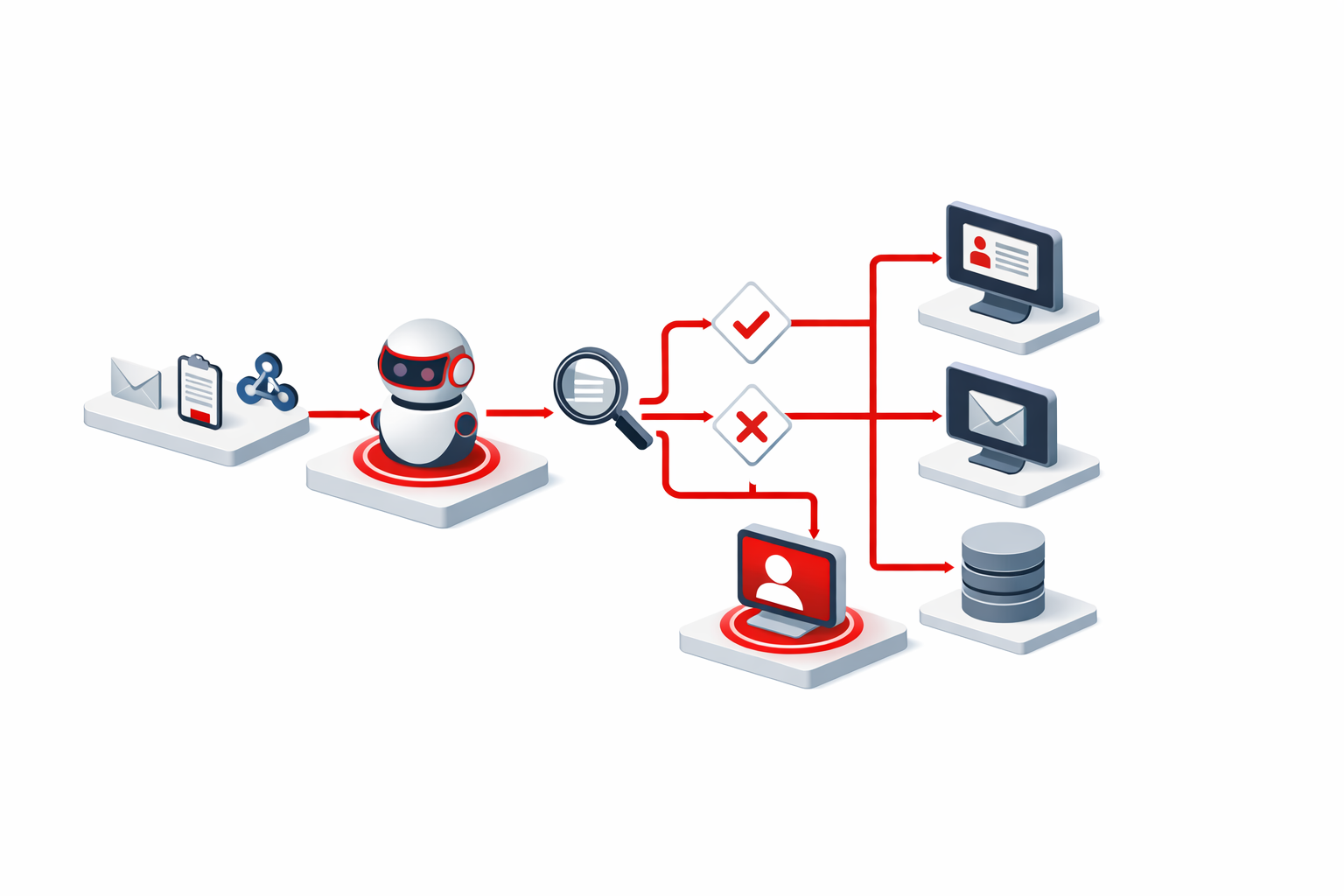
We build agents for each priority workflow. An email agent reads incoming messages, classifies them by type and urgency, generates appropriate responses for standard pattern messages using your voice and communication standards, schedules responses at appropriate times, and routes anything requiring judgment to the right person with recommended response options. A scheduling agent manages your calendar availability, accepts and confirms appointments based on your availability rules, sends reminders, and handles reschedule requests without involving your team.
We train agents on your actual communication history. A design studio's email agent uses samples of how principals actually respond to prospect inquiries, not generic templates. The agent writes in the studio's voice. A yoga studio's scheduling agent understands the studio's class structure, instructor availability, and membership rules. The agent operates within the studio's actual logic, not a generic scheduling framework.
Testing happens against real historical scenarios before deployment. We run agents on past email samples and scheduling requests and review outputs for accuracy and appropriateness. We refine based on results before agents handle live traffic.
Industries We Serve in Bucktown
Design studios and creative agencies along Damen Avenue and Milwaukee Avenue deploy email agents that handle prospect intake, project status communications, and routine client coordination. Agents capture prospect information, respond to common questions about services and process, schedule discovery calls, and send project status updates without requiring principal involvement for each exchange. Designers and creative leads stay in their work rather than context-switching to administrative communication throughout the day.
Boutique retail shops near Holstein Park and along North Avenue use agents for customer service, product inquiry responses, order status communications, and appointment-based consultation scheduling. A boutique that offers styling consultations deploys a scheduling agent that manages appointments around staff availability without requiring the owner to manage a calendar manually. Customer service inquiries about sizing, availability, and returns get resolved by an agent trained on the store's policies.
Yoga studios and wellness practices near The 606 trail, Pulaski Park, and Churchill Field Park deploy agents for class registration coordination, membership inquiry responses, payment reminders, and community communications. A studio that sends class reminders, follows up with lapsed members, and answers scheduling questions through automated agents gives its instructors and owners more time for the teaching and community engagement that actually builds a loyal yoga community.
Independent restaurants and coffee shops on Armitage Avenue and North Avenue use agents for reservation management, catering inquiry responses, dietary accommodation communications, and customer follow-up after events. A restaurant manager who does not have to personally confirm every reservation can focus on the service experience that determines whether customers return.
Real estate offices in Bucktown deploy agents for showing request coordination, market inquiry responses, listing information distribution, and follow-up sequences with prospects who have expressed interest. An agent that handles the first several touches of a buyer or seller relationship frees agents to focus on the conversations and negotiations that require human expertise and relationship skill.
Professional services and consulting practices use agents for appointment scheduling, client inquiry intake, proposal follow-up, and billing communications. A consultant who does not spend time on administrative scheduling and billing follow-up delivers more consulting hours per week at the same personal capacity.
What to Expect Working With Us
1. Workflow audit and automation mapping. We observe your actual administrative workflows over two weeks, documenting what consumes time, what follows repeatable patterns, and where human judgment is genuinely required versus where patterns could be executed automatically. We deliver a prioritized automation roadmap with estimated time savings for each workflow.
2. Agent design and process specification. We document the exact logic for each agent: what inputs trigger the agent, what information it needs, what actions it takes, what it escalates and why. For email agents, we specify what each message category requires. For scheduling agents, we specify availability rules and exception handling. This specification phase ensures agents operate within your actual business logic.
3. Agent training and scenario testing. We build agents using your historical communication data and test them against real past scenarios. We review outputs and refine before any agent touches live traffic. Most Bucktown clients spend two to three weeks in testing and refinement before deployment.
4. Monitored deployment and continuous optimization. Agents launch with your team reviewing their work before actions are fully automated. As confidence in accuracy builds, automation levels increase. We monitor agent performance, review escalation patterns, and refine agent logic continuously as new scenarios emerge and your business evolves.