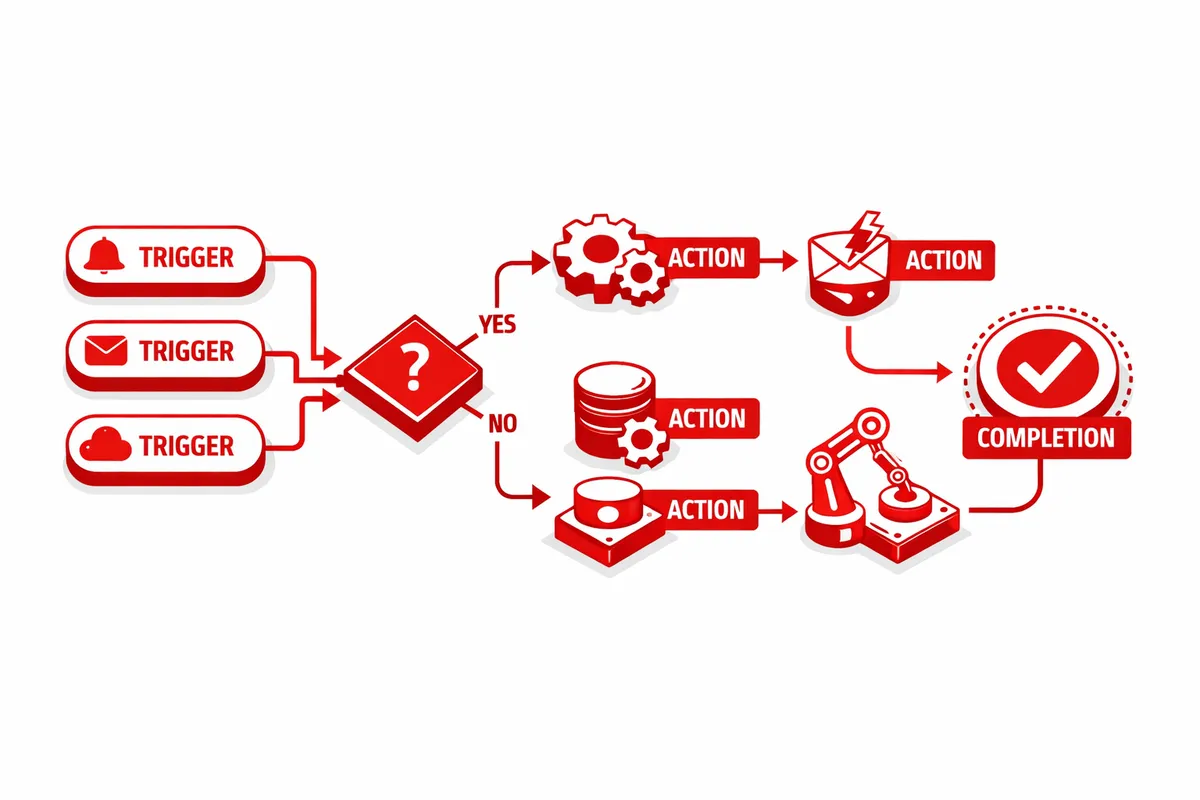
How We Build Workflow Automation for Bronzeville
Our process begins with a workflow audit, which is less technical than it sounds. We sit with you and walk through every repetitive task in your business: how leads come in, what happens after they come in, how projects get scoped, how invoices get sent, how clients get onboarded, how grant reports get produced, how events get coordinated, how inventory gets ordered. For a Bronzeville consultancy, this conversation typically runs two or three hours and produces a list of 15 to 30 repetitive processes, most of which are candidates for automation in some form.
We then prioritize. Not every process is worth automating. Some processes happen rarely enough that manual handling is more efficient than automation infrastructure. Some processes involve so much judgment that automation would produce worse outcomes. Some processes are candidates for automation but depend on other decisions, like choice of CRM or accounting software, that we should settle first. The prioritized list focuses on the automations that produce the most hour-recovery per dollar spent.
Tool selection is deliberate and restrained. We avoid the pattern of throwing a dozen SaaS tools at a small Bronzeville operation, because the integration overhead and monthly costs pile up quickly. For most of our clients, we build automation on a lean stack: a CRM like HubSpot or Pipedrive or Notion, a workflow tool like Make or n8n or Zapier, a document generation tool like PandaDoc or DocuSign, a communication layer like email and Slack, and the existing operational tools the business is already comfortable with. We pick the minimum set of tools that deliver the needed capability without adding unsustainable monthly cost.
Implementation happens in phases. We deploy one workflow at a time, test it with real data, train your team on it, and verify that it produces the expected results before moving to the next. For a Bronzeville nonprofit, phase one might be donor communication automation, phase two might be grant reporting automation, phase three might be volunteer management automation. Each phase delivers visible value before the next begins, so you are not waiting months for payoff.
Training is a core deliverable, not an afterthought. Every automation we build gets documented with clear operational runbooks, and we train every team member who needs to understand how the automation works and what to do if something breaks. For small Bronzeville teams where the executive director and the part-time staffer need to both understand the systems, this training is what makes the automation durable.
We also handle data migration and cleanup when needed. Many Bronzeville organizations have years of data scattered across spreadsheets, old email inboxes, paper files, and previous software platforms. Part of implementing automation is getting that data into the new systems in a structured, usable form. We do this work carefully, with attention to historical context that matters, and we document where data came from and how it was transformed so the organization's institutional memory is preserved rather than lost in a migration.
Industries We Serve in Bronzeville
Black-owned professional services firms including consultancies, law firms, accounting practices, and marketing agencies along 47th and throughout the neighborhood use our services for lead management, proposal generation, contract workflows, client onboarding, and project management automation. The result is often 10 to 20 hours of weekly administrative work recovered for billable or strategic work.
Nonprofits and community development organizations working from offices along 35th, 43rd, and State Street use our services for donor management, grant reporting, program tracking, volunteer coordination, and board communication automation. For staff-lean nonprofits, these automations can be the difference between executing the mission and being consumed by administrative work.
Creative studios, photographers, and media producers operating from Bronzeville's cultural spaces use our services for booking management, client galleries, contract and invoicing automation, and project handoff workflows. The creative work gets the operator's attention while the admin work runs on rails.
Restaurants, catering operations, and food businesses along 43rd and 47th use our services for reservation management, private event inquiries, catering proposals, inventory reorders, and staff scheduling automation. The front-of-house and kitchen stay focused on service while the back-office routine handles itself.
Cultural institutions and historical organizations connected to the Bronzeville Historic District use our services for event registration, program coordination, membership management, and archival and communication workflows. The mission-specific work gets elevated by automation of the logistics that surround it.
Small retail and specialty shops opening in the corridors along State Street and 47th use our services for inventory management, customer communication, e-commerce integration, and local delivery coordination. Automation gives small retailers the operational backbone of a bigger operation without the overhead.
What to Expect Working With Us
1. Workflow audit. We walk through every repetitive process in your business and document what happens, who does it, how long it takes, and how often it occurs. You receive a written audit report with a prioritized list of automation opportunities and estimated time recovery for each.
2. Tool selection and phased plan. We recommend the minimum set of tools needed to deliver the automation, with clear monthly cost projections. We propose a phased implementation plan that delivers visible value at each step rather than requiring a long build-up before payoff. You approve the plan before any implementation begins.
3. Phased implementation and training. We deploy automations one at a time, test them with real data, and train your team on each before moving to the next. For most Bronzeville engagements, the full automation program rolls out over eight to sixteen weeks, with hour-recovery visible within the first few weeks.
4. Ongoing support and iteration. After initial implementation, we provide ongoing support for automation maintenance, new workflow requests, and adjustments as your business evolves. Many Bronzeville clients continue with monthly support retainers that cover both existing automation maintenance and new automation builds as new needs emerge.