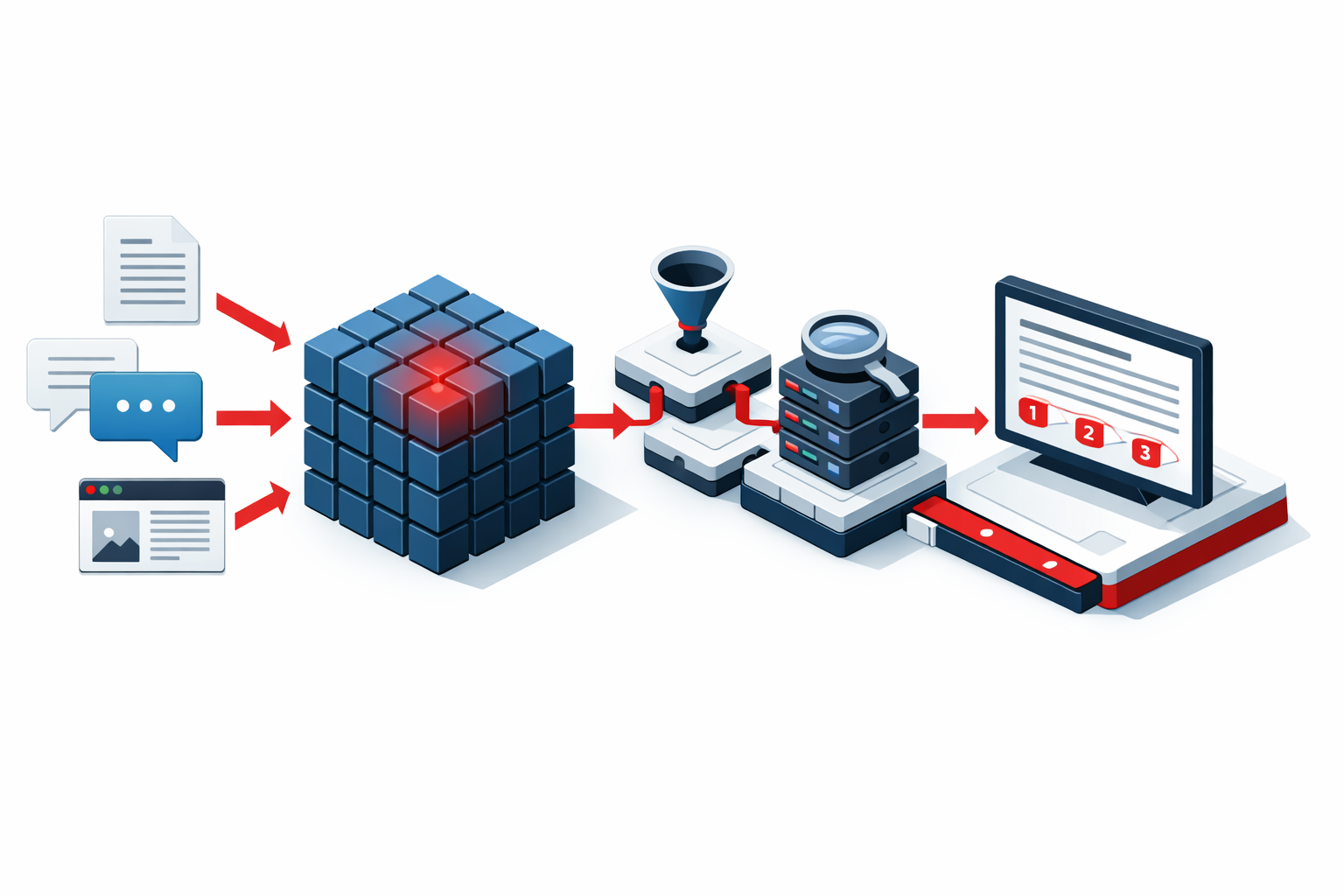
How We Build RAG for Bronzeville
We begin with a knowledge assessment that is specific to your Bronzeville organization's history and context. We interview leadership, long-serving staff, and community partners who have relationships with the organization. We audit your documents: past event records, program plans, donor histories, partnership agreements, board materials, community feedback, and any other documentation that contains institutional knowledge. We identify what is documented versus what lives only in people's memories, and we map the critical knowledge that is most at risk of being lost.
For many Bronzeville cultural and community organizations, the most valuable knowledge is entirely undocumented: the story behind a key partnership, the context for a past strategic decision, the relationship history with a major donor, the cultural reasoning behind a programming approach. We capture this through structured interviews that are as much oral history as they are knowledge documentation. The result is a knowledge base that reflects what the organization actually knows, not just what it has managed to write down.
Integration connects your existing documents, databases, email archives, and other information sources into a unified searchable system. We index emails, program records, meeting notes, donor files, event documentation, and any other relevant materials so the full scope of your institutional knowledge becomes queryable in plain language. A team member can ask "What were the outcomes of our 2017 community health initiative?" and receive a synthesized answer drawn from program records, meeting notes, and staff reports, rather than spending an hour searching through file folders.
Query testing uses actual questions your team asks about community relationships, program history, partnership context, and strategic decisions. We refine the indexing and retrieval until the system produces accurate, useful responses to the questions your team actually needs answered.
Training and process establishment ensure new staff can access institutional knowledge from their first day and that new knowledge flows into the system as the organization continues to operate. As new programs run, new partnerships form, and new strategic decisions are made, the system captures and indexes them so the knowledge base grows rather than staying frozen at the moment of implementation.
Industries We Serve in Bronzeville
Cultural organizations and arts institutions near the DuSable Black History Museum and across the Bronzeville corridor use RAG to store artist relationships, programming history, audience feedback, community partnership context, and organizational strategy rationale. New program directors have immediate access to the institutional foundation. Programming decisions improve because they build on documented experience rather than institutional memory reset.
Nonprofits and community development organizations across Bronzeville use RAG to preserve donor relationships, past campaign results, program outcome histories, community feedback, grant and funding context, and the strategic reasoning behind organizational decisions. New leadership can access the organization's full history rather than inheriting only what was written down in formal reports.
Black-owned restaurants and family food businesses along 43rd Street, King Drive, and Cottage Grove Avenue use RAG to preserve recipes, supplier relationships, customer preference patterns, event histories, and community connections. Staff maintain quality and relationships as businesses grow and ownership evolves.
Family businesses and established retailers operating in the Bronzeville corridor use RAG to preserve business knowledge across generational transitions, including supplier relationships, customer histories, operational approaches, and the community standing that has been built over years or decades.
Financial services and advisory firms along Indiana Avenue and Michigan Avenue use RAG to preserve client relationship histories, investment rationale, market context notes, and advisor knowledge that currently lives in individual professionals' memories and would be lost if those professionals departed.
Faith organizations and community centers in the Bronzeville area use RAG to preserve ministry records, community relationship histories, program development context, outreach strategies, and the organizational memory that sustains continuity of mission across leadership transitions.
What to Expect Working With Us
1. Historical audit and knowledge assessment. We interview leadership and review your documents, records, and databases. We map what knowledge is documented and what lives only in people's memories. We identify the knowledge most at risk of loss and prioritize what to capture. For Bronzeville cultural and community organizations, this phase often surfaces knowledge that has never been documented anywhere and is immediately at risk of loss to staff transition.
2. Integration, capture, and indexing. We connect your existing information sources and build the searchable index. We conduct structured knowledge capture interviews for the institutional knowledge that is undocumented. We test the system with real questions your team asks about organizational history, relationships, and context. We refine retrieval until the system produces useful, accurate responses.
3. Documentation, training, and process establishment. We document organizational history and institutional context in formats accessible to new staff. We train your team on how to access and contribute to the knowledge base. We establish processes so new knowledge flows into the system automatically as programs run, partnerships develop, and decisions are made.
4. Preservation, maintenance, and evolution. We establish regular review processes so institutional knowledge stays current. As the organization evolves, the knowledge base reflects that evolution. Institutional memory becomes living infrastructure that grows stronger over time rather than eroding with each staff transition.