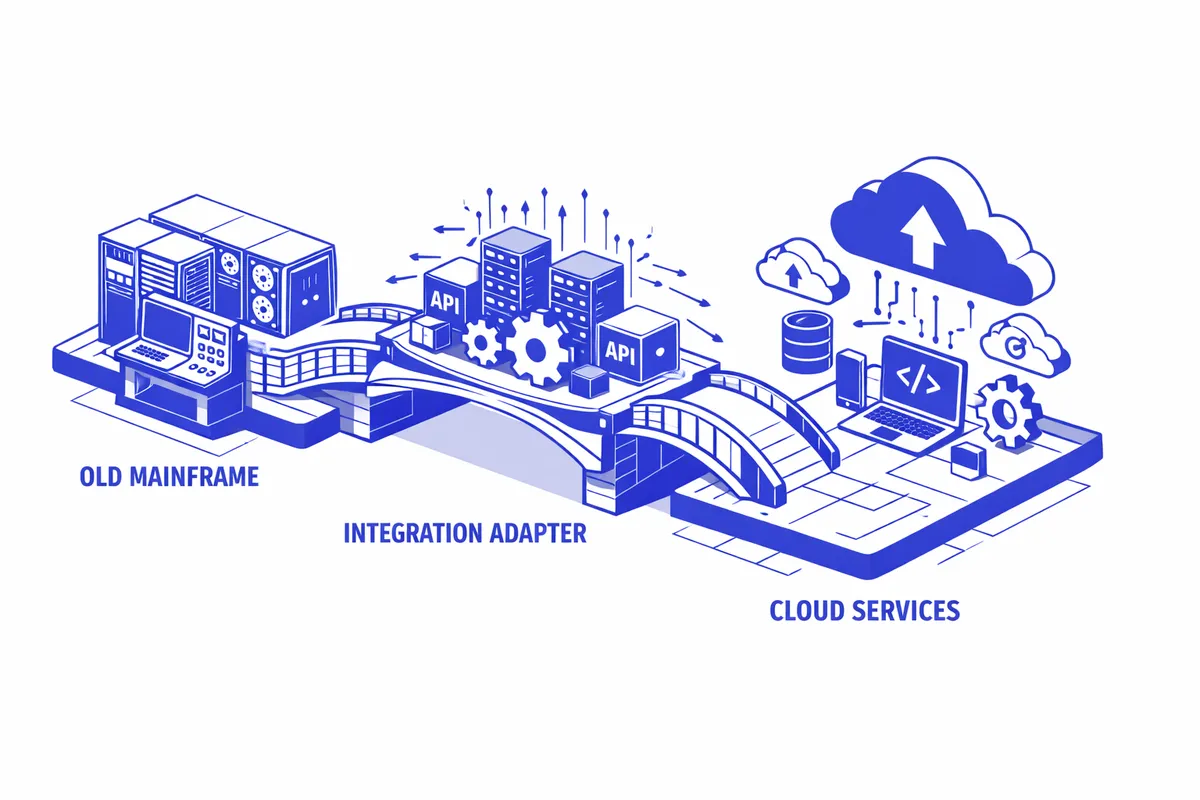
How We Build Legacy System Integration for Bronzeville
Bronzeville integration projects begin with a detailed discovery of the legacy system's actual capabilities. Many Bronzeville businesses operate systems that were installed by vendors who no longer support them, with documentation that is incomplete or absent. Our discovery process reverse-engineers the system's data structure and integration points: what formats it can export, whether its database is accessible directly, and what the data represents in business terms. This foundation is necessary for building integration that handles real operational data, not idealized assumptions about what the system contains.
From discovery we design the integration architecture. For financial services firms where data accuracy is not negotiable, we build strict transformation rules, validation logic that catches data quality problems before they move downstream, and audit trails that document every data transfer. For personal care businesses where simplicity and reliability matter most, we favor file-based or webhook-driven approaches that are straightforward to maintain. For nonprofit organizations where staff technical capacity may be limited, we design integrations that run automatically with clear error notification when something needs attention.
Testing covers the data scenarios that Bronzeville businesses actually encounter: high client volumes for personal care businesses during peak periods, complex donor segmentation for nonprofits running multiple concurrent campaigns, and multi-period financial data for firms managing compliance reporting across quarters. Deployment comes with monitoring and a maintenance plan.
Industries We Serve in Bronzeville
Financial Services and Consulting Firms: Bronzeville's professional services community includes financial planning, insurance, and consulting firms with legacy client management systems that need integration with modern compliance reporting, CRM, and document management tools. We build connections that keep regulated data accurate and accessible across platforms.
Barbershops and Salons: Personal care businesses serving Bronzeville's residential community along King Drive and Indiana Avenue operate legacy scheduling systems that need integration with SMS reminder platforms, online booking tools, and customer communication systems. We connect the scheduling system with the modern client touchpoints.
Cultural Nonprofits and Arts Organizations: Organizations near the DuSable Black History Museum, the Chicago Bee Building, and the Bronzeville Walk of Fame operate legacy donor databases and program management systems that need integration with modern event management, email marketing, and payment processing platforms. We connect institutional history with operational capability.
Black-Owned Restaurants and Hospitality: Bronzeville restaurants along 35th Street and 43rd Street operating legacy POS or inventory management systems need integration with modern cloud accounting, delivery platform, and reservation tools. We automate data flows that staff currently handle manually.
Small Publishers and Media Organizations: Small publishers and media businesses carrying on Bronzeville's journalism and cultural publishing tradition operate content management, subscription, and distribution systems that need integration with modern advertising, analytics, and digital distribution platforms. We connect legacy content infrastructure with the digital tools the industry now requires.
Community Health and Social Services: Health and social service organizations serving Bronzeville's residents operate legacy case management and client tracking systems that need integration with modern reporting, scheduling, and communication tools. We build connections that keep client records accurate across platforms.
What to Expect Working With Us
Legacy System Discovery: We document the actual behavior of your legacy system: what data it holds, what export or integration capabilities it supports, and how it handles the specific data types your integration needs to move. For undocumented systems common in Bronzeville's established business community, discovery builds the technical foundation necessary for reliable integration.
Integration Architecture Design: Based on discovery, we select the right integration approach: API wrapper, database-level access, file-based exchange, or a combination. For financial services clients, we add validation and audit-trail requirements. For nonprofit clients, we prioritize automatic operation with clear error notification. Every design reflects the specific operational context of the Bronzeville business.
Build and Testing: We build the integration and test it against data volumes and scenarios that reflect real operations, including peak periods, data quality edge cases, and failure conditions. We verify that error handling works correctly before deployment.
Deployment and Monitoring: We deploy with monitoring that alerts on errors, data inconsistencies, or performance issues. Legacy systems contain behaviors that surface only under specific conditions, and monitoring catches problems before they become operational disruptions in businesses that Bronzeville's community depends on.