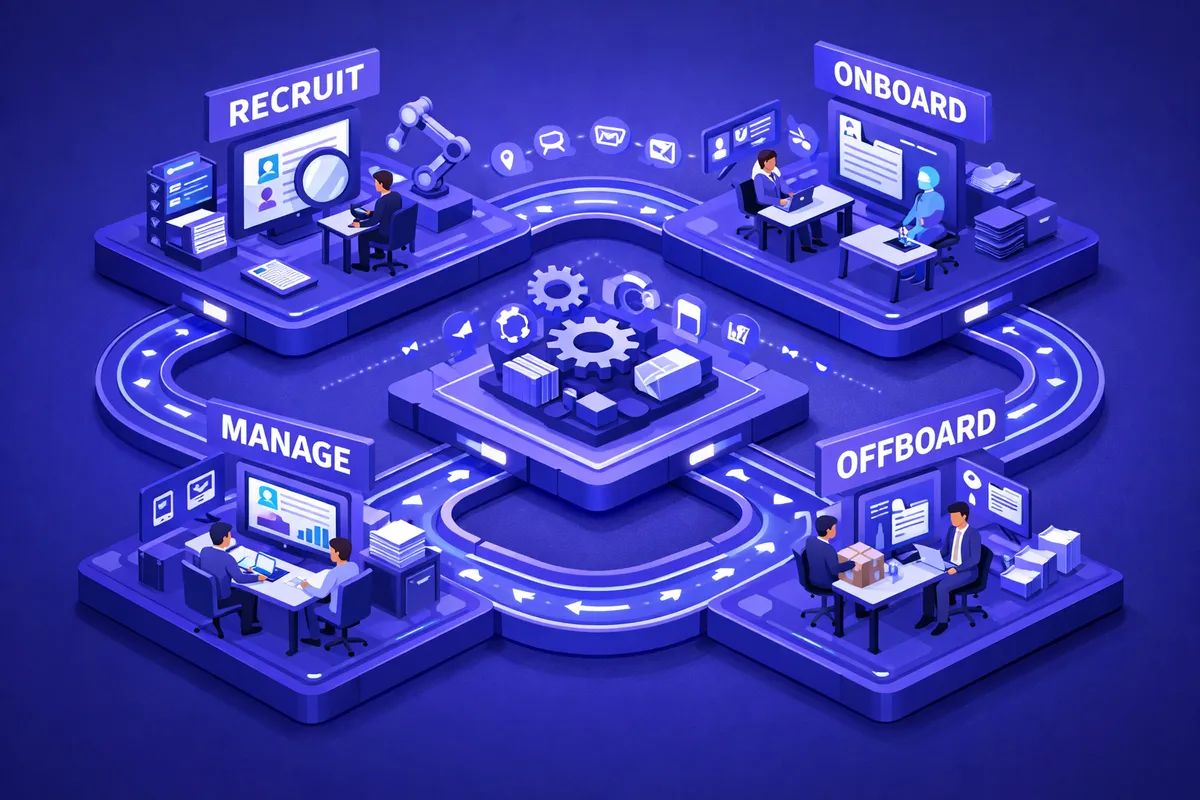
How We Build HR Automation for Bronzeville
The configuration process starts with a people operations audit. We document your current hiring process from job posting through first day, your onboarding sequence, your time and attendance tracking, and your payroll workflow. For most small businesses and nonprofits, this audit surfaces three to five manual processes that are consuming significant administrative time and introducing errors that create compliance risk.
Platform selection follows the audit. We work with the major HR platforms including Gusto, BambooHR, Rippling, and Homebase, and we recommend based on your specific workforce composition rather than the platform with the most features. A nonprofit with eight full-time and twelve part-time employees needs different software than a consulting firm with six salaried professionals. Cost scales with employee count on most HR platforms, and we size the recommendation to your current reality with a clear path to expansion.
The hiring workflow configuration covers job posting distribution, application collection, interview scheduling, and offer letter generation. Most small businesses post job openings through manual copying and pasting across multiple platforms. Automation posts to LinkedIn, Indeed, Glassdoor, and Google Jobs from a single entry. Applications collect in one place, candidates move through defined stages, and offer letters generate from a template with the candidate's specific terms populated automatically.
Onboarding configuration is where the investment pays off most visibly. New hire paperwork, including federal tax forms, direct deposit authorization, benefit enrollment, and any organization-specific documentation, flows through a digital workflow the new employee completes before their first day. They arrive ready to work rather than spending their first morning filling out paper forms at a desk.
Industries We Serve in Bronzeville
Independent consulting firms on King Drive with professional staff need HR systems that support performance management, PTO tracking, and benefits administration alongside standard payroll. A four-person consulting practice that managed informally at two people needs infrastructure when it adds salaried employees with benefits, and the transition is easiest when the system is configured before the team grows rather than after.
Financial practices and advisory firms on 35th Street operate in a regulated environment where employment documentation, licensing verification, and compliance training records must be maintained and accessible. HR automation handles the documentation burden of compliance-related HR, including tracking required continuing education, maintaining current license records, and documenting the compliance training that regulators periodically review.
Cultural nonprofits near the DuSable Black History Museum manage complex staffing arrangements: full-time program staff, part-time administrative staff, grant-funded positions, contractors, and volunteers. HR automation handles time tracking across all categories, allocates payroll costs to the correct grant codes, and manages the documentation required for each employment type distinctly.
Barbershops and salons on Cottage Grove Avenue with commission-based staff need payroll systems that calculate compensation from variable pay inputs, track shift scheduling, and handle tip reporting compliance. Manual payroll for commission-based workers is particularly error-prone, and payroll errors damage the trust relationship between owner and staff.
Restaurants and food service businesses near the Victory Monument and along Michigan Avenue deal with high turnover, complex scheduling, and tip pooling arrangements that create ongoing payroll compliance challenges. HR automation systems built for food service handle these specific complexities and integrate with the POS systems most Bronzeville restaurants already use.
Property management and maintenance companies operating from Bronzeville across the South Side coordinate field staff whose scheduling, time tracking, and pay calculations all depend on job-based data that feeds from field service management systems into payroll. HR automation connects those systems so payroll reflects actual hours and job completions without manual data re-entry.
What to Expect Working With Us
1. People operations audit. We map every HR process from hiring through offboarding, document the manual steps, and identify compliance gaps that create organizational risk. The audit output is a priority-ordered list of automation opportunities with specific time savings and risk reduction estimates for each.
2. Platform selection and configuration. We configure the selected platform with your company structure, pay types, benefits, PTO policies, and any grant cost allocation requirements. Every form, workflow, and automated communication is reviewed and approved by your team before the system goes live.
3. Data migration and payroll parallel run. We migrate existing employee data into the new system and run one full payroll cycle in parallel with your existing process before cutting over completely. The parallel run catches configuration errors in a low-stakes environment before they affect real paychecks.
4. Manager and employee training. We train managers on the tools they will use daily: job posting management, time and attendance review, PTO approval, and document access. We walk employees through the self-service features that give them access to their pay stubs, tax documents, and personal information updates without routing through a manager or HR contact.