How We Build Field Service Management for Bronzeville
The configuration process begins with a service operations audit. We document every job type the business runs, the typical crew composition, the equipment or materials required, the documentation required at job completion, and the invoicing cycle. For a plumbing operation based near 35th Street, that might mean multiple job types with different duration estimates, crew size requirements, and parts inventory needs. For a cleaning service on Cottage Grove Avenue, it might mean recurring scheduled visits with client-specific checklist requirements and proof-of-completion photo documentation.
Platform selection reflects the audit findings. We work with the major field service management platforms, including Jobber, ServiceTitan, Housecall Pro, and FieldPulse, and we recommend based on your specific business model rather than which platform is easiest to configure. A one-person operation with fifteen residential clients needs different software than a ten-technician commercial services company.
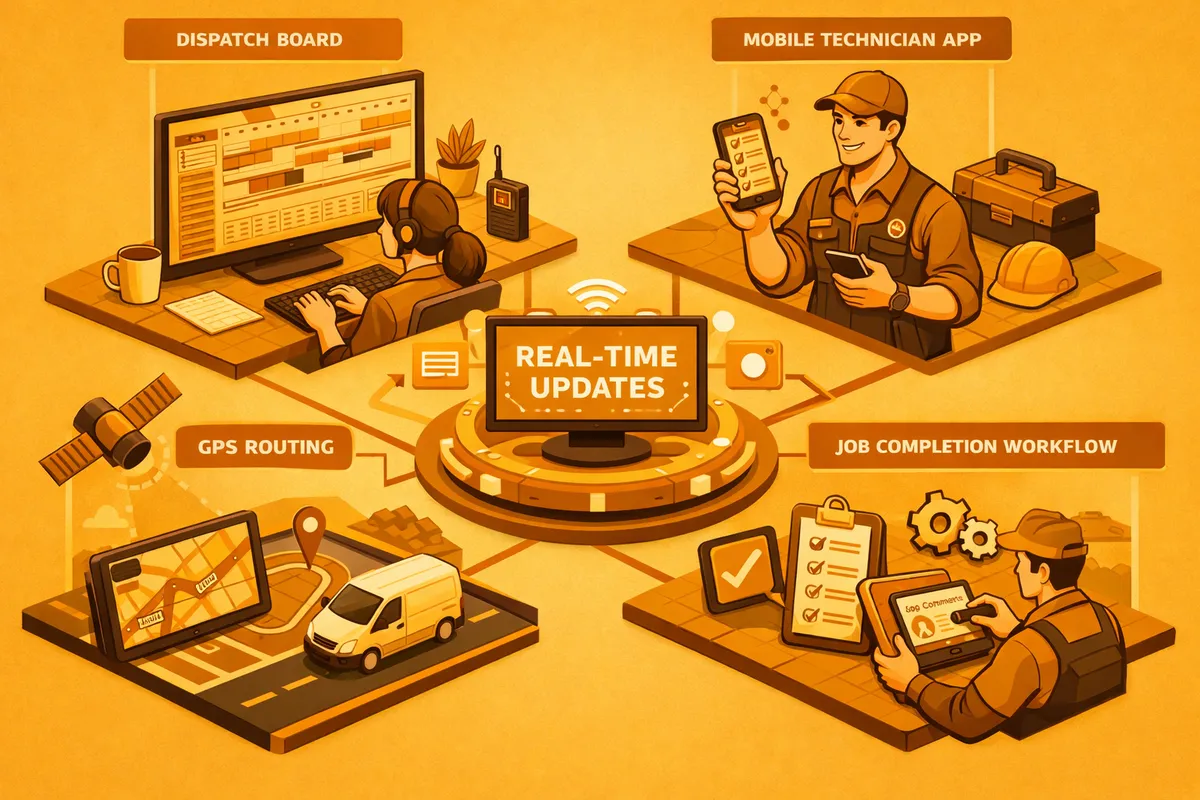
The configuration covers scheduling and dispatch logic: the rules that determine how jobs are assigned to technicians based on location, skill set, and availability. Route optimization for businesses running multiple crews across different South Side neighborhoods reduces drive time and fuel costs while fitting more jobs into the same crew day. Automated appointment confirmations and technician tracking notifications handle the client communication that most service businesses do manually.
Invoicing configuration matches your billing model: flat-rate billing, time and materials, recurring service contracts, or hybrid structures. Invoices generate automatically on job completion from the work order data the technician records in the field, so there is no billing delay while an office manager manually creates invoices from handwritten job sheets.
Industries We Serve in Bronzeville
Property maintenance and janitorial businesses operating along King Drive and servicing commercial accounts across the South Side use field service management to schedule recurring maintenance visits, dispatch crews to urgent call-ins without disrupting the regular schedule, and track completion documentation that commercial clients require for their building management records.
Plumbing and HVAC contractors based near 43rd Street and the 35th Street corridor use field service systems to manage service call dispatching, track parts inventory across trucks, document job completion with photos and technician notes, and generate invoices that include the detailed materials and labor breakdown that commercial clients require for reimbursement.
Security and safety services companies near the Bronzeville Walk of Fame and Indiana Avenue that patrol commercial properties and provide monitoring services need dispatch and scheduling tools that handle irregular shift patterns, multiple site assignments per crew member, and incident documentation that creates a verifiable service record for client contracts.
Personal care and beauty services businesses on Cottage Grove Avenue that offer mobile services, including on-location hair and makeup for events near the DuSable Black History Museum or private appointments, use field service management to coordinate bookings, send client confirmations, and track service history across a mobile client base.
Landscaping and exterior maintenance businesses serving the institutional and residential properties near the Victory Monument and the Supreme Life Building use scheduling software to manage seasonal service contracts, coordinate equipment-intensive jobs that require pre-planning, and track the before-and-after documentation that differentiates their work from competitors.
Home health and personal care services coordinating caregiver assignments across residential clients in Bronzeville and surrounding neighborhoods use field service platforms to manage caregiver availability, client preferences, scheduling changes, and the compliance documentation required by state home care regulations.
What to Expect Working With Us
1. Operations audit and platform selection. We document your current scheduling, dispatch, and billing operations, identify the specific pain points, and recommend the platform that fits your business model and budget. This step includes a side-by-side comparison of two or three platform options with specific pros and cons for your situation.
2. Platform configuration and workflow setup. We configure the selected platform with your job types, service territories, crew structure, pricing, and billing rules. Scheduling logic, automated communications, and invoicing templates are all configured before the system goes live with real jobs.
3. Technician and staff training. Field service management software is only useful if the people doing the work use it correctly. We train your office staff on scheduling and dispatch and your field technicians on job acceptance, time tracking, documentation, and completion confirmation through the mobile app. Real-scenario training produces better adoption than a walkthrough of software features.
4. Two-week live check-in and optimization. Two weeks after go-live, we review actual usage data, identify any workflows being bypassed, and address configuration issues that only surface under real operational conditions. This step has consistently been the one that determines whether field service software sticks or gets abandoned.