How We Build Customer Portals for Bronzeville
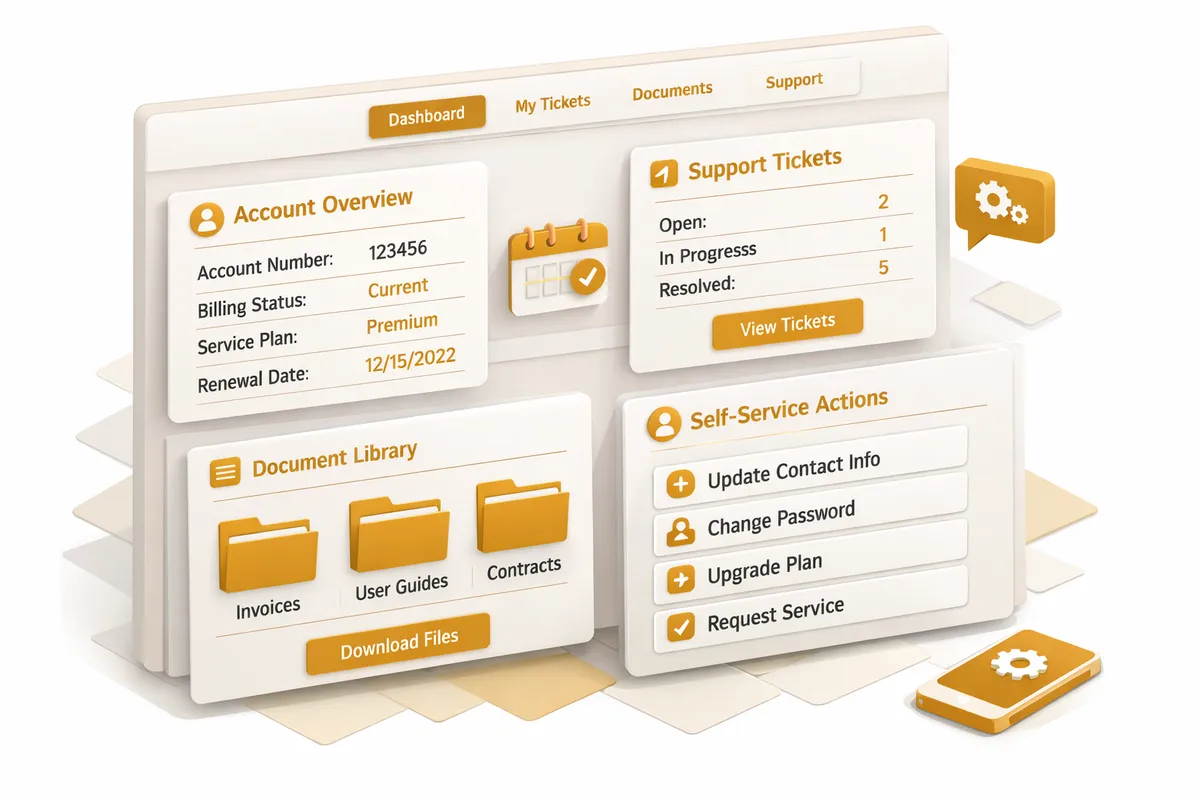
Portal design starts with a user perspective exercise. We ask what your clients need to access most frequently, what they currently have to contact you to get, and what information would reduce the number of routine calls and emails your staff handles each week. For a consulting firm, the portal might primarily serve project tracking and document delivery. For a financial practice, it is account statements and tax documents. For a nonprofit, it is enrollment status, program schedules, and eligibility documents. Each of these requires a different design but shares the same underlying principle: the client should be able to self-serve the things they currently rely on you to provide.
The build uses a secure web application architecture with individual client accounts, role-based access controls, and encrypted document storage. Every document upload, every message, and every access event is logged for audit purposes, which is particularly important for financial services and nonprofit organizations that operate under regulatory or funder oversight. Clients log in with secure credentials, and we implement multi-factor authentication for portals that handle sensitive financial or compliance documents.
We build the portal interface for the specific reading patterns of your clients. A corporate client accessing project deliverables from a consulting firm on Indiana Avenue needs a clean, professional interface that reflects the caliber of the work inside it. A community member accessing program enrollment documents through a nonprofit portal needs a simple, accessible interface that works on a phone over a slow connection. These are different design decisions driven by who actually uses the portal.
Integration with your existing workflow is part of the build: documents you create in your project management tool appear in the client portal automatically, messages sent through the portal sync to your team's communication platform, and status updates push to the portal when you change them in your internal system. The portal is not a second place to maintain information. It is a client-facing window into the information you already manage.
Industries We Serve in Bronzeville
Independent consulting firms along King Drive deliver project deliverables, status updates, and billing documentation through portals that clients access on their own timeline rather than waiting for the next check-in call. The portal becomes the engagement record: every deliverable, every milestone, and every approved change is documented and accessible to both parties without digging through email threads.
Financial advisory and wealth management practices on 35th Street use portals to deliver account statements, performance reports, tax documents, and compliance disclosures through encrypted channels that meet regulatory requirements. The portal also provides a secure messaging channel so client communications are documented in a compliant environment rather than an email inbox.
Cultural nonprofits near the Chicago Bee Building and the DuSable Black History Museum serve program participants who need access to enrollment documentation, eligibility status, program schedules, and resource materials. A portal that provides this access reduces staff time on inquiry handling and ensures that program participants have their information available when they need it, not only during office hours.
Small publishers and independent media companies on Indiana Avenue use portals to give authors access to their manuscript status, editorial feedback, production timelines, and royalty statements. Authors who can check their own status are not calling the editor. Transparent communication through a portal is also a competitive factor in attracting manuscripts from established authors who have options.
Barbershops and salons on Cottage Grove Avenue with loyalty programs and recurring service clients use portals to deliver appointment histories, spending summaries, loyalty point balances, and exclusive offers. Clients who log in regularly to check their status have a higher retention rate and spend more than clients who do not.
Community-serving organizations near the Victory Monument that provide legal aid, financial counseling, or social services to Bronzeville residents use portals to give clients access to their case documentation, appointment records, and resource referrals. Reducing barriers to information access is a service quality issue as much as an operational one.
What to Expect Working With Us
1. Client journey mapping. We map the full arc of a client engagement from your perspective and from theirs: every touchpoint, every document exchange, every status update request. This produces a clear picture of what the portal needs to support and what it can eliminate from your team's daily task list.
2. Architecture and security design. Before building anything, we document the access control model, the document security requirements, the authentication approach, and the integration points with your existing tools. For financial services and nonprofit portals, this step includes reviewing applicable compliance requirements to ensure the portal meets them.
3. Build and user testing. We build the portal and test it with a representative sample of actual clients before launch. Real users on real devices surface usability issues that internal testing misses. We iterate based on that feedback before the portal goes live for your full client base.
4. Launch and client onboarding. We prepare clear onboarding communications for your clients that explain the portal, walk through logging in and finding their information, and set expectations for what will be delivered through the portal going forward. A portal that clients do not use is not useful to anyone.