How We Build Custom CRM for Bronzeville
The design process begins with relationship mapping. We ask you to describe your five most important business relationships and walk through how each one developed, how it is currently maintained, and what information you need to manage it well. That conversation surfaces the data structure that your CRM needs to capture. A consulting firm might describe relationships that need tracking across multiple engagements over years, referral connections, and shared professional network context. A nonprofit might describe donor relationships with giving history, program participation, volunteer activity, and communication preferences all attached to the same record.
From that mapping we design a data model: the entities in your CRM, the relationships between them, and the fields that matter for each. A contact record for a financial advisory on King Drive might include not just standard contact information but also the specific services the person has used, the life events that typically precede financial planning decisions, and the communication cadence that matches their preferences. These are not generic CRM fields. They are specific to how that business manages its client relationships.
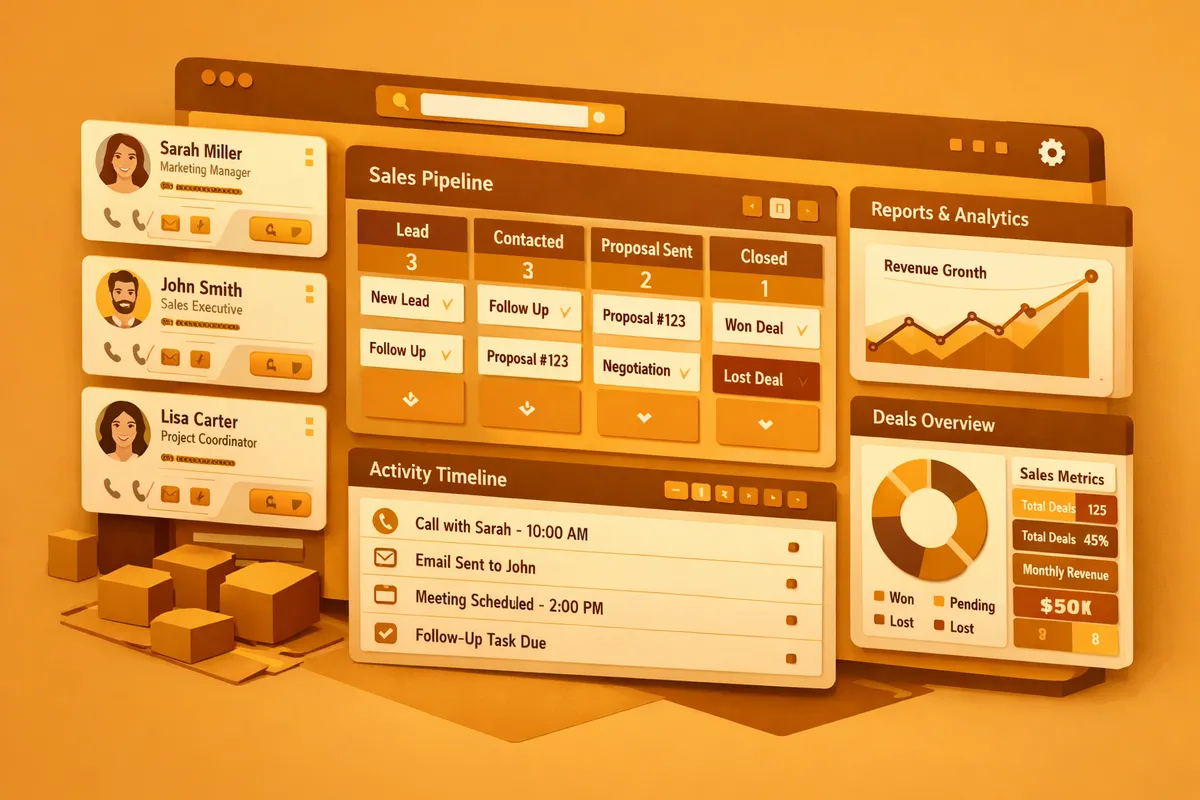
The build uses modern web application infrastructure with a clean interface that your team will actually use. The best CRM is the one that gets used consistently, and that means building something that does not require training to navigate and does not create friction for daily contact and relationship management tasks. We prioritize the actions your team takes most frequently and make them fast: logging a conversation, scheduling a follow-up, pulling a contact's relationship history.
Integration with your existing tools is part of every build: email client synchronization so conversations are logged automatically, calendar integration for appointment tracking, and connections to your financial or project management systems so the CRM reflects the full scope of each relationship without manual data entry.
Industries We Serve in Bronzeville
Independent consulting firms along King Drive manage relationships that span years and multiple engagement types. A custom CRM tracks the history of each client relationship, surfaces clients who are due for a check-in, identifies referral patterns, and shows the full context of every relationship before a call or meeting. Off-the-shelf tools treat every contact as a lead. This treats them as a relationship.
Near the 35th Street financial corridor, wealth management and investment advisory practices deal with client relationships that require strict regulatory compliance documentation alongside genuine personal relationship management. A custom CRM built for this context captures both: it maintains the conversation records and service histories required for compliance and the personal context that enables advisors to serve clients at a genuinely personal level.
Cultural nonprofits near the DuSable Black History Museum track constituent relationships that generic CRMs cannot represent accurately. The same person who attended a program in 2018, donated in 2020, volunteered in 2022, and is now a prospect for board membership needs a record that reflects all of that history cleanly. Custom CRM builds that relationship model directly into the data structure rather than working around the limitations of a tool designed for sales funnels.
Small publishers on Indiana Avenue manage relationships with agents, authors, retailers, distributors, and press contacts that each require different information and different interaction patterns. A publisher's CRM needs to track manuscript stage, contract status, and sales performance alongside standard contact management, none of which fit cleanly into generic CRM field structures.
Barbershops and personal care businesses on Cottage Grove Avenue build loyal client bases through personal relationship and consistent service. A CRM that tracks client preferences, service history, product purchases, and birthday and anniversary dates enables the kind of personalized outreach that converts occasional visitors into regulars and regulars into advocates.
The civic and community development organizations anchored near the Victory Monument manage relationships with government contacts, community members, corporate partners, and peer nonprofits simultaneously. A custom CRM designed for this relationship complexity tracks engagement across all stakeholder categories and surfaces the right contact information when a grant application requires a government reference or a program partnership requires a peer organization introduction.
What to Expect Working With Us
1. Relationship audit and data model design. We spend a full working session mapping your key relationship types, the data you need for each, and the actions your team takes most frequently in managing those relationships. The output is a data model that we validate with you before writing a single line of code.
2. Build and internal testing. We build iteratively with your team involved in testing as we go. You see the interface at regular checkpoints and provide feedback before features are finalized. This is different from reviewing a requirements document and receiving a finished product six weeks later. Your team's actual usability feedback shapes the final system.
3. Data migration and integration setup. Existing contacts from spreadsheets, previous CRM tools, or your email client migrate into the new system in a clean, validated format. We handle deduplication, standardize contact records, and connect email and calendar integrations before launch so the system is immediately populated with real data.
4. Training and adoption support. CRM adoption fails when the system is handed off without adequate training. We run your team through every workflow they will use regularly, answer questions with real data from your actual contact database, and check in at two weeks and six weeks post-launch to address friction points before they become habits that route around the system.