How We Build Business Process Automation for Bronzeville
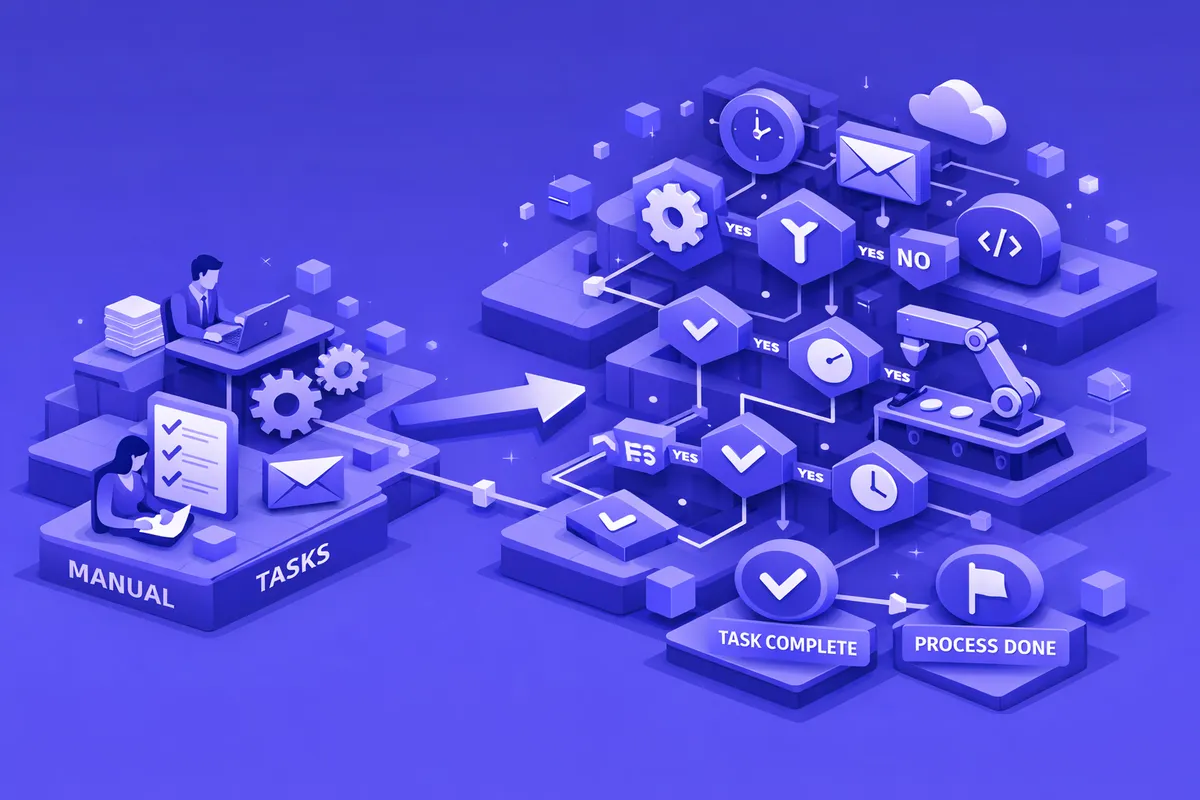
We start by walking your current workflows. Not the ones written in your operations manual, but the ones that actually happen: the email chain that substitutes for an intake form, the spreadsheet that tracks project status because no one set up a project management tool, the calendar reminder you set every Friday to follow up on outstanding invoices. We map what is happening, identify the manual steps that could be automated, and sequence the build around the highest-impact opportunities first.
For a small publisher on Indiana Avenue, the highest-impact automation might be the manuscript intake and review routing sequence. For a financial advisory near the Supreme Life Building, it might be the client document collection and compliance review workflow. We do not sell a generic automation package and configure it to fit your business. We build the specific workflows your business runs on.
The build phase uses no-code and low-code automation platforms connected to your existing tools. If your team already uses Slack, Google Workspace, and a project management tool, we build automation inside that environment rather than replacing it. Where better tools exist for specific functions, we recommend them with context about what they will replace and what they will cost.
Every automated workflow gets documented before handoff. Your team understands what triggers each automation, what it does, and how to modify it when your process changes. We do not build black boxes that break without explanation when circumstances shift.
Industries We Serve in Bronzeville
Independent consulting firms along King Drive run proposal-to-contract-to-invoice cycles that are almost entirely manual at most small practices. Automation handles the proposal generation from a brief intake, routes contracts for signature, triggers the project kickoff sequence on signing, and sends invoices on delivery milestones without anyone manually tracking where each engagement stands.
The financial services practices on 35th Street deal with document-heavy client onboarding: account applications, compliance disclosures, identity verification, and account setup steps that require multiple handoffs between client, advisor, and back-office staff. Automation orchestrates those handoffs, sends the right document to the right party at the right time, and tracks completion without anyone manually monitoring the queue.
Cultural nonprofits near the Chicago Bee Building and the DuSable Black History Museum run program registration, volunteer coordination, and event logistics processes that recur across every program cycle. Automating registration intake, confirmation communications, volunteer assignment, and post-program reporting means program staff spend their time running programs rather than managing spreadsheets.
Barbershops and personal care businesses on Cottage Grove Avenue deal with appointment management, client retention outreach, and staff scheduling processes that most owners handle manually. Automation sends appointment reminders, follows up with clients who have not rebooked, and generates staff schedules without manual intervention, freeing the owner to focus on service quality and business development.
Small publishers and media organizations on Indiana Avenue manage submission intake, editorial review routing, and production workflow coordination across teams that often include contractors in multiple time zones. Process automation routes submissions, sends status updates to contributors, triggers production steps on editorial approval, and tracks publication schedules without a managing editor manually coordinating each handoff.
Community development and civic organizations near the Victory Monument handle grant application management, board approval workflows, and community program coordination that involve multiple internal approvers and external stakeholders. Automation routes documents for review, sends reminders to approvers, and maintains a clear audit trail of every decision, which is essential for organizations that operate under public accountability requirements.
What to Expect Working With Us
1. Workflow discovery and priority mapping. We document your actual operational workflows, not an idealized version, and identify the ten to fifteen manual steps that consume the most time and introduce the most errors. You walk away from this session with a clear build sequence ordered by impact.
2. Automation build in your existing environment. We configure automation inside the tools your team already uses wherever possible. New tools are added only when they solve a genuine gap. Every workflow is tested with real data before it goes live, and we handle edge cases explicitly rather than hoping they do not occur.
3. Process documentation and team training. Every automation gets a one-page documentation sheet that explains what triggers it, what it does, what happens if it fails, and how to modify it. We train your team on the system before we step back, and we run a live check-in two weeks after launch to address anything the real-world conditions surfaced.
4. Ongoing refinement as your business evolves. Process needs change. A consulting firm that adds a second service line in year two needs updated automation rules. We handle those refinements as they come up rather than scheduling a new project engagement for every change request.