How We Build Autonomous Workflow Agents for Bronzeville
We start by identifying the routine workflows that are candidates for automation. The qualification criteria are clear: the workflow is multi-step, it is repetitive, it consumes meaningful staff time, and it does not require human judgment at most of its decision points. Email triage, appointment scheduling, invoice processing, meeting note summarization, and social media distribution are common candidates across Bronzeville organizations. We interview staff to understand current workflows, map the steps involved, and identify where the majority of time is spent versus where judgment is actually applied.
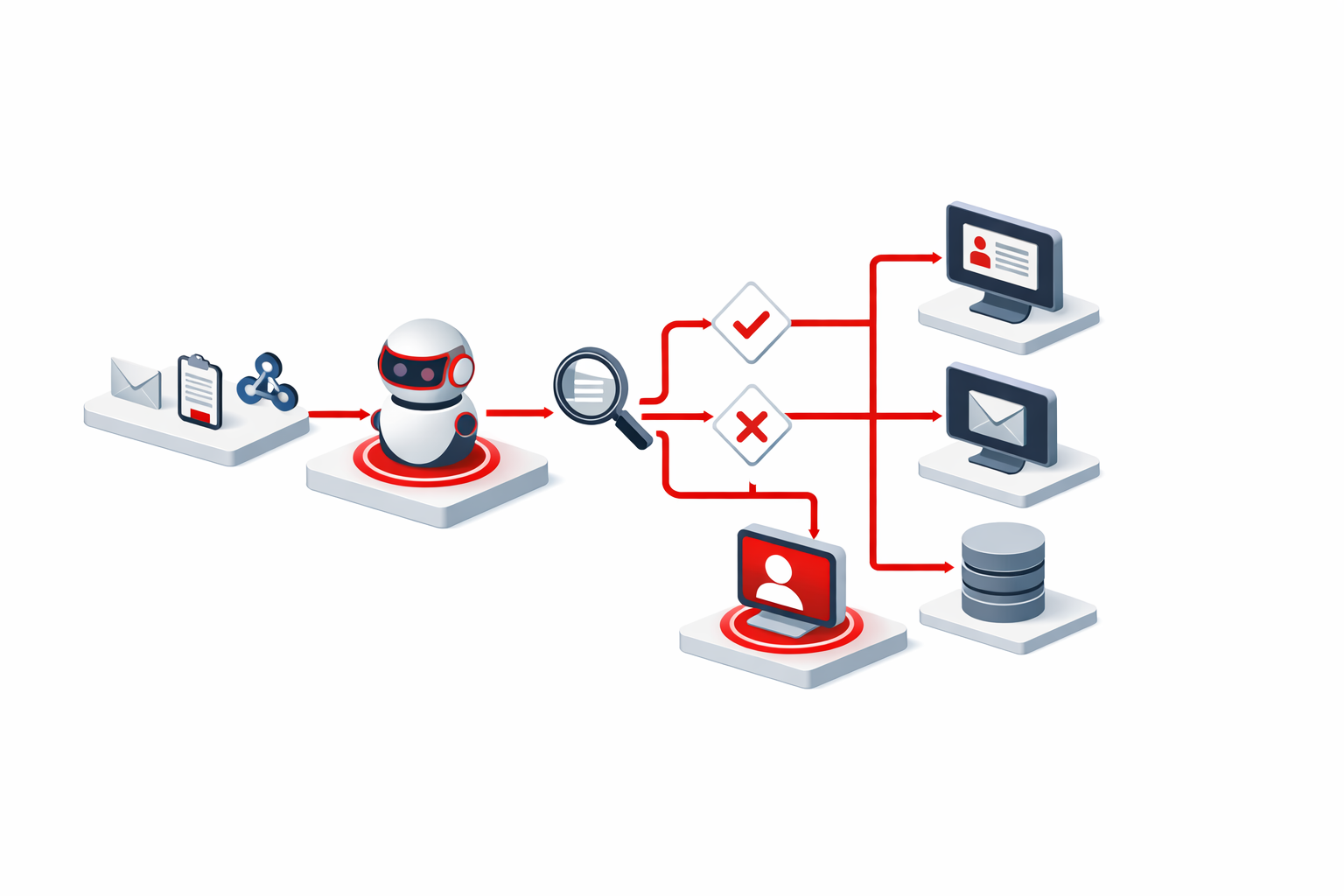
For each workflow, we design an autonomous agent that handles the process end to end. The agent is configured with the business rules, routing logic, and exception handling appropriate for your organization. An email triage agent for a nonprofit near the DuSable Black History Museum understands the difference between donor communication, press inquiries, community member questions, and vendor correspondence, and routes each appropriately. An appointment scheduling agent for a healthcare practice near Indiana Avenue understands appointment types, practitioner availability, insurance verification requirements, and HIPAA-compliant communication protocols.
Exception handling and escalation are designed into every agent from the start. The goal is not to automate everything but to automate the cases that do not require human judgment while surfacing those that do. An invoice agent that receives an unusual amount flags it for human review rather than processing it automatically. An email agent that receives a message it cannot confidently categorize flags it rather than routing incorrectly. The agents are calibrated to handle routine cases reliably while keeping important decisions in human hands.
Integration connects the agents to your existing systems: email platforms, calendar and scheduling tools, accounting software, CRM, document management. The agents do not require you to replace systems you already use. They work within those systems, automating the steps that currently require manual intervention. A scheduling agent integrated with your calendar and practice management system can handle the full booking flow without staff involvement. An invoice agent integrated with your accounting software can process and file invoices without data entry.
Industries We Serve in Bronzeville
Professional services firms along Indiana Avenue, Michigan Avenue, and across the Bronzeville corridor use autonomous agents to handle email triage, appointment scheduling, and invoice processing so associates can focus on client work and principals can focus on business development rather than administrative friction between client engagements.
Nonprofits and community organizations near the DuSable Black History Museum and across Bronzeville deploy agents to manage volunteer coordination, meeting scheduling, donor communication categorization, and administrative task distribution so staff focus on program quality, community relationships, and mission delivery.
Medical practices and healthcare offices serving Bronzeville residents use agents to manage appointment scheduling, patient communication, prescription refill routing, and administrative documentation so clinical staff focus on patient care rather than administrative call volume.
Cultural institutions and event organizations in Bronzeville use agents for event registration management, attendee communication, media inquiry routing, and post-event documentation so programming staff focus on the cultural work rather than coordination overhead.
Small businesses and retail operations along King Drive and 35th Street use agents for customer inquiry categorization, appointment and service booking, inventory-related notifications, and social media distribution so owners focus on product quality and customer relationships.
Legal offices and consulting firms serving the Bronzeville and broader South Side community use agents for scheduling, document intake routing, meeting note summarization, and follow-up task tracking so attorneys and consultants focus on substantive client work.
What to Expect Working With Us
1. Workflow audit and automation strategy. We interview your team, document routine workflows, identify which qualify for automation, and assess the staff time and reliability impact of automating each. We produce a prioritized roadmap that starts with the highest-impact, lowest-risk automations and builds from there.
2. Autonomous agent configuration and integration. We configure agents for your priority workflows and integrate them with your existing systems. We establish exception handling and escalation protocols so the agents know what to handle automatically and what to surface for human review. Configuration reflects your specific business rules, not generic templates.
3. Testing and supervised deployment. We test agents on real workflows before deployment, identify edge cases, and refine based on results. Initial deployment includes close monitoring so we can catch and correct issues before they compound. We establish quality metrics so performance is measurable from the start.
4. Ongoing optimization and expansion. After deployment, we gather team feedback, monitor agent performance, and refine handling for edge cases that emerge in real-world use. As your team gains confidence, we identify additional workflows worth automating and expand the system incrementally.