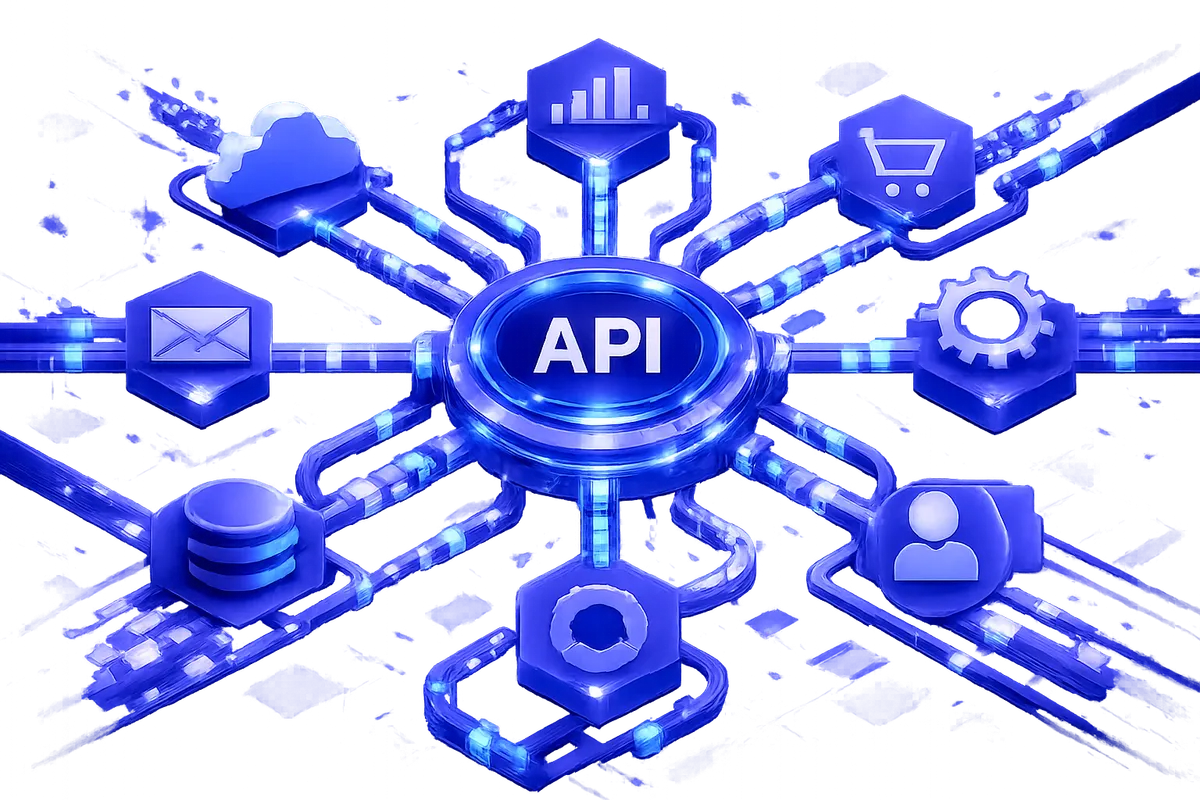
How We Build API Integration Services for Bronzeville
Bronzeville's professional services and nonprofit sectors have distinct integration needs, and we approach each engagement by understanding the operational reality before recommending architecture. A financial services firm near Cottage Grove Avenue has different data flow requirements than a cultural nonprofit organizing programming around the Victory Monument or a small publisher producing content rooted in African American history. We do not sell a standard integration package. We audit what you have, map what should connect, and build what the audit reveals.
The audit begins with a complete inventory: every software system in operation, what data it holds, how data currently moves between systems, and where manual handoffs create delay, risk, or duplication. For most Bronzeville firms in our first engagement, this process surfaces integrations that people have built informally, a spreadsheet that someone exports every Friday, a shared inbox that routes attachments between departments, a scheduled report that one person downloads and another re-uploads. These informal integrations are often fragile and undocumented. We map them alongside the formal gaps.
From the audit, we build an integration priority list ranked by operational impact. For a consulting firm managing multiple client engagements, the highest-priority connection is usually between the project management system and the time-tracking and billing platforms. For a financial services practice, it is typically the reconciliation loop between portfolio accounting and client reporting. For a nonprofit, it is often the donor management system connected to accounting and to the email marketing platform so that giving history drives outreach segmentation automatically.
We build using native vendor APIs where they are available, middleware platforms where they handle complexity cleanly, and custom connectors where the specific system combination requires it. Every integration includes monitoring and error alerting. A data pipeline that fails without notification can allow systems to drift out of sync for days before anyone notices, which is a worse operational position than not having the integration at all. Bronzeville firms running compliance-sensitive operations cannot afford silent failures.
Industries We Serve in Bronzeville
Consulting firms along King Drive and Indiana Avenue integrate project management, time-tracking, and billing platforms so that engagement economics are visible in real time. When billable hours recorded in one system automatically post to the billing platform and update the financial dashboard, principals see margin data weekly rather than at month close.
Financial services practices near Cottage Grove Avenue and 43rd Street integrate portfolio accounting systems, client relationship management platforms, and reporting tools. The reconciliation between what the portfolio system shows and what the reporting platform delivers to clients should be automated, verified, and documented, not dependent on a weekly manual export.
Cultural nonprofits anchored near the DuSable Black History Museum and the Chicago Bee Building integrate donor management systems with accounting platforms, event registration tools, and email marketing. When a major gift posts in the CRM, the accounting system should reflect it the same day, the acknowledgment workflow should trigger automatically, and the donor's contact record should update for future outreach.
Small publishers and media organizations in Bronzeville with roots in the African American press tradition integrate editorial workflow tools with distribution platforms, subscriber databases, and advertising management systems. When content is published, subscriber notification should fire without manual routing.
Barbershops and salons on 47th Street and the surrounding commercial corridors that have grown into multi-location operations integrate appointment booking systems with customer loyalty platforms and point-of-sale tools. A client who books online should appear in the loyalty database immediately. A purchase at one location should update their record for every location.
Community health centers and social service organizations near Roberto Taylor Homes and Pershing Road integrate case management platforms with scheduling systems, billing tools, and reporting dashboards required for grant compliance. When a client receives a service, the case record, the billing record, and the program outcome report should update from a single data entry event.
What to Expect Working With Us
1. Integration audit. We document every system in your operation, every data flow (formal or informal), and every manual handoff. For most Bronzeville firms, this process takes two to three working sessions and produces a map of integration debt that makes the priority sequence obvious.
2. Priority roadmap. We rank potential integrations by the labor they eliminate, the risk they reduce, and the implementation complexity required. You approve the sequence. Work begins where the payoff is clearest so each phase justifies the next.
3. Build and parallel validation. Every new integration runs alongside the existing manual process for a minimum of two full business cycles. We validate automated outputs against historical baselines and manual records before retiring the old process.
4. Monitoring and handoff. Every integration goes live with active monitoring: alerts for failures, anomaly detection for volume changes, and a daily or weekly summary of what ran and what required attention. Your team takes ownership of a system they can see, not a black box they trust by assumption.