How We Build AI Integration for Bronzeville
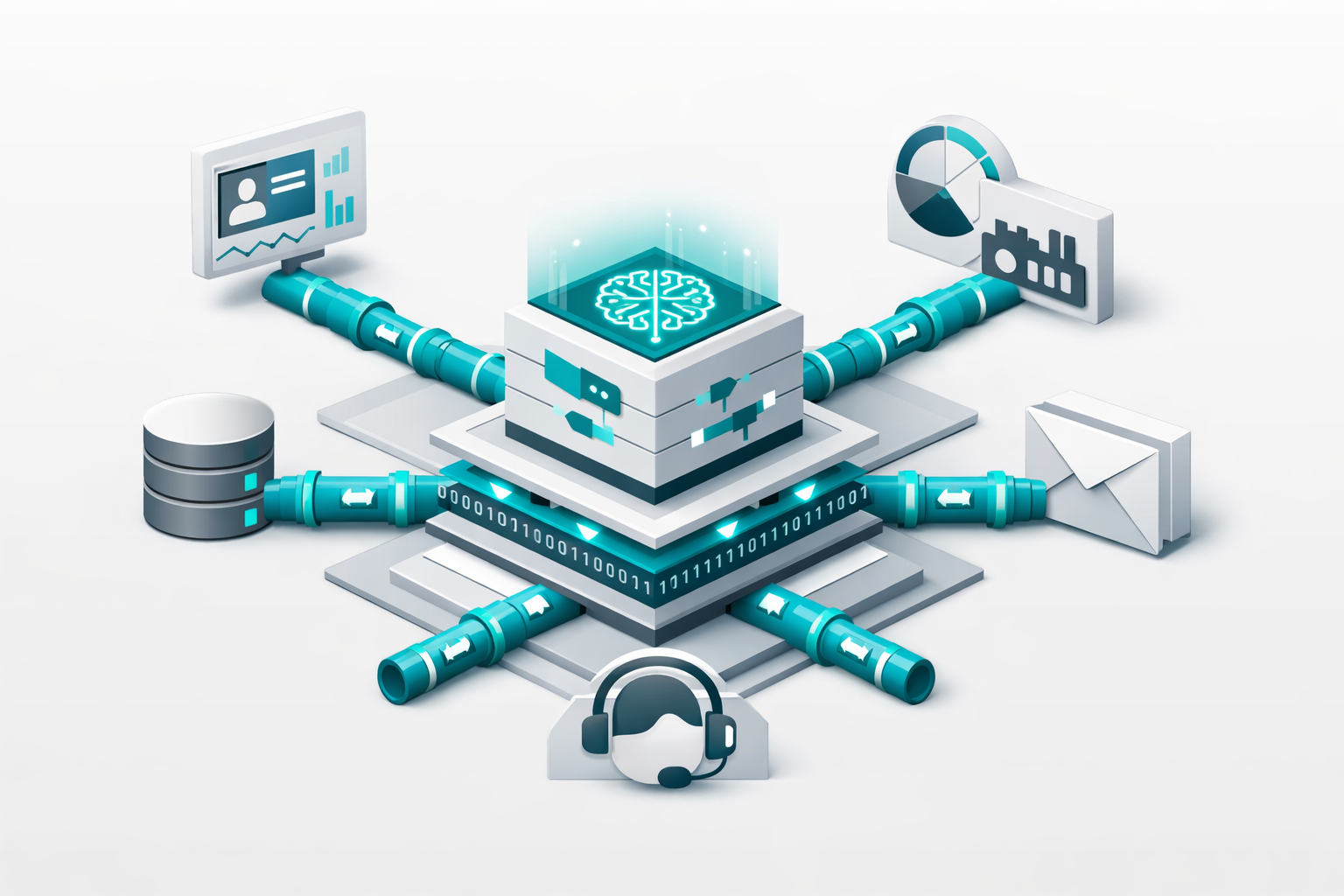
Our process begins with a system audit. We identify every application your business uses, what data each one holds, and what manual steps currently bridge the gaps between them. For a barbershop, that audit might reveal an appointment system, an inventory tracker, and a POS. For a restaurant, it might reveal a reservation system, a POS, a supplier ordering tool, and an accounting application. For a nonprofit, it might reveal a donor database, an event management platform, a communication tool, and separate grant tracking.
We document the data flows your business needs. When a customer books an appointment, that data should flow automatically to the POS so their history is visible at checkout. When a sale is recorded, inventory should update automatically. When a donor makes a contribution, the CRM should update and a thank-you communication should trigger. When an invoice is sent, the accounting system should record it without manual entry. Each of these flows reduces manual work and ensures data accuracy.
We design and build integrations using APIs, webhooks, and middleware appropriate for your systems. Modern business software typically offers integration hooks that allow data to move automatically. Where they do not, we build bridges that reliably transfer data on schedule. We test every integration on real data before deployment to ensure reliability.
After integration, we configure AI tools to operate across your unified data. Customer segmentation, demand forecasting, profitability analysis, and automated recommendations become possible because the data is now complete and current. A barbershop owner sees profitability by barber, by service, and by day of week without running any reports manually. A restaurant owner gets automated inventory reorder suggestions based on sales patterns. A nonprofit development director sees donor engagement scores updated in real time.
The Bronzeville business environment adds a specific dimension to integration work: many businesses here operate with deep community relationships that generate valuable but informal data. A barbershop on King Drive knows which clients drive the most referrals, but that knowledge lives in the owner's memory rather than in a system. A restaurant near the Victory Monument knows which events on the cultural calendar drive the highest covers, but that pattern has never been connected to the POS data. A financial advisory firm on Indiana Avenue knows which client relationships produce the most referrals over time, but that insight requires cross-referencing contact records, invoicing history, and calendar notes that currently exist in three different places. Integration surfaces these embedded patterns by connecting the systems where the underlying data lives, making visible what experienced owners already sense but cannot act on systematically.
Industries We Serve in Bronzeville
Barbershops and beauty salons on King Drive and 35th Street integrate appointment scheduling, inventory management, staff tracking, and POS into a unified system. Barbers see customer history and preferred services when clients arrive. Owners see which staff and services are most profitable and which products sell fastest.
Restaurants and cafes along Cottage Grove Avenue and 43rd Street integrate reservation management, POS, menu pricing, supplier ordering, and accounting. Regular customers are recognized and their preferences are known. Owners see profitability by menu item, identify labor cost patterns, and get automated reorder suggestions for high-velocity ingredients.
Cultural nonprofits and community organizations near the DuSable Black History Museum integrate donor databases, event registration, email communications, and grant tracking. Member engagement becomes visible across channels. Events are promoted to the right segments. Attendance patterns reveal which programs resonate most with the Bronzeville community.
Consulting and professional services firms along Indiana Avenue and Michigan Avenue integrate project management, client communications, time tracking, and billing. Client engagement is visible across touchpoints. Project profitability is clear. Resource allocation decisions become data-informed rather than intuitive.
Small publishers and cultural media organizations in Bronzeville integrate content management, subscriber communications, order fulfillment, and analytics. Subscribers are tracked across channels. Content performance is understood. Business decisions about what to publish next are grounded in actual reader behavior.
Financial advisory and accounting firms serving Bronzeville small businesses integrate CRM, scheduling, client document management, and billing. Client relationships are visible. Seasonal demand patterns inform staffing decisions. Follow-up processes trigger automatically based on client milestones.
What to Expect Working With Us
1. System audit and integration roadmap. We review every system your business currently uses, map the data flows you need, and design an integration architecture tailored to your operational reality. We identify the highest-impact integrations and prioritize them in the roadmap.
2. Custom integration build and testing. We build connections between your systems using APIs, webhooks, and middleware appropriate for your software stack. We test thoroughly on real data before deployment. Edge cases and error conditions are handled before they reach production.
3. Deployment and team training. We deploy integrations and train your team on working with unified data. For business owners who have managed fragmented systems for years, seeing complete operational data in one place is often the most immediately impactful moment in the engagement.
4. Ongoing support and expansion. We maintain integrations and support you as your business grows, new systems are added, or existing systems are upgraded. Integration architecture is designed to scale so adding new connections does not require rebuilding from scratch.