How We Build Accounting Automation for Bronzeville
Every engagement starts with a financial operations audit. We sit down with your current tools: the spreadsheet, the bank feed, the QuickBooks account you set up in 2019 and have not fully reconciled since. We map every inbound revenue stream and every expense category, flag anything that creates reconciliation friction, and identify the specific reports you actually need to make business decisions. For a cultural nonprofit on Cottage Grove Avenue, that usually means grant tracking and program expense segregation. For a consulting firm on King Drive, it means project-based profitability reporting.
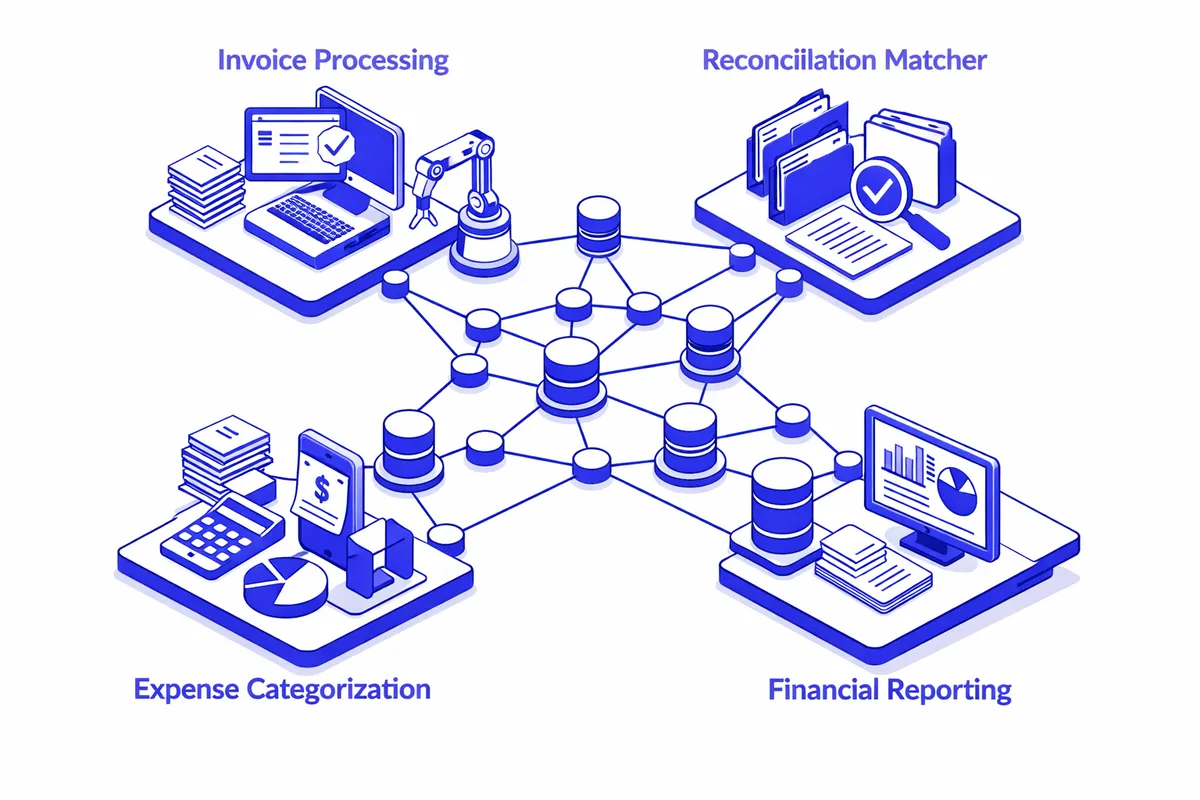
From that audit we build an automation layer that connects your bank accounts, invoicing tool, and payroll system into a single reconciled ledger. Transactions categorize automatically using rules we write around your specific chart of accounts. Invoices push to the ledger the moment they are issued and again the moment they are paid. Payroll entries post automatically each cycle. The accounts reconcile nightly without anyone opening a spreadsheet.
The reporting layer is where the real value shows up. Your profit and loss statement, your cash flow projection, your outstanding receivables: all of them generate automatically on whatever schedule you set. A weekly cash flow email hits your inbox every Monday morning so you walk into the week knowing exactly where you stand. No manual assembly. No waiting until month-end to discover a shortfall.
We train every client on the system before handoff, and we remain available for reconfiguration as your business changes. A consulting firm that adds a second revenue line in year two gets an updated automation ruleset, not a new contract.
Industries We Serve in Bronzeville
Independent consulting firms along King Drive use accounting automation to separate project-based revenue, track billable hours against invoiced amounts, and generate profitability reports by client without manual entry. The firms that serve corporate clients downtown and return profits to the Bronzeville community are exactly the businesses that benefit most from clean, real-time financial data.
On the 35th Street corridor, financial services practices including tax preparers, investment advisors, and wealth management offices need ledgers that are audit-ready year-round, not assembled in a rush before filing season. Automation ensures every transaction is categorized correctly from the moment it posts, so the books are always current.
Cultural nonprofits anchored near the DuSable Black History Museum and the Bronzeville Walk of Fame manage funding from multiple grant sources simultaneously. Accounting automation handles expense allocation by program code, generates funder-required financial reports on schedule, and tracks restricted versus unrestricted funds without manual sorting.
Small publishers and independent media companies on Indiana Avenue deal with revenue streams that most accounting tools handle poorly: royalties, licensing fees, print-on-demand deposits, and irregular distributor payments. We configure automation rules that categorize each revenue type correctly and reconcile against expected payment schedules.
Barbershop and salon owners with multiple chairs or locations on Cottage Grove Avenue often run payroll through commission-based structures that create reconciliation headaches every cycle. Automation connects the point-of-sale system to the payroll processor and posts each cycle's entries without manual intervention.
The Victory Monument neighborhood anchors a cluster of community development and civic organizations that receive government contracts alongside private donations. These organizations need accounting automation that separates contract revenue from charitable contributions, tracks program expenses by grant, and generates the financial statements required for annual audits without a dedicated accounting staff.
What to Expect Working With Us
1. Financial operations audit. We map every inbound and outbound transaction across your current tools and identify the gaps that are costing you time each month. This step usually takes one working session and produces a clear picture of where automation will have the most immediate impact on your workload.
2. System configuration and integration. We connect your bank feeds, invoicing platform, payroll processor, and any other financial tools into a single automated ledger. Every categorization rule, every reconciliation schedule, and every report template is configured around your specific chart of accounts before you see a single live transaction.
3. Seasonal calibration. Bronzeville's business calendar has peaks: grant cycles, Black History Month project surges, year-end nonprofit reporting deadlines. We build your automation schedule around those patterns so reporting is ready before you need it, not assembled after the fact.
4. Training and ongoing support. We walk through the system with you until you can read every report and understand what it is telling you. Reconfiguration requests, new revenue lines, and chart-of-accounts changes are handled as they come up, not scheduled into a future engagement.