How We Build Workflow Automation for Bridgeport
We start with a manual task audit. Over one or two sessions with the business owner and key staff, we document every repetitive manual task that happens weekly or more often: what information gets moved between what systems, what messages get sent when certain events happen, what reports get compiled by hand. We estimate the time cost of each.
From that audit, we build a prioritized automation map. Some tasks are automatable immediately with existing tools. Others require a platform addition or integration configuration. We sequence the work by return on investment, starting with the automations that save the most time with the least complexity.
For most Bridgeport businesses, the highest-value automations are: invoice generation triggered by job completion, review request messages sent automatically after a customer transaction, social media scheduling using a planning tool rather than manual daily posting, and accounting sync from POS to accounting software. These four alone often recapture five to ten hours per week.
We build the automations using the tools the business already pays for where possible. A contractor already using Jobber and QuickBooks can automate invoice sync without adding another tool. A restaurant already using Square and Mailchimp can automate post-visit email follow-ups without new software purchases.
For automations that require a connecting platform like Zapier, we configure the workflows, test them with real data, and document them so the business can maintain them without depending on us.
Industries We Serve in Bridgeport
Contractors and trades along Archer Avenue and throughout the neighborhood have the most to gain from workflow automation. Estimate-to-invoice generation, job completion notifications, review request sequences, and lead follow-up timing are all automatable. We build contractor automation systems that recover administrative time and reduce the gaps that cost revenue.
Restaurants and bars near Guaranteed Rate Field benefit from automated social posting, game-day specials publication, POS-to-accounting sync, and post-visit customer follow-up. We automate the game-day marketing workflow so specials go out on schedule without requiring manual posting on a busy day.
Specialty retailers and butchers on Halsted benefit from inventory reorder alerts, customer purchase history triggers for personalized promotions, and accounting sync from the POS. We configure retail automation that connects the front-of-store tool to the back-office systems.
Service businesses from salons to cleaning companies benefit from appointment confirmation, reminder, and follow-up sequences, rebooking prompts after service intervals, and review requests timed to the post-service window. We build service business automation that runs the customer lifecycle without manual management.
Galleries and creative businesses in the Zhou B corridor benefit from exhibition announcement sequences, collector follow-up workflows, and artist communication automation. We build arts-business automation that maintains relationship consistency without constant manual outreach.
Small business owners who wear every hat in the business, owner, manager, bookkeeper, and social media manager simultaneously, benefit most from automation that handles the lowest-skill tasks so they can focus on the highest-value work. We design automation specifically for the solo or two-person operation that cannot hire its way out of the problem.
What to Expect Working With Us
1. Manual task audit. We document every repetitive task in your current operation, estimate the weekly time cost, and produce a prioritized list of automation opportunities. You see the full picture and the potential time savings before we recommend a single tool or configuration.
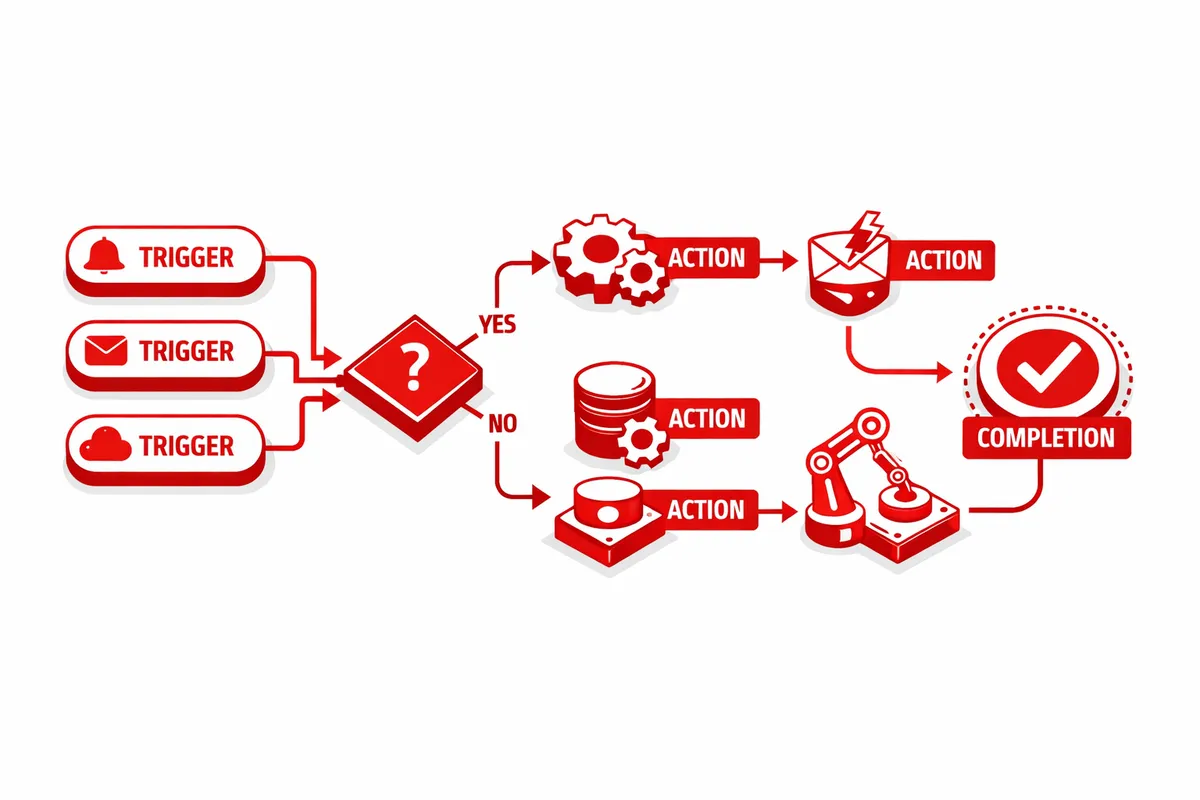
2. Automation design. We design the workflow logic for each automation: what triggers the workflow, what information moves where, what happens at each step, and what notifications or outputs are produced. You review the design before we build anything.
3. Build and testing. We configure the automations in your actual tools with real data, test every workflow end to end, and verify that the outputs are correct. Automations that move financial data or customer communications are tested twice, with documented test results.
4. Documentation and handover. Every automation we build is documented: what it does, what triggers it, what tools it connects, and how to modify it if the workflow changes. You receive written documentation and a walkthrough session before we consider the work complete.