How We Build UI/UX Design for Bridgeport
Research in Bridgeport requires understanding the neighborhood's actual demographic complexity. Bridgeport is not simply an Irish American neighborhood anymore, and designing products as if it were produces tools that serve only a portion of the actual population. We recruit research participants from the Chinese American community along Archer Avenue and Cermak Road, the Latino families who are a significant share of Bridgeport's residential population, and the long-time Irish American residents whose expectations for local business are shaped by decades of neighborhood character. A digital tool that works across these three populations is better designed than one that works only for the easiest test participants to recruit.
For sports venue and event technology adjacent to Guaranteed Rate Field, we conduct research with both game-day populations: the regulars and the visitors. We observe how each group uses phones during a game-day visit to the Bridgeport commercial corridor: what they search for, what they try to do, and where they fail. That observational research produces design specifications that apply to a real operational context rather than an imagined one.
For family restaurant and bar clients in Bridgeport, we prioritize operational efficiency research above everything else. We interview operators about what their busiest service periods look like, what tasks take the most staff time, and where digital tools currently create friction rather than reducing it. For 35th Street and Halsted Street restaurants where game-day service is the highest-revenue period, the design question is not "what could this app do" but "what does this app need to do in the forty minutes before first pitch when the restaurant is at capacity."
Industries We Serve in Bridgeport
Sports venue adjacent restaurants and bars near Guaranteed Rate Field on the streets around 35th Street and Halsted Street benefit from game-day operational tools designed for high-volume service periods, guest-facing experiences that serve both regulars and visitors from outside the neighborhood, and waitlist and reservation systems designed for the demand pattern of a 40,000-seat stadium's event calendar.
Family restaurants and community bars along Halsted Street and Archer Avenue that have served multiple generations of Bridgeport residents benefit from point-of-sale interface design optimized for regular customer speed, ordering and kitchen communication tools appropriate to independent restaurant operations, and loyalty experience design appropriate to the relationship-first culture of Bridgeport's family-run food establishments.
Cultural venues and arts organizations connected to the Zhou B Art Center and the Ramova Theatre benefit from ticketing and event management interfaces that match the community character of their programming, artist and collector-facing platform design appropriate for the working-class and immigrant-background arts community of the 35th Street corridor, and event promotion tools designed for the channels that actually reach Bridgeport's arts audience.
Contracting, trucking, and trade service businesses along Archer Avenue and the Bridgeport industrial corridor benefit from field service management tools designed for the operational realities of trade businesses: job scheduling interfaces for dispatchers, mobile tools for crew members who use phones in physical worksites, and customer communication platforms appropriate for the relationships that anchor Bridgeport contractor businesses.
Community organizations and neighborhood institutions connected to the Richard J. Daley Library and Palmisano Park benefit from accessible digital tool design, multilingual interface support for Bridgeport's Chinese, Latino, and English-speaking populations, and community platform design that supports the civic character the neighborhood has always maintained.
Chinatown-adjacent retail and restaurant businesses on Cermak Road and Archer Avenue benefit from bilingual interface design, e-commerce and ordering flows that work for customers moving between Bridgeport and Chinatown, and reservation and event experiences appropriate for the international visitors who travel to this corridor specifically for food and cultural programming.
What to Expect Working With Us
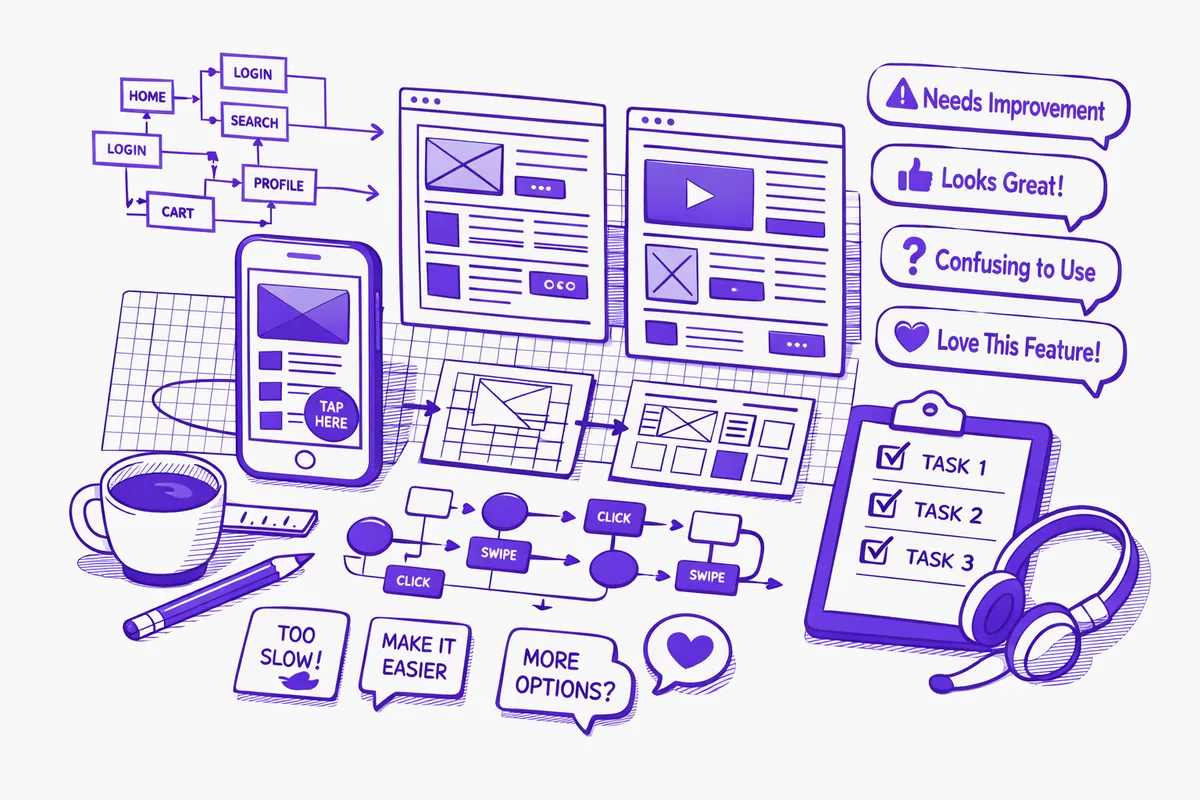
1. Discovery and Research. We conduct research with Bridgeport's actual user population, not a generic Chicago audience. For sports venue adjacent businesses, that includes game-day observation. For family restaurants, it includes service period observation and operator interviews. For arts venues, it includes research with the specific community the venue serves, not just the general Chicago arts audience.
2. Information Architecture and Wireframing. Structure before surface. For Bridgeport's operationally focused businesses, this phase often reveals that the product needs fewer features designed better rather than more features designed quickly. Wireframes establish flow and content organization and enable early feedback from Bridgeport operators and community members before high-fidelity design investment begins.
3. High-Fidelity Design and Prototyping. Pixel-precise interfaces built in Figma, including the interactive prototype that test participants and operators use to complete realistic tasks before development begins. For game-day and service-period tools, this includes design for the specific lighting conditions, noise levels, and time pressure of the actual operational context.
4. Testing and Iteration. We test with users representing Bridgeport's demographic reality before handoff. For products serving the neighborhood's Chinese, Latino, and Irish American communities, testing with participants from each group is not optional. It is what the research requires. Findings from testing are incorporated before development begins.