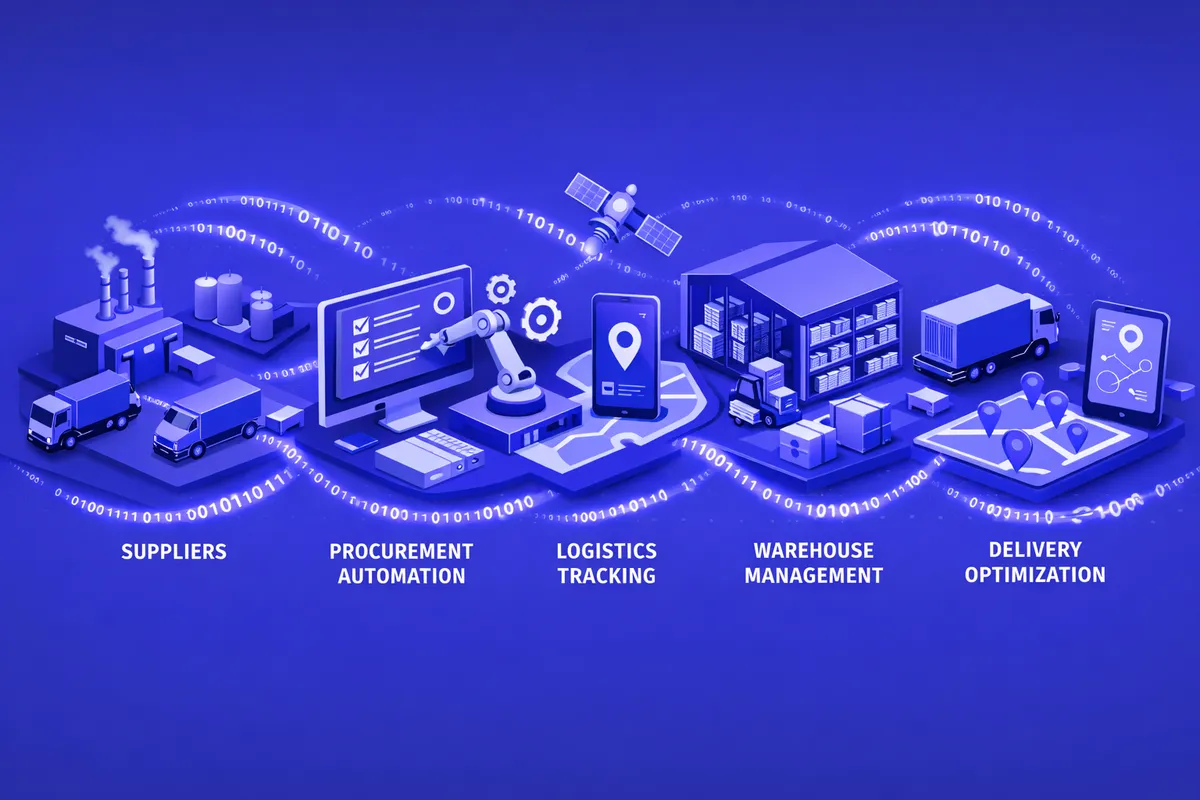
How We Build Supply Chain Automation for Bridgeport
Bridgeport supply chain automation engagements reflect the neighborhood's practical, working-class operational character. We do not build systems that require a dedicated procurement manager to operate. We build systems that small business owners and their teams can run with fifteen to thirty minutes of daily exception review, with the routine ordering, tracking, and reconciliation happening automatically.
The starting point is a vendor and product inventory: every supplier your business uses, what you source from each, the current ordering process, and historical patterns around lead times, minimum orders, and delivery accuracy. For a Bridgeport restaurant, this covers food and beverage vendors. For a contractor, material suppliers and equipment rentals. For a trucking company, parts suppliers, fuel vendors, and maintenance contractors.
From that inventory, we identify the procurement decisions that have the highest cost when they go wrong: materials that create production delays, food ingredients that cause menu gaps, truck parts that create fleet downtime. We build reorder management for those items first, establishing the inventory triggers and supplier routing that prevent the most expensive failures.
For Bridgeport food businesses sourcing from Chinatown-area distributors and South Side food vendors, we build supplier communication workflows that match the actual ordering processes those suppliers use. Some have electronic ordering portals. Others take orders by phone or email. The automation generates the correctly formatted order and routes it through the channel the supplier accepts, while the purchasing record and confirmation tracking happen systematically on your end.
Industries We Serve in Bridgeport
Chinese restaurants and Asian food businesses near the Chinatown border at Cermak Road source specialty produce, seafood, and ingredients from distributors serving the South Side Chinese food community. Automated reorder management for specialty ingredients, with order windows timed to each supplier's lead time and delivery schedule, ensures that a Chinese restaurant never runs out of specialty items that define its menu and drive repeat customer visits.
Irish pubs and traditional American restaurants along Halsted Street and 35th Street source draft beer, pub food staples, and specialty items from regional distributors and local food service vendors. Automated beverage inventory tracking connected to draft beer kegging data provides real-time tap room inventory visibility, generating purchase orders for kegs and bottles before the bar runs dry on a popular line rather than after a frustrated server discovers the cooler is empty.
Small manufacturers and fabricators in industrial spaces off Archer Avenue and Morgan Street manage raw material procurement tied to production job schedules. When job confirmation automatically generates a materials requisition based on job specifications, and that requisition routes to the appropriate supplier based on material type and current price, the manufacturer eliminates the informal ordering step that is most often skipped when the shop is busy. Skipping that step is where production delays originate.
Trucking and logistics companies with yards near Bridgeport's transportation infrastructure manage fleet maintenance procurement for vehicles where downtime is directly measured in lost revenue. Automated preventive maintenance scheduling connected to parts ordering means that the parts required for a scheduled service arrive before the service date, not after the truck has been taken offline waiting for a part that should have been ordered a week earlier.
Near Guaranteed Rate Field, event catering vendors and food service operators manage procurement that spikes around White Sox home games and major events at the stadium. Automated demand-based reorder management that incorporates the game schedule as a demand signal, increasing par levels before home stands and reducing orders in road trip windows, manages the procurement volume fluctuation without requiring manual adjustment for every game series.
Small contractors and construction trade businesses operating in Bridgeport and across the South Side manage material procurement for multiple simultaneous projects with different material requirements and delivery addresses. Job-site specific purchase orders that track material delivery to the correct address, with receiving confirmation tied to each job, give the contractor real-time job cost data and eliminate the materials allocation work that currently happens at month's end when someone has to sort out which supplies went to which job.
What to Expect Working With Us
1. Vendor and supply chain inventory. We document every supplier relationship, every product category, and the current ordering process with enough detail to build a procurement system around it. For Bridgeport family restaurants with long-standing supplier relationships, this documentation often surfaces institutional knowledge currently held by the owner alone, converting an operational vulnerability into a documented, transferable process.
2. Procurement priority analysis. We identify the vendor relationships and product categories where procurement failures have the highest operational cost: ingredients that cause menu gaps, parts that cause fleet downtime, materials that delay job completion. We build automation for the highest-cost categories first.
3. Workflow build and supplier communication configuration. We build the reorder management, purchase order generation, and delivery confirmation workflows for your priority categories. Supplier communication is configured for the channels each supplier accepts. Accounting integration is configured for the platform you use. The system is built around your existing supplier relationships and operational tools, not around a new platform that requires learning a new system.
4. Operational handoff and exception management training. We train your team on the exception management workflow: what the system handles automatically, what requires daily review, and how to resolve the discrepancies the system surfaces. The goal is thirty minutes of daily exception review replacing three hours of active procurement management, with better documentation and fewer errors as the measurable outcome.