How We Build RAG Systems for Bridgeport
Our process begins by identifying the knowledge that matters most for your specific Bridgeport business. We interview the owner and long-tenure staff members about which questions come up repeatedly, which decisions require experience to make well, which areas of the business are most dependent on institutional knowledge, and which mistakes new staff or successors are most likely to make without access to that knowledge. This interview process itself often surfaces knowledge that has never been explicitly articulated because the owner does not realize how much judgment they are applying automatically.
We then gather the documents and records that contain or reflect that knowledge. Email threads with suppliers going back years that reveal relationship history and past issues. Notes from customer interactions that capture preferences and sensitivities. Job records for a contractor that show which subcontractors performed well on which types of work. Supplier invoices and quality records for a restaurant that reveal pricing patterns and reliability histories. Financial records that document which product categories or service types have been most profitable over time. Meeting notes. Procedure manuals. Training documents. Anything that embodies operational knowledge gets evaluated for inclusion.
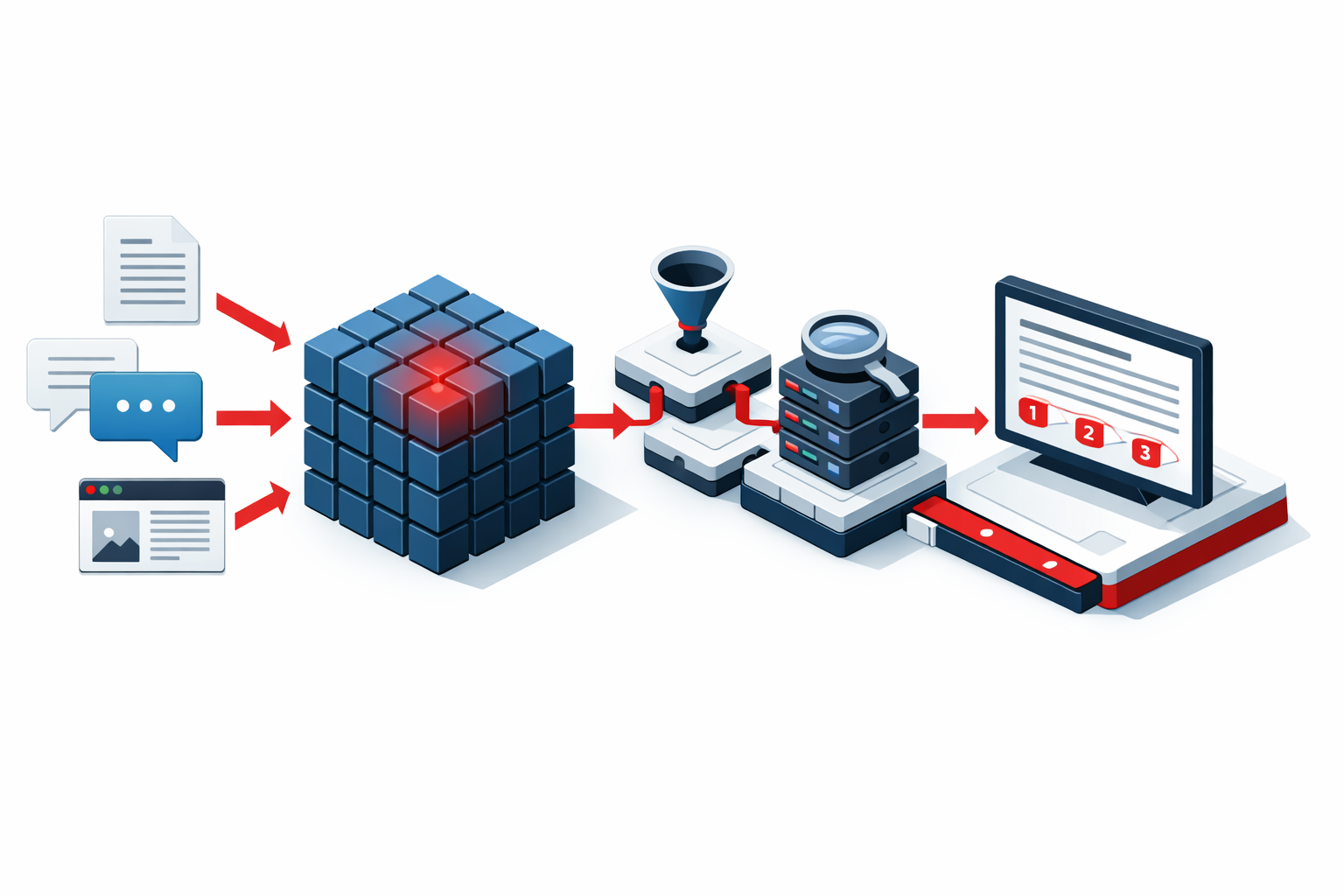
We organize and process this material into a knowledge base structured for retrieval. Documents are chunked, indexed, and tagged so the RAG system can find relevant information quickly when a question is asked. The system does not memorize documents. It retrieves the most relevant passages from across the knowledge base and uses them to synthesize answers grounded in your actual business history.
We deploy the RAG system where your team already works. A shared Slack channel where staff can ask questions and get answers in real time. An internal web interface accessible from any browser. Integration into the tools your team uses for training and onboarding. The system is built for accessibility by non-technical team members, not for administrators who want to manage a database.
Industries We Serve in Bridgeport
Family restaurants and food businesses along Halsted Street, 31st Street, and throughout Bridgeport capture supplier relationship histories, menu optimization decisions, seasonal demand patterns, customer preference records, and the operational frameworks that have guided the business across decades, so new staff and successors can access that accumulated knowledge rather than relying entirely on owner availability.
Contractors and construction firms operating across Bridgeport and the South Side capture subcontractor reliability assessments by project type, materials sourcing relationships and quality histories, building code navigation knowledge specific to Chicago's older residential housing stock, client communication patterns that have driven repeat business, and the project management frameworks that have kept jobs on time and on budget.
Medical and dental practices serving Bridgeport's multi-ethnic community capture referral network knowledge by community segment, insurance navigation patterns specific to the patient population, common procedure approach variations, patient communication preferences, and the clinical decision frameworks that reflect years of practice in this specific neighborhood context.
Specialty retailers and butchers serving Bridgeport capture supplier relationships and quality histories, product selection rationales across different customer segments, seasonal purchasing patterns, pricing decision frameworks, and the customer relationship knowledge that has built loyal clientele over decades of neighborhood presence.
Auto repair and home service shops capture manufacturer reliability assessments, parts sourcing knowledge and quality histories, common failure pattern diagnoses, customer communication approaches that maintain trust during complex repairs, and the service recommendation frameworks that reflect years of working on the specific vehicles and systems prevalent among Bridgeport's residential customers.
Community nonprofits and mutual aid organizations serving Bridgeport's Irish, Chinese, and Latino communities capture community relationship maps, program outcome histories, referral network knowledge, organizational decision frameworks, and the institutional knowledge about what works in this specific community that distinguishes effective community organizations from well-intentioned ones that do not understand the neighborhood.
What to Expect Working With Us
1. Knowledge discovery and documentation. We interview you and your key staff about the institutional knowledge that matters most, gather relevant documents across all the places that knowledge currently lives, and organize it into a knowledge base structured for effective retrieval. This phase takes two to four weeks depending on how much historical material exists and how distributed it is across systems and physical storage.
2. RAG system design and development. We design the retrieval architecture that best serves your specific knowledge base and use cases, build the system, and test extensively to verify that questions get accurate, relevant answers grounded in your actual business history rather than generic responses. We test with real questions from your team and iterate until the system reliably produces useful answers. This phase takes three to five weeks.
3. Integration and team training. We deploy the RAG system in the platforms your team already uses, train staff on how to query it effectively, and establish the practices that keep the knowledge base current as new information is generated. We make sure the system is accessible and useful for team members who are not technically sophisticated. This phase takes two to three weeks.
4. Refinement and knowledge expansion. We monitor how your team uses the system, identify questions where answers are incomplete or imprecise, and refine the knowledge base and retrieval architecture based on real usage patterns. We work with you to establish a process for adding new documents as knowledge is generated so the system stays current. Most RAG systems improve substantially in the first ninety days of active use.