How We Build No-Code Tools for Bridgeport
Bridgeport businesses are practical and direct. We approach no-code projects the same way. We start by mapping your actual operational process, not the one you would describe to a software vendor trying to sell you a platform. Where does data get entered twice? Where do jobs fall through the cracks because status lives in someone's head? Where does a paper system work fine until it suddenly does not? The answers to those questions determine where no-code creates real value and where it would add complexity without benefit.
Platform selection follows the process audit. For Bridgeport's trades and contractors, Airtable is often the strongest starting point: it handles job records, subcontractor relationships, material purchase orders, and client communication in relational structure that spreadsheets cannot maintain as job volume grows, and it is approachable enough for team members who are not technical. Retool builds more sophisticated internal dashboards for operations that need to pull data from multiple sources into a single operational view. Glide builds mobile-first tools for crews who need to update job status from a phone rather than a laptop.
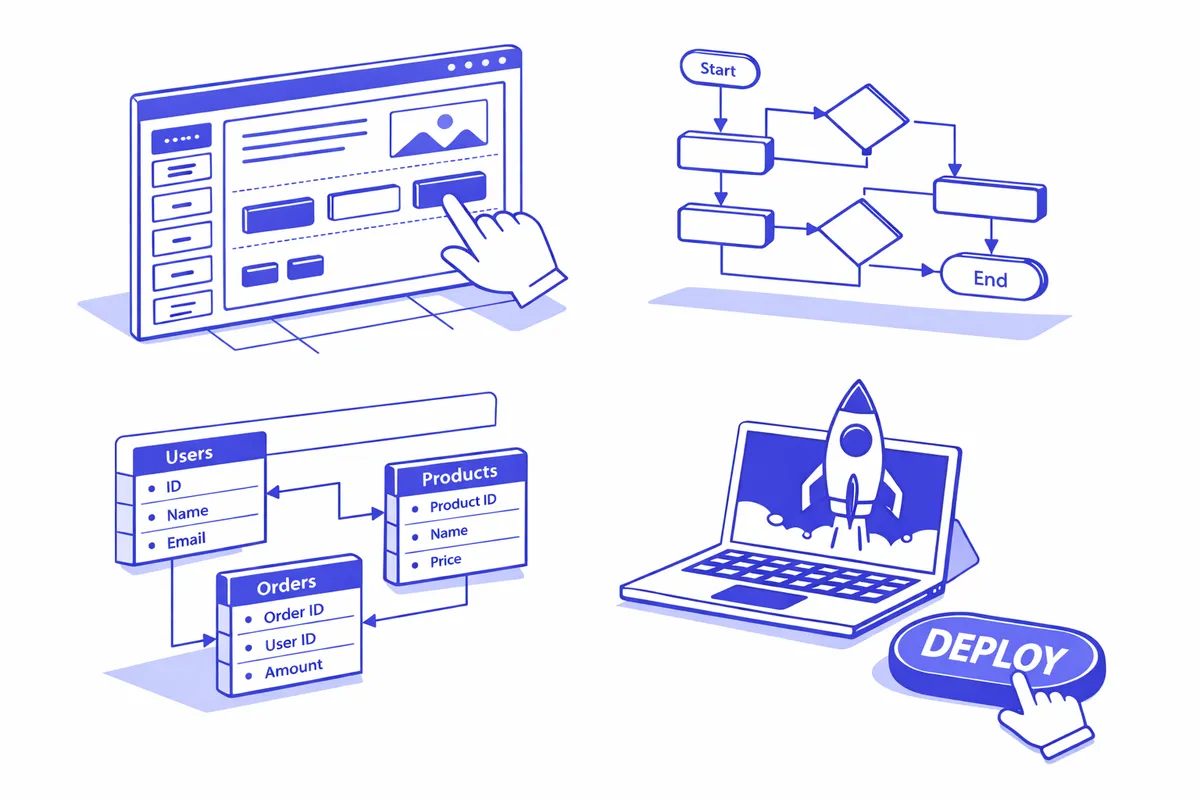
We design the data model on paper before building, wire in integrations with the systems already in use in your Bridgeport operation, and deliver the application with documentation and team training. Bridgeport businesses do not have IT departments. We build tools that your team can maintain without one.
Industries We Serve in Bridgeport
Contractors and Trades: Small contractors and specialty trades businesses working out of Bridgeport use Airtable and Glide for job management, subcontractor coordination, materials tracking, and client communication. The systems we build fit the irregular rhythms of construction project work rather than the linear workflows of software built for other industries.
Trucking and Logistics: Trucking companies and logistics operators in Bridgeport's commercial corridors use no-code for dispatch tracking, load management, driver scheduling, and the customer communication that enterprise logistics software overbuilds for small fleets.
Bars and Food Businesses: Restaurants, bars, and food businesses near Guaranteed Rate Field and along Halsted Street use Airtable for staff scheduling, inventory management, and the event-driven operational coordination that generic restaurant platforms do not support well for Bridgeport's specific event calendar.
Art Galleries and Cultural Venues: The Zhou B Art Center and Bridgeport's growing gallery community use no-code for exhibition management, artist relationship tracking, event coordination, and the community engagement programming that general purpose CRM platforms handle with structural assumptions poorly matched to arts organizations.
Civic and Community Organizations: Neighborhood organizations connected to Bridgeport's longstanding civic fabric use Airtable and Bubble for volunteer coordination, community event management, membership tracking, and program administration at budget levels that preclude enterprise software.
Family-Owned Service Businesses: Auto shops, cleaning services, and other family-owned service businesses along 31st Street use no-code to replace manual dispatch and scheduling systems with structured tools that give owners clear operational visibility without requiring them to adopt software built for much larger service companies.
What to Expect Working With Us
Process Audit and Platform Selection: We begin by working through your actual daily operational workflow, identifying where manual processes create the most drag, and recommending the platform that addresses your specific requirements without unnecessary complexity. For Bridgeport's trades and services economy, simpler is usually better, and we say so.
Data Model and Wireframes: We design the data architecture and map the core user flows before configuration begins. For job management and project coordination systems, this stage is particularly important: getting the relationship between jobs, subcontractors, materials, and clients right at the design stage prevents restructuring after the system is in use.
Build and Integration: We build to specification, integrate with your existing systems, and give you access to a working preview throughout the process. For Bridgeport businesses using QuickBooks, Square, or other common small business software, we wire in the integrations that eliminate manual data transfer between your no-code tool and your accounting or payment systems.
Training and Handover: We train your Bridgeport team on managing and extending the application and document the system in plain language that does not assume technical background. Bridgeport crews are capable of maintaining well-built tools. We build well-built tools.