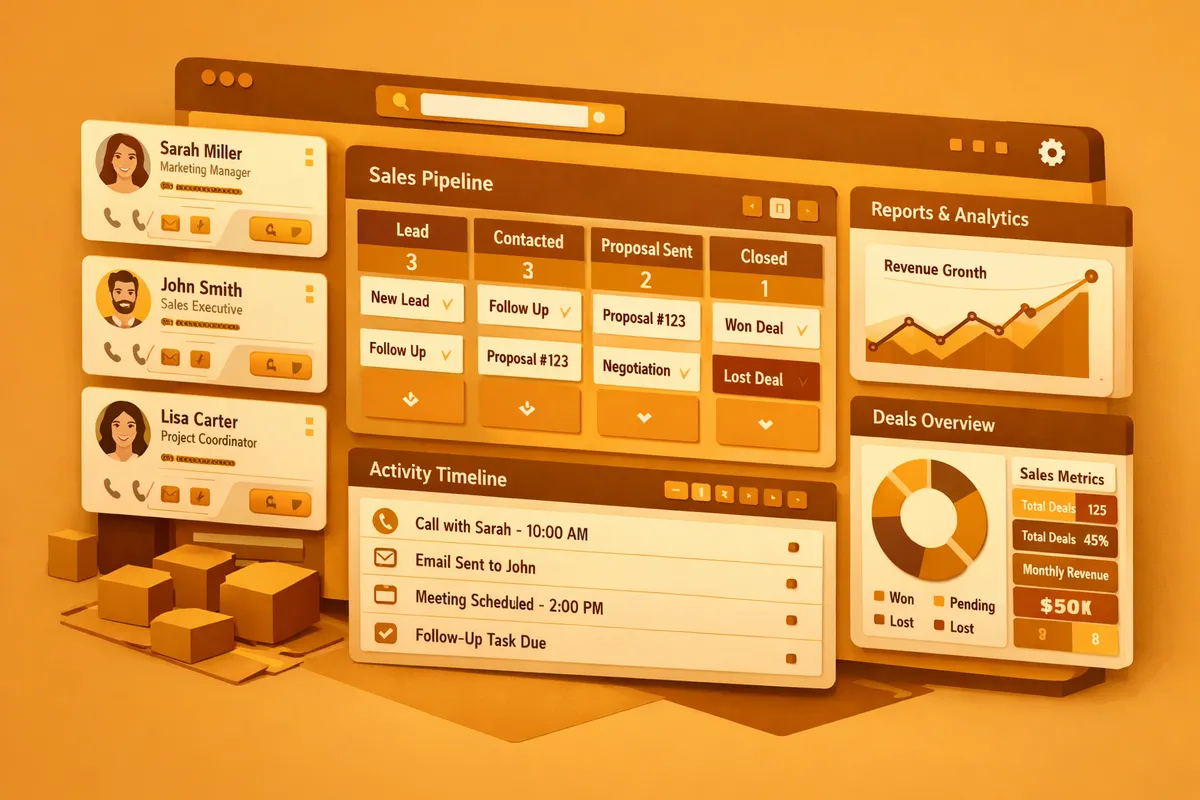
How We Build Custom CRM for Bridgeport
Discovery for Bridgeport CRM projects maps the actual relationship lifecycle for the specific business type. For a contractor, that means walking through the full client journey from initial referral to project completion and post-project relationship, surfacing the gaps where relationship information falls through. For a wholesale food business, discovery maps the account structure, order history requirements, pricing agreement tracking, and the relationship notes that separate a trusted supplier from a commodity vendor.
From discovery we design the data model for your specific business. For a Bridgeport contractor, the core object is a client record connecting referral source, job history with dates and scope, warranty tracking with alert dates, and a communication log. The workflow automation surfaces clients approaching warranty expiration, flags former clients without contact in twelve months, and tracks referral chains so the contractor knows which relationships are generating business.
For wholesale food businesses, the core object is an account record with order history by product category and season, pricing agreements, key buyer contacts, and relationship notes. The workflow automation surfaces accounts due for follow-up, alerts the rep when order volume drops below historical baseline, and tracks which buyers have tried which products so the rep can make informed recommendations.
We build in phases: core account management and relationship tracking first, then workflow automation, then integrations with billing or order management systems, then reporting dashboards. Bridgeport businesses have a working system within eight to ten weeks, with each subsequent phase adding capability without disrupting what is already in use.
Industries We Serve in Bridgeport
Residential and commercial contractors based in Bridgeport and serving the South Side manage client relationships that span years and generate referral chains that sustain the business. On Morgan Street and Archer Avenue, contractors with CRM systems that track post-project relationship maintenance alongside job history and warranty records generate more repeat business and referrals than those who move on to the next job without a systematic follow-up process.
Family restaurants and food service businesses along Halsted Street and 35th Street need guest relationship management that captures visit history, preference notes, and the regulars who define the restaurant's community. A family restaurant near Palmisano Park that knows its regulars by name, preference, and occasion history delivers a guest experience that builds loyalty in a way that transaction records alone cannot.
Wholesale food distributors and specialty food suppliers serving Bridgeport's diverse restaurant community need buyer relationship management organized around account order history, product preferences, seasonal purchasing patterns, and pricing agreements. When a sales rep on 35th Street knows each buyer's ordering patterns before making a call, every sales interaction starts from relationship context rather than a blank product pitch.
Trucking companies and logistics businesses in the industrial corridor near the Chicago River manage carrier relationships, shipper accounts, and broker contacts across a relationship network that generic CRMs do not model. A custom CRM for a Bridgeport trucking operation tracks lane history, rate agreements, carrier performance, and the relationship contacts at each account so the operations team can make informed decisions quickly.
Arts organizations and cultural businesses connected to the Zhou B Art Center and Ramova Theatre manage patron and collector relationships that require a data model reflecting the complexity of arts patronage: individual donors, corporate sponsors, collectors, community supporters, and the event and exhibition history that defines each relationship. A generic contact database cannot model this relationship landscape; a custom CRM can.
Auto service and specialty repair businesses on Halsted Street manage repeat customer relationships where knowing a vehicle history, a customer's communication preferences, and outstanding warranty or service items creates a materially better service experience. A custom CRM for an auto shop tracks vehicle history alongside customer relationship history, so every service interaction is informed by complete context.
What to Expect Working With Us
1. Discovery interviews. Two weeks of structured conversations with you and your key staff. We document every relationship type you manage, every data point your team needs to maintain those relationships effectively, and every place where relationship intelligence currently lives outside any system. For Bridgeport contractors and food businesses, this almost always surfaces significant relationship knowledge living in staff memory with no systematic backup.
2. Data model and architecture. We design the CRM objects, fields, workflows, and integration architecture before writing code. For a contractor, that design includes the client record, job history, warranty tracking, and referral chain structure. You review and approve the design before development begins, so the system reflects your actual business rather than a generic template.
3. Phased implementation. Core relationship management live within eight to ten weeks. Subsequent phases add workflow automation, integrations, and reporting. Your team uses the system from the first phase and builds habits around the core features before additional complexity is layered in.
4. Training and adoption. Role-specific training for each team member, adoption monitoring for ninety days, and iteration based on what the team actually uses. A CRM that does not get used consistently does not deliver value regardless of how well it is built.