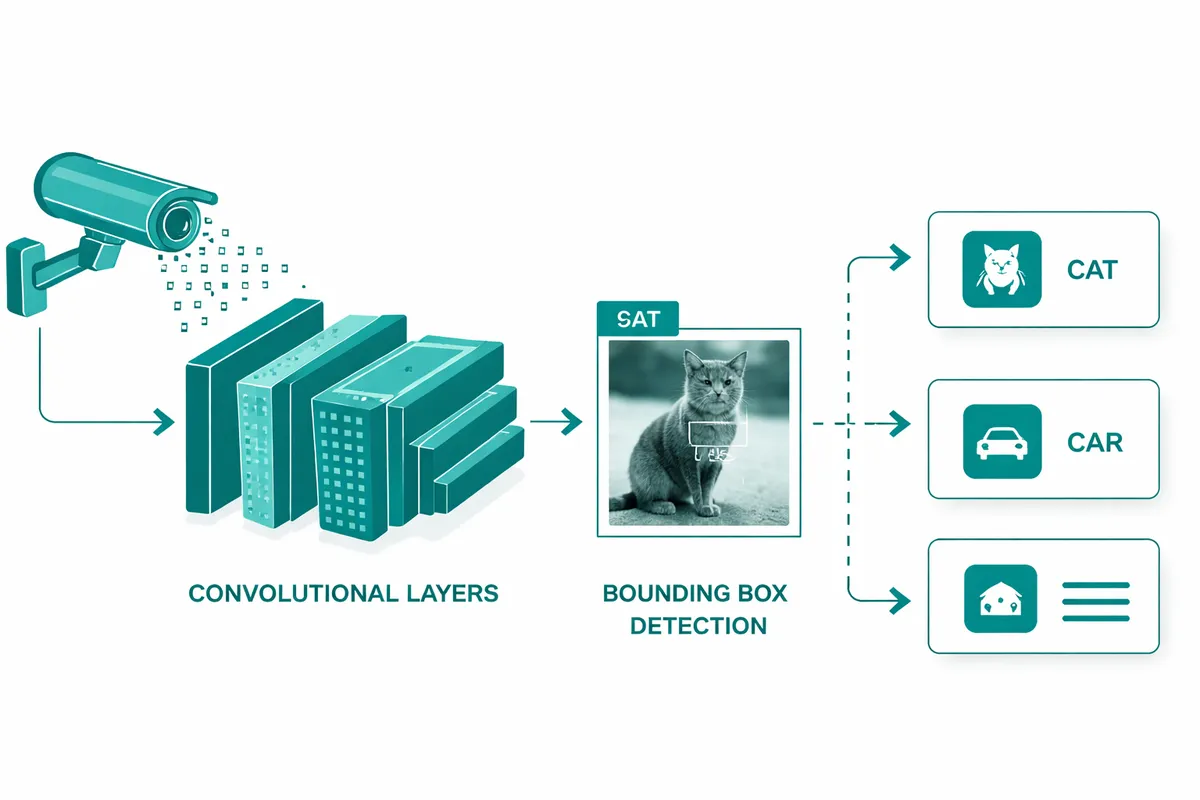
How We Build Computer Vision in Bridgeport
We start with an operational assessment: which visual tasks consume the most staff time, which quality issues cost the most money, and which monitoring gaps create the most risk. For a Halsted Street hardware store, the highest-value applications are typically inventory monitoring and loss prevention. For a 31st Street restaurant, they are kitchen quality control and pre-game traffic management. We design the deployment around your specific highest-impact applications rather than building a generic system that does many things adequately and nothing exceptionally.
Camera infrastructure review comes next. Most Bridgeport businesses already have security cameras installed. We assess existing coverage and identify where gaps exist for the specific monitoring applications we are deploying. We connect to your existing infrastructure wherever possible to minimize hardware costs, recommending new camera placement only where existing coverage cannot support the required monitoring.
Model training follows hardware setup. A computer vision model trained on a generic grocery shelf cannot accurately monitor a hardware store's fastener aisle. A model trained on restaurant portion standards from a corporate chain cannot evaluate portions at a Bridgeport neighborhood restaurant with its own recipes and presentation standards. We train each model on your specific environment: your products, your layout, your operational patterns, your quality standards. Calibration runs against real operations before we declare the system live.
Staff training is the final phase. The most technically accurate computer vision deployment fails if the team does not know how to interpret and act on what it tells them. We train staff on reading alerts, understanding confidence thresholds, and distinguishing between alerts that require immediate action and those that flag patterns to review. The goal is a system that integrates into your existing operation rather than creating a new operational burden.
Industries We Serve in Bridgeport
Restaurants and bars along 31st Street and Morgan Street deploy computer vision for kitchen quality monitoring, portion consistency tracking, and customer traffic analysis that informs staffing decisions around White Sox home games at Guaranteed Rate Field. Traffic pattern monitoring near 35th Street gives kitchens 30 to 45 minutes of lead time before pre-game surges arrive, enough time to stage additional prep rather than scrambling once the crowd appears. Portion monitoring catches inconsistencies across all shifts, not just when the owner or head chef is present, ensuring that the food a customer receives on a Tuesday night matches what they got on Saturday.
Hardware and retail shops on Halsted Street use visual inventory monitoring to track shelf levels in real time across thousands of SKUs. A store that previously spent four hours per week on manual counts eliminates that process, receiving automated low-stock alerts throughout the day so restocking happens proactively. Loss prevention monitoring identifies patterns that indicate shrinkage before end-of-month inventory reconciliation reveals the full cost. Customer flow analysis identifies which aisles and product sections draw the most attention, informing merchandising and product placement decisions.
Butcher shops, bakeries, and specialty food businesses near 31st Street and Archer Avenue use computer vision for portion control, food safety compliance monitoring, and quality verification across preparation stations. A butcher with consistent cut-weight standards can deploy visual weight estimation to flag portions outside tolerance before they leave the prep area. Bakeries track production output against daily goals and monitor cooling and storage conditions visually without staff needing to check by hand.
Trucking companies and contractors near Archer Avenue use visual monitoring for fleet parking and equipment tracking, job site safety compliance, and work quality documentation. Before-and-after visual records of completed work protect the business in disputes and verify quality standards across jobs performed by different crews. Safety monitoring flags potential hazard conditions on job sites before they result in incidents.
Property managers and building services businesses throughout the neighborhood deploy visual monitoring across multiple sites without requiring physical presence at each location. Common area monitoring flags maintenance issues before they escalate to tenant complaints. Access point monitoring provides security documentation. Equipment room monitoring catches mechanical issues visually before they become emergency repairs.
Community-facing service businesses near Palmisano Park and the Richard J. Daley Library corridor use traffic and occupancy monitoring to manage service capacity and staffing efficiently. Visual occupancy counts inform cleaning schedules and facility management without manual counts.
What to Expect Working With Us
1. Operational assessment and priority mapping. We identify the visual tasks that save the most time or reduce the most risk for your specific business. For a Halsted Street hardware store, that is usually inventory monitoring and loss prevention. For a 31st Street restaurant, it is kitchen quality control and customer flow management. We design the deployment around the highest-impact applications first, building a clear ROI case before any hardware is installed.
2. Camera infrastructure review and hardware specification. We assess your existing camera coverage and identify gaps. Where existing cameras can support the monitoring applications we are deploying, we connect to them. Where gaps exist, we specify the minimal additional hardware needed and handle installation coordination. Most Bridgeport businesses need fewer new cameras than they expect because existing security infrastructure covers substantial ground.
3. Model training and calibration. We train AI models on your specific products, layout, and quality standards. Calibration runs against your real environment over a two-week period before we declare the system accurate. We publish accuracy benchmarks before go-live so you know exactly what confidence level to expect.
4. Deployment, staff training, and operational integration. We deploy the system, configure alerts and dashboards for your team's workflow, and train staff on how to interpret and act on what the system reports. The goal is immediate operational value from day one, not a technically impressive system that requires expertise to use. Monthly check-ins during the first quarter ensure the system is delivering the results we projected.