How We Build Business Process Automation for Bridgeport
Every engagement starts with a process walk. For a Bridgeport contractor, that means following a job from estimate request through final invoice, noting every time a human decision is required and every time a human is just moving information from one place to another. The second category is automation territory. The first category is where the business adds value, and automation should protect that time, not compete with it.
We map the current process in plain language before we draw any workflows. What triggers the process? What information does each step need? Who needs to be notified when a step completes? Where do errors typically occur and how does the business catch them? For a trucking dispatcher on Archer Avenue, that map might reveal that sixty percent of their day is spent on tasks a properly configured system could handle without any human involvement.
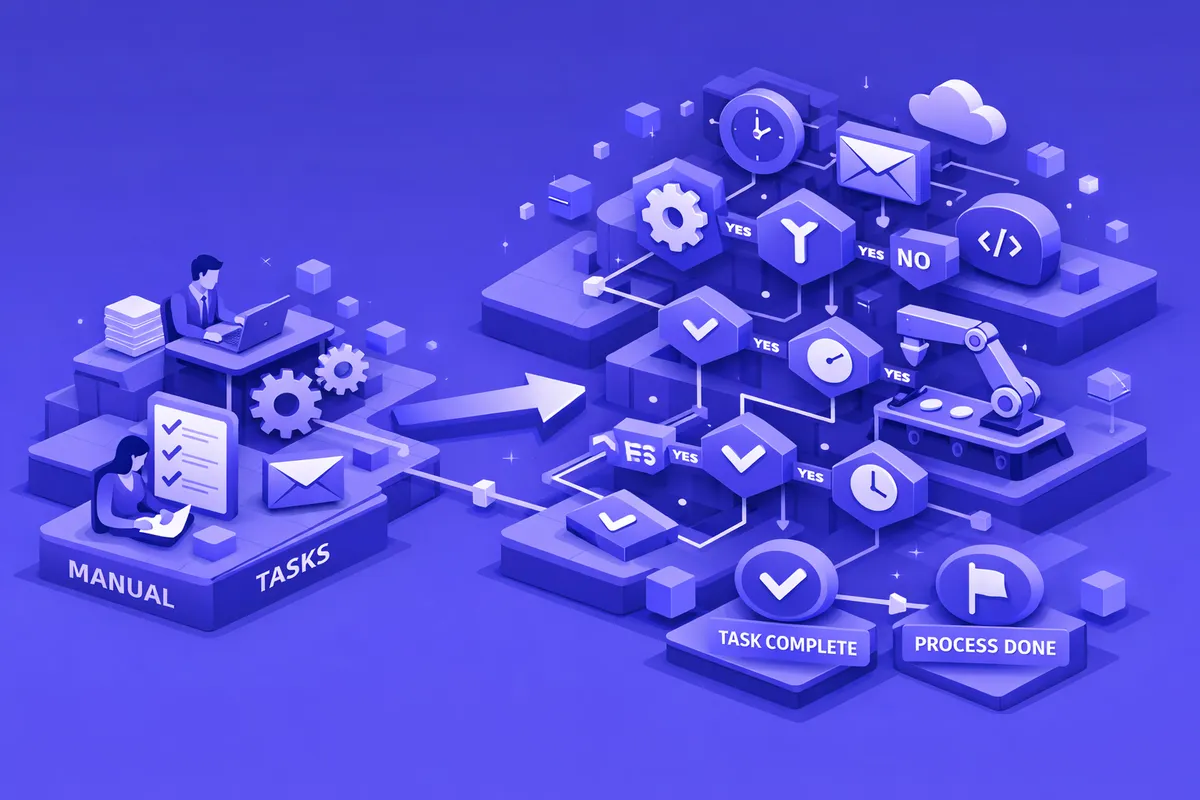
From the map, we build in layers. First, the integrations: connecting the systems the business already uses so information does not need to be re-entered. Then, the automation logic: rules that trigger actions based on events without requiring anyone to initiate them manually. Then, the exception handling: what happens when something does not match the expected pattern, and who gets notified so a human can intervene. The system handles the routine. The humans handle the exceptions.
Industries We Serve in Bridgeport
Contractors and construction firms operating out of Morgan Street and the surrounding blocks automate job onboarding, daily crew scheduling, materials ordering, and progress reporting. When a subcontractor completes a phase, the next trade is automatically notified, the project manager gets a status update, and the customer receives a milestone confirmation. None of those notifications require a phone call.
Family-owned restaurants and taverns near Guaranteed Rate Field use process automation to manage the pre-game prep cycle that defines their weekly operations. Inventory reorder triggers fire automatically when stock drops below threshold. Staff scheduling requests route through a workflow that tracks availability and approvals without a manager building a spreadsheet from scratch. Event catering orders move through a checklist that every department sees in real time.
Trucking and freight companies along the Archer Avenue corridor automate load assignment, driver communication, proof-of-delivery capture, and customer invoicing. A delivery confirmed via a driver's phone photo triggers the invoice automatically. No one needs to transfer data from a delivery log to an accounting system by hand.
Butcher shops and specialty food businesses on Halsted Street automate supplier ordering based on sales velocity and seasonal patterns. During the run-up to holidays like Chinese New Year, which brings substantial foot traffic from Chinatown neighbors, the system increases reorder quantities automatically without the owner manually adjusting every line item.
Art galleries and event spaces anchored by the Zhou B Art Center on 35th Street automate intake for show applications, exhibition scheduling, and artist communication. A submitted application triggers a review workflow. An approved show triggers the calendar hold, the contract generation, and the artist notification without anyone managing the sequence manually.
Small property managers and landlords scattered across Bridgeport's residential and mixed-use blocks automate tenant communication, maintenance request routing, lease renewal workflows, and rent collection reminders. A maintenance request submitted by a tenant automatically creates a vendor work order, routes it to the appropriate contractor, and notifies the tenant when the job is scheduled.
What to Expect Working With Us
1. Process audit before any configuration. We spend the first week documenting how your business actually operates, not how the manual describes it. The gap between those two things is usually where the biggest automation wins hide.
2. Quick-win deployment first. Rather than rebuilding your entire operation at once, we identify the two or three processes with the highest manual burden and automate those first. Bridgeport businesses see tangible time savings within thirty days of the engagement starting.
3. Integrated rollout around your calendar. If your business slows down in February between the end of football season and the start of baseball season, that is your implementation window. We schedule the heavier training and testing phases when the business can absorb the learning curve.
4. Documentation you actually keep. At the end of implementation, you get plain-language documentation of every automated workflow, written for the person who will manage it day to day, not for the person who built it. When your dispatcher or manager changes, the next person can understand the system without calling us.