How We Build Autonomous Workflow Agents for Bridgeport
Our process begins with a workflow audit specific to your Bridgeport business. We spend one to two weeks observing your actual work: which emails consume the most time, which administrative tasks feel most repetitive, which spreadsheets are maintained manually, which customer communications follow predictable patterns. We are looking for workflows that are high-volume and rule-based with clear decision logic. For a contractor, that is typically bid inquiry responses, initial project scheduling, and invoice generation. For a gallery, that is artwork inventory updates, collector inquiry responses, and exhibition scheduling communication. For a restaurant, that is reservation confirmation, catering inquiry triage, and supplier reorder communication.
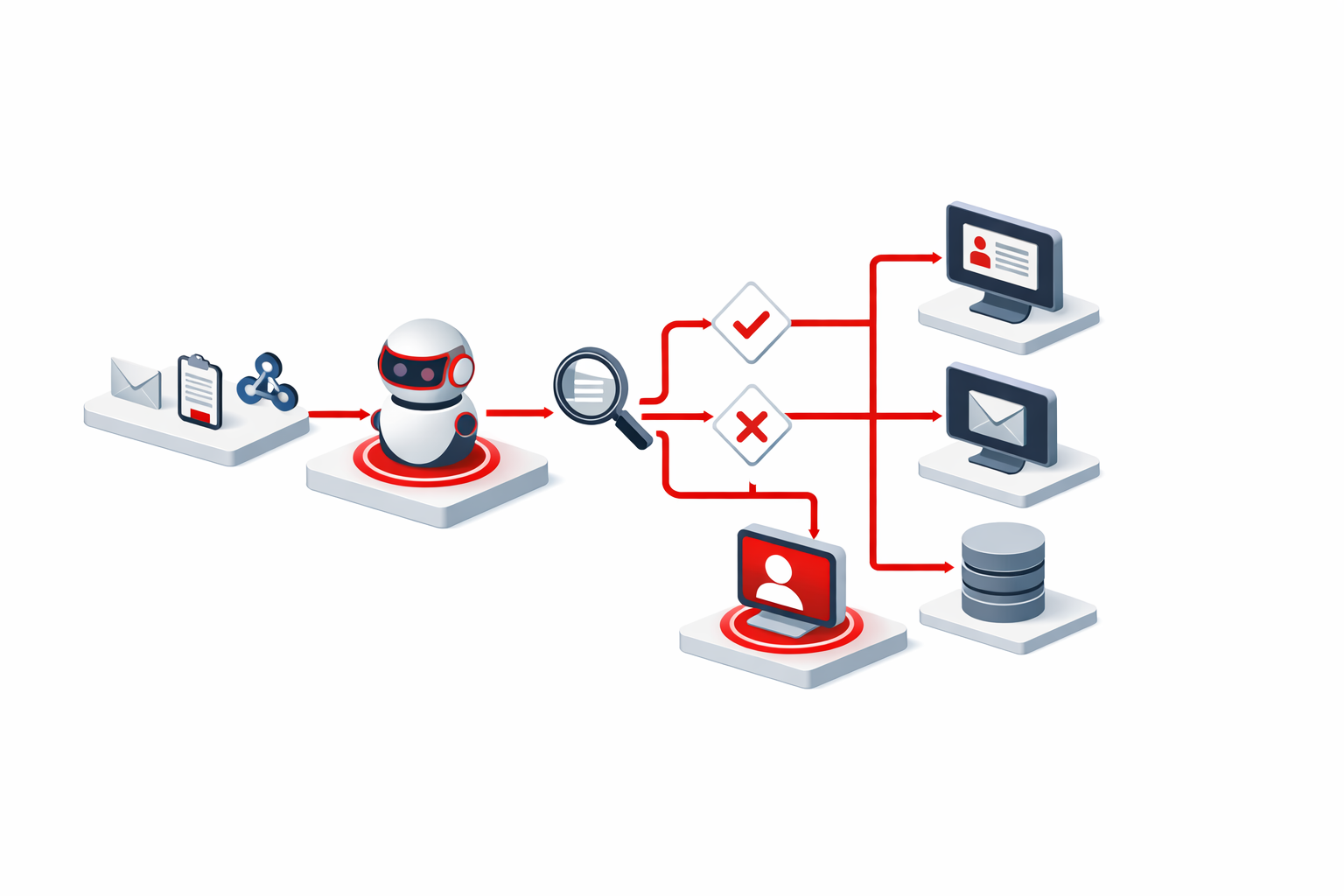
For each identified workflow, we map the decision logic in detail. An email agent needs to know which inquiry types get which response templates, which situations require human escalation immediately, and what information to capture from the inquiry before routing. An invoicing agent needs to know the trigger conditions for invoice generation, the line item logic for different service types, the payment terms by client type, and the follow-up sequence for overdue invoices. A scheduling agent needs to know availability rules, lead time requirements, team assignment logic, and conflict resolution procedures.
We then build and train agents using your actual historical data. We test agents against your past emails, invoices, and scheduling decisions so you can see how they would have handled real situations before going live. We run agents in a supervised mode initially, where their work is reviewed before it goes out, and move to autonomous operation as accuracy and judgment improve. Most Bridgeport businesses find that agents reach autonomous operation within six to eight weeks on their primary workflows.
The most effective agent implementations are the ones that feel invisible: the administrative work simply happens reliably in the background while the operator focuses entirely on the relationships, judgment, and quality that define their business.
Industries We Serve in Bridgeport
General contractors and construction companies operating from Bridgeport's industrial corridor use autonomous agents to categorize and respond to bid inquiries, schedule initial site visits, generate project quotes from estimate inputs, send invoices upon job completion, and follow up on payment so contractors focus entirely on active job site management and client relationship work.
Family restaurants and food businesses along Halsted Street, 31st Street, and near Guaranteed Rate Field deploy agents for reservation confirmation, catering inquiry response and triage, waitlist management, and post-visit customer follow-up so owners and managers focus on in-person service quality rather than communication volume during peak service hours.
Art galleries and artist studios near the Zhou B Art Center and throughout Bridgeport use agents for artwork inventory management across catalog and website platforms, collector inquiry response and appointment scheduling, exhibition announcement distribution, and sales inquiry triage so gallery directors focus on artist relationships, acquisition judgment, and exhibition programming.
Specialty food retailers and butchers serving Bridgeport's multi-ethnic community use agents for supplier reorder communication when inventory drops below threshold, customer order confirmation and pickup notification, and routine customer inquiry response so shop owners focus on product sourcing quality and customer relationships rather than communication management.
Auto repair and home service shops deploy agents for appointment scheduling, service inquiry response, invoice generation upon job completion, and customer follow-up for satisfaction and review requests so technicians and service advisors focus on the repair and service work without being pulled away by phone and email management.
Community nonprofits and cultural organizations serving Bridgeport use agents for program registration processing, volunteer coordination communication, event scheduling confirmation, and routine donor acknowledgment so program directors focus on mission delivery and community relationships rather than administrative volume.
What to Expect Working With Us
1. Workflow audit and prioritization. We document your most time-consuming administrative tasks over one to two weeks of observation and interview. We identify which workflows are strongest candidates for automation based on volume, repetitiveness, and clarity of decision logic. We prioritize by time impact so the first agents we build deliver the most meaningful relief.
2. Agent design and logic mapping. We document the complete decision logic for each workflow: which conditions trigger which responses, which situations escalate to humans, what information needs to be captured and how. We map this logic in plain language and review it with you before building anything, so you know exactly how agents will make decisions on your behalf.
3. Agent training and supervised testing. We build agents using your historical data, test them on past examples, and run supervised operation where agent work is reviewed before going out. We provide accuracy reports and iterate until agents match your standards before moving to autonomous operation.
4. Deployment and continuous improvement. We deploy agents to live workflows with monitoring in place. Most Bridgeport businesses see agents improve meaningfully in the first sixty days as they process more actual work and receive corrections. We provide ongoing refinement based on real performance and expand to additional workflows as confidence in agent judgment grows.