How We Build Accounting Automation for Bridgeport
The first thing we do is sit with you and walk through every place money enters and leaves your business. For a Bridgeport trucking company on Archer Avenue, that might mean fuel cards, fleet maintenance vendors, carrier payments, and customer invoicing across a dozen accounts. For a restaurant on 35th Street, it means POS integration, vendor ACH, payroll, and sales tax remittance. We map every flow before we configure anything.
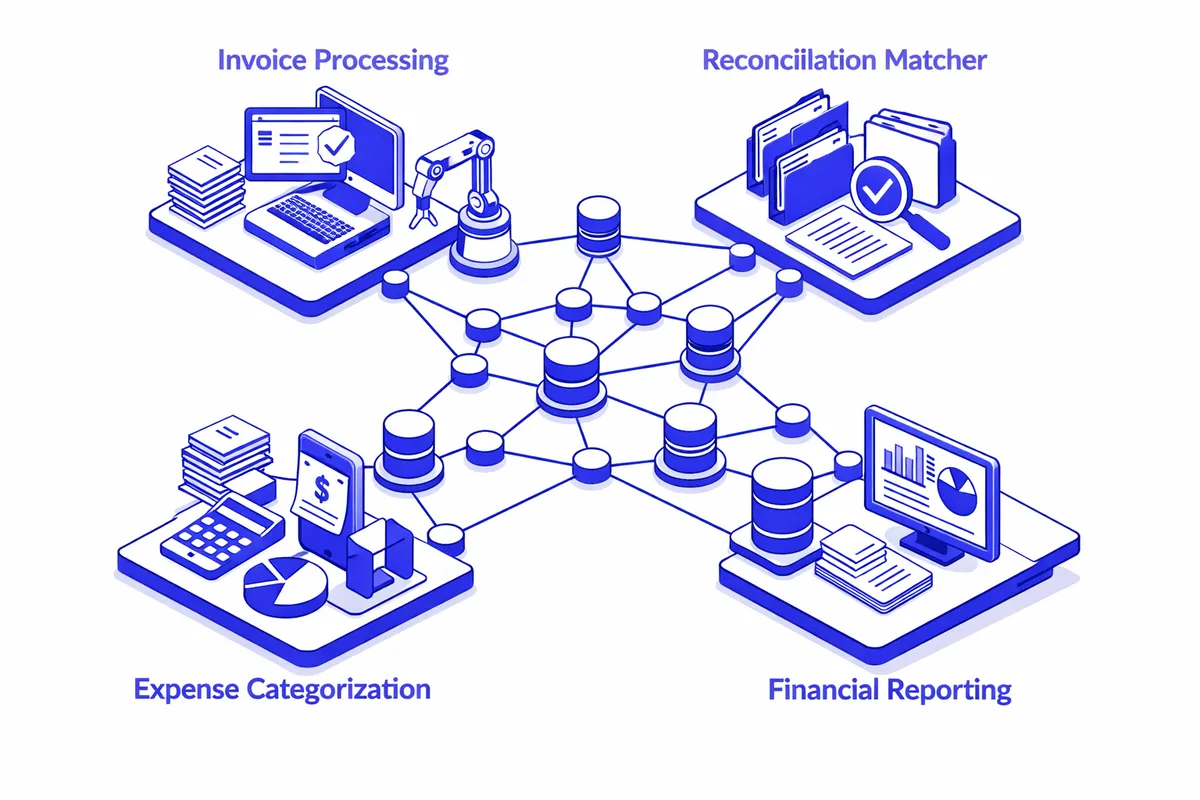
From that map, we build the automation layer. Bank feeds connect to your accounting platform and categorize transactions using rules we configure around your actual vendor list and expense categories. Invoice capture pulls data from photos of paper invoices, PDFs from email, and EDI feeds from larger suppliers. Payroll entries post automatically when your pay runs complete. The result is a ledger that stays current throughout the month, not one that gets rebuilt every thirty days.
We run a parallel period before going live. Your books are kept both ways for thirty days so you can see exactly where the automation is capturing the same data your manual process captured, and where it is catching things that used to fall through. Most Bridgeport businesses find the automation catches more than it misses, particularly around small recurring expenses that were being coded inconsistently or not coded at all.
Industries We Serve in Bridgeport
Small contractors and construction firms working the South Side run complex job-cost accounting that spreadsheets cannot handle cleanly. A contractor operating out of Morgan Street with multiple concurrent projects needs job-level profit and loss without manually allocating every receipt. We configure project-based accounting so every cost tracks to a job, every invoice posts to the right account, and the contractor sees margin by project before invoicing the customer.
Family restaurants and bars near Guaranteed Rate Field face the sharpest cash flow swings in the neighborhood. Accounting automation connects POS daily close data, weekly supplier invoices, and labor costs into a rolling view of restaurant economics that the owner can check on a phone. The Zhou B Art Center events a few blocks north on 35th bring similar volume spikes for nearby bars and food businesses, and automated reconciliation handles those swings without extra work.
Trucking and logistics companies along the Archer Avenue freight corridor manage accounts payable volume that grows with every new carrier relationship. Automation handles the three-way match between purchase orders, delivery confirmations, and vendor invoices, flagging discrepancies before payment instead of discovering them months later during audit.
Butcher shops and specialty food retailers on Halsted Street manage perishable inventory with tight margins and constant supplier price changes. Automated cost tracking connects purchasing to inventory so the shop owner knows exactly what they paid per pound versus what they sold it for, without a separate spreadsheet that is always one week behind reality.
Art galleries and studios near the Zhou B Art Center deal with consignment accounting that most off-the-shelf systems handle badly. Automation handles the split between artist proceeds and gallery revenue, tracks consignment inventory separately from owned inventory, and generates the artist payment summaries that used to take a full afternoon to produce.
Property management and small real estate operations scattered across the Bridgeport blocks between 31st Street and Archer automate rent collection, maintenance expense tracking, and owner disbursements. The automation reduces the month-end close from a multi-day process to a two-hour review.
What to Expect Working With Us
1. Flow mapping and system selection. We document every financial flow in your business before recommending any software. Bridgeport businesses often run on a mix of legacy tools, and we work with what you have where possible rather than forcing a complete replacement on day one.
2. Parallel implementation. We run automated and manual processes side by side for thirty days. This is not a hedge. It is how you build confidence in the system before handing it the books entirely. Game-day volume spikes, seasonal supplier pricing, and irregular payroll cycles all get tested during this period.
3. Staff training built around your schedule. Training sessions are scheduled around the rhythms of your business. We do not ask a restaurant to train on a Saturday game day. We build the training calendar around your slow periods so the learning does not cost you revenue.
4. Monthly close review for the first quarter. After go-live, we review your first three monthly closes with you to catch any transaction types that need rule adjustments and to make sure the reports you care about are giving you clean numbers. After the quarter, the system runs on its own with annual check-ins.