How We Build RAG Systems for Beverly
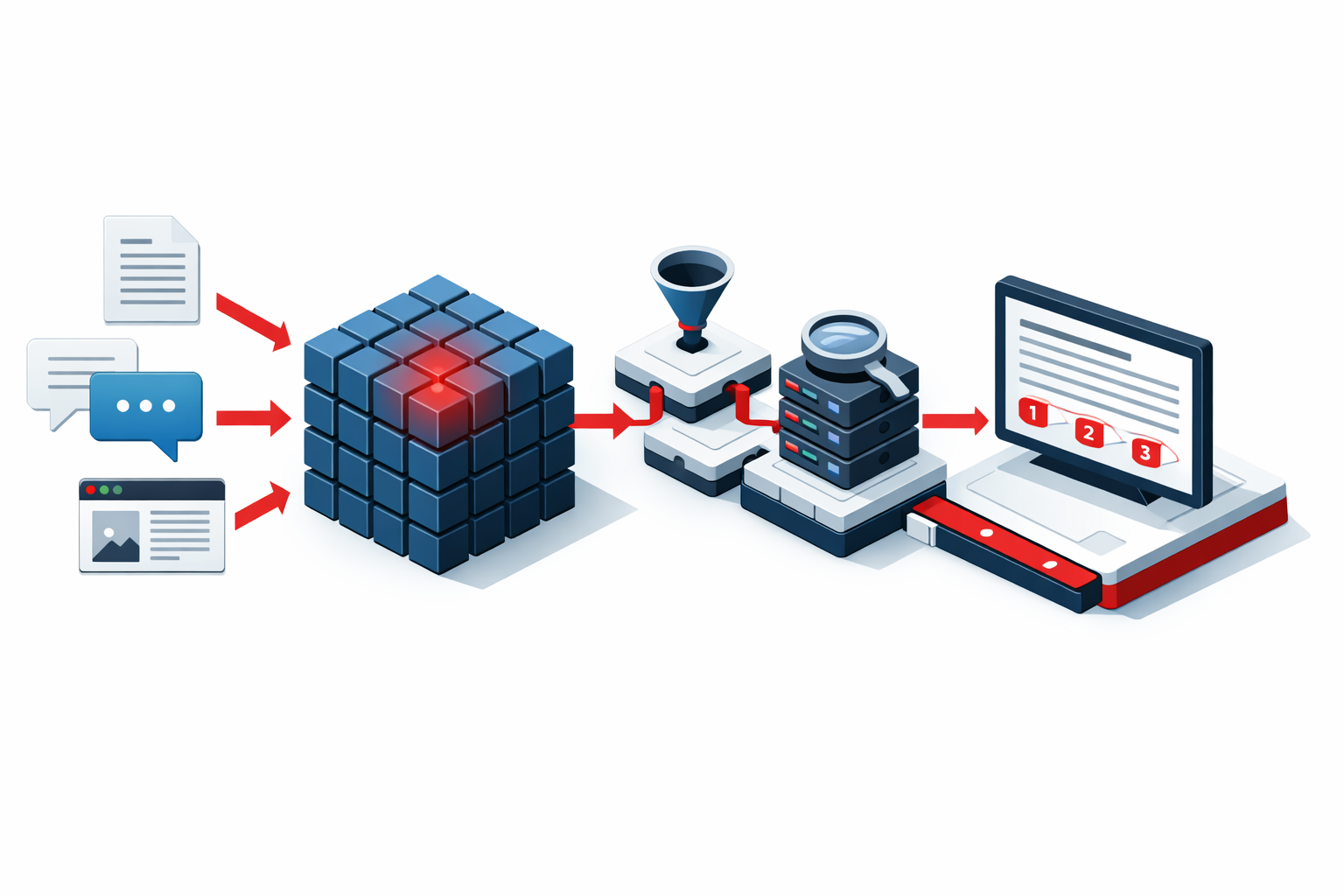
We begin by inventorying your knowledge assets. For a law firm, that includes case files, research memos, contract templates, client correspondence, and procedural guides. For a medical practice, it includes clinical protocols, patient education materials, documentation standards, and administrative procedures. For an accounting firm, it includes client advisories, regulatory interpretations, engagement procedures, and tax strategy documentation. We assess the volume, format, and quality of available materials to determine what is suitable for RAG indexing.
We build the document processing pipeline that prepares your materials for retrieval. Documents need to be converted to searchable text, organized into meaningful segments, and indexed with appropriate metadata so the retrieval system can find the right content when a question is asked. For a Beverly law firm with 30 years of mixed-format files, this preparation phase is significant and must be done carefully to ensure retrieval accuracy.
We design and build the retrieval system and the AI interface that answers queries. When a staff member asks the RAG system "how have we handled non-compete clauses in Illinois employment agreements," the system retrieves the relevant contract sections, memos, and notes from the knowledge base and uses them to answer the question accurately and specifically. The answer cites the source materials so the staff member can review the underlying documents if needed.
We test retrieval quality extensively before deployment. A RAG system that retrieves irrelevant documents or misses relevant ones produces incorrect or incomplete answers that can cause real harm in a professional services context. We evaluate retrieval precision and recall against a test set of questions drawn from your actual practice before the system goes live with your staff.
Industries We Serve in Beverly
Law firms and legal practices on Western Avenue and 95th Street build RAG systems from case files, research memos, contract libraries, procedural guides, and client correspondence, creating an AI assistant that can answer questions about how the firm has handled specific legal situations using the firm's own documented work product.
Medical and dental practices near Ridge Park and 103rd Street build RAG systems from clinical protocols, patient education materials, documentation standards, and administrative procedures, creating an AI assistant that staff can query for practice-specific guidance rather than relying on generic medical resources.
CPA and accounting firms serving Beverly's professional families build RAG systems from client advisories, regulatory interpretations, engagement procedures, and tax strategy documentation, creating an AI assistant that can answer questions about the firm's approach to specific client situations using the firm's own accumulated expertise.
Insurance agencies along Longwood Drive and Wood Street build RAG systems from policy files, claims analyses, coverage interpretations, and underwriting notes, creating an AI assistant that agents can query for guidance on specific coverage situations using the agency's documented experience.
Real estate offices serving Beverly and neighboring Morgan Park and Mount Greenwood build RAG systems from market analyses, transaction records, neighborhood documentation, and client correspondence, creating an AI assistant that agents can query for local market intelligence using the firm's accumulated South Side expertise.
Boutique retail and restaurant businesses near the Beverly Arts Center and Horse Thief Hollow build RAG systems from supplier records, operational procedures, product knowledge documentation, and customer service guides, creating an AI assistant that staff can query for operational guidance using the business's own documented standards.
What to Expect Working With Us
1. Knowledge asset inventory. We catalog your existing documents, assess their format and quality, and determine what is suitable for RAG indexing. We identify materials that should be updated or standardized before indexing to ensure they produce reliable retrieval results.
2. Document processing and indexing. We convert, clean, and index your materials into the retrieval system. For practices with large historical document libraries, this phase takes four to eight weeks. We report progress and surface any quality issues we encounter in the source materials.
3. RAG system build and testing. We build the retrieval system and AI interface, then test retrieval quality extensively against real questions your staff would ask. We refine the system until retrieval accuracy meets the threshold appropriate for professional practice use.
4. Deployment and staff training. We deploy the RAG system with interfaces appropriate for your team and train staff on how to query it effectively. We monitor usage and retrieval quality for 60 days after deployment and make refinements based on actual usage patterns.