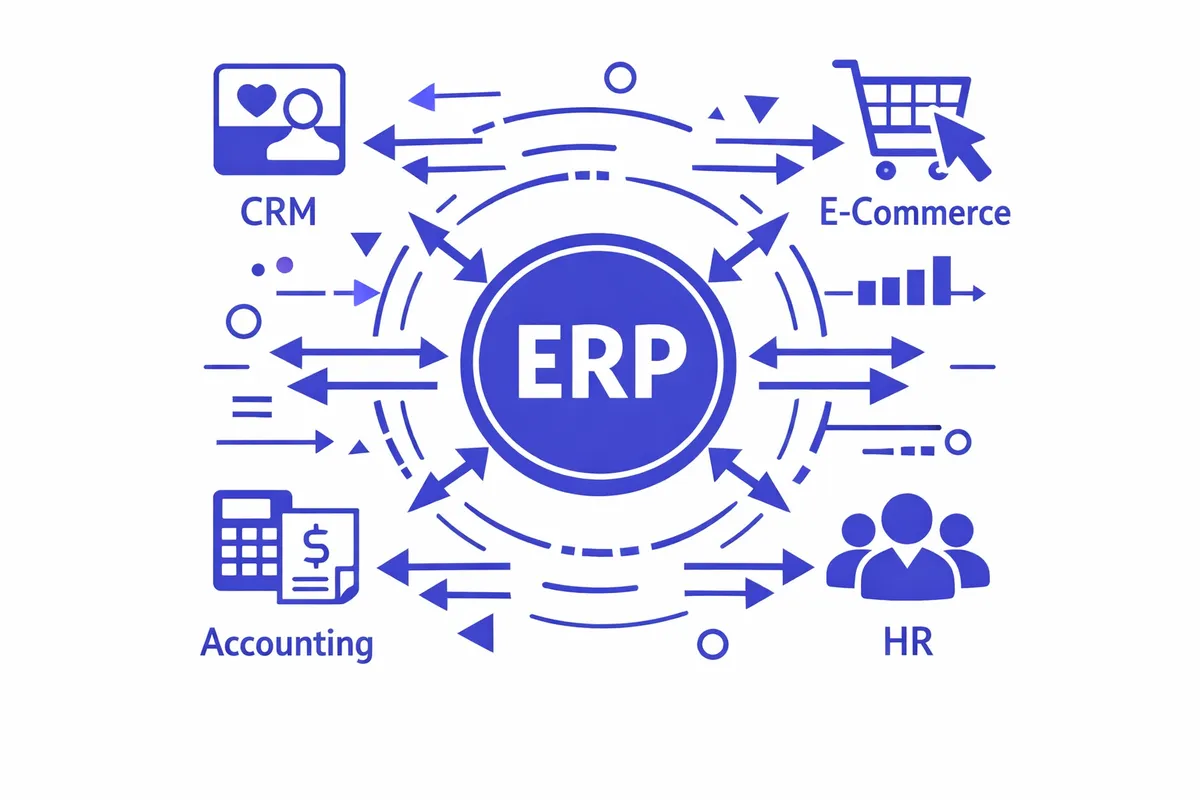
How We Build ERP Integration for Beverly
We start by mapping your current systems: what you have, what each system owns, what data needs to move between them, and where the current manual processes indicate the missing connections. For a Beverly medical practice, this typically means understanding the relationship between clinical scheduling, patient billing, insurance reconciliation, and practice accounting. For a law firm, it means mapping matters, billing, trust accounts, payroll, and general ledger.
From that map, we design the integration architecture: which systems connect directly, which require middleware to translate between different data formats, where real-time sync is necessary versus daily batch processing, and how error handling works when upstream systems produce incomplete or inconsistent data. This design phase produces a documented integration plan that your team can review before any development begins.
Implementation is modular. We build the highest-priority connection first, typically the one generating the most manual work for your team. A Beverly medical practice might start with automating the flow from billing to accounting. A law firm might start with matter billing into QuickBooks. Each completed module delivers immediate value while the next phase is in development.
We test against real data from your systems before any integration goes live, and we build monitoring into every connection so your team knows when a sync completes, when volumes are outside expected ranges, and when errors occur.
Industries We Serve in Beverly
Family medical practices along 95th Street and 103rd Street operate billing systems, EHR platforms, and accounting tools that rarely share data natively. We connect these layers so patient billing flows to accounting automatically, insurance reconciliation updates your financial records without manual entry, and practice-level financial reporting reflects current data.
Law firms and solo practitioners on Wood Street and throughout Beverly rely on legal practice management platforms that do not connect natively to general accounting, trust account management, or HR systems. We build the connectors that move billing data to QuickBooks, synchronize trust account transactions, and keep payroll records current without manual extraction.
CPA and financial services offices near Beverly Arts Center often run practice management tools alongside accounting platforms with limited integration. We connect client records, billing data, and document management to the ERP or accounting system at the center of their operations.
Insurance agencies along Western Avenue manage carrier relationships, policy administration, and business accounting in separate platforms. We connect agency management systems to accounting and CRM tools so policy activity flows to financial records without manual reconciliation.
Boutique professional services firms on 111th Street and across Beverly that have grown into multi-staff operations typically find that the tools they started with no longer connect to the ERP or accounting platform they added as they scaled. We build those connections from the existing system outward.
Healthcare specialists and therapy practices near Walker Branch Library run scheduling, documentation, and billing in clinical platforms that were not designed with accounting integration in mind. We map the billing-to-accounting connection and build it for your specific combination of tools.
What to Expect Working With Us
1. Systems audit. We document every platform your business currently uses: what data each system owns, what manual transfers currently happen between them, and where the highest-friction integration gaps are. For Beverly practices with legacy platforms, we review API availability and fallback options before scoping any work.
2. Integration design. We produce a documented architecture showing exactly how your systems will connect, what data flows in each direction, how errors surface, and what the monitoring looks like. You approve this before development begins.
3. Phased build. We implement the highest-priority integration first, typically live within six to ten weeks. Subsequent connections build on the same infrastructure without disrupting what is already running.
4. Monitoring and support. Every integration includes automated monitoring so your team knows when syncs complete and when errors occur. We provide a warranty period after launch and optional maintenance retainers for ongoing changes.