How We Build Employee Portals for Beverly
We begin with a workflow mapping session that distinguishes between the professional services employers and the neighborhood commercial employers in Beverly, because their HR needs diverge significantly. For a law firm on Western Avenue, the mapping centers on credential tracking architecture: which credentials each role requires, what the renewal cycle looks like, and who needs visibility when an expiration is approaching. For a medical practice on 103rd Street, it means mapping the intersection of clinical credentialing, HIPAA training documentation, and the scheduling complexity of a practice with multiple provider types. For a CPA office navigating tax season, it means understanding the seasonal hiring cycle, what the temporary staff onboarding looks like, and what documentation needs to survive the off-season for regulatory purposes.
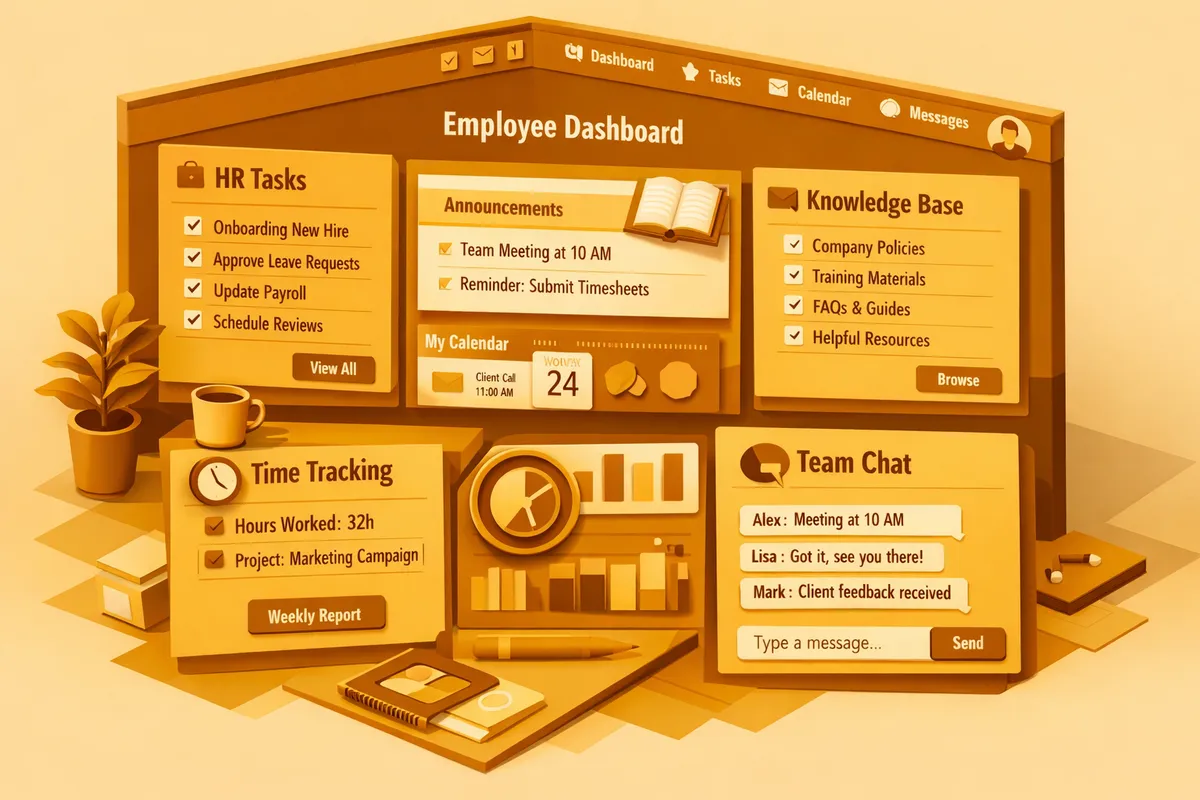
From the mapping, we design portal architecture with four layers. The professional layer handles the credential tracking, continuing education documentation, and license management that defines professional employer HR. The self-service layer covers schedule access, PTO requests, pay stub retrieval, and policy acknowledgments for all staff regardless of credential level. The manager layer gives practice owners and office managers the scheduling tools, approval queues, and team visibility they need to run daily operations. The compliance layer tracks Chicago and Illinois employment law obligations that apply to all employers: paid sick leave accrual, I-9 documentation, and required training completions.
Integration with existing professional systems is central to the design. Many Beverly law firms and medical practices use specialty practice management software. We build portal connections that pull relevant data from those systems rather than requiring double-entry that erodes data reliability over time.
Industries We Serve in Beverly
Law Firms and Legal Practices: Law offices along Western Avenue and the broader Beverly commercial district manage attorney credential tracking, CLE documentation, bar admission currency, and paralegal certifications alongside standard HR operations. We build portals that automate credential expiration alerts and maintain the documentation records professional liability coverage expects.
Medical and Dental Practices: Healthcare practices near St. Xavier University and along 95th Street manage clinical credentialing, DEA registration, malpractice documentation, HIPAA training records, and clinical scheduling alongside the standard HR functions every employer handles. We build portals where clinical compliance and HR compliance live in a single integrated system.
CPA Offices and Financial Services: Accounting firms and financial advisory practices serving Beverly's professional families manage professional licensing, seasonal staffing cycles tied to tax season, and client confidentiality acknowledgments that need systematic documentation. We build portals with credential tracking and seasonal onboarding workflows built in.
Insurance Agencies: Insurance offices on 111th Street and the Western Avenue corridor manage state licensing, continuing education requirements, and E&O documentation alongside standard employee management. We build portals with license renewal tracking that surfaces gaps before they affect coverage or compliance standing.
Neighborhood Restaurants and Retail: The independent restaurants and boutiques near Ridge Park and Beverly Arts Center manage scheduling, Chicago paid sick leave compliance, and new hire onboarding alongside the community relationships that define Beverly commercial character. We build portals that handle the compliance and scheduling needs without enterprise-level complexity.
Nonprofit and Educational Organizations: St. Xavier University-adjacent nonprofits and community organizations managing grant-funded staff, volunteer coordination, and program delivery need HR portals designed for mission-driven structures with mixed employee classifications. We build portals that accommodate the complexity of nonprofit workforce models.
What to Expect Working With Us
1. Professional Credential Mapping: Before any design work, we document every credential, license, and certification required by each role in your Beverly organization, including renewal cycles, governing authorities, and the consequence of lapses. This mapping drives the compliance architecture of the entire portal.
2. Role Design and Access Structure: We design portal access levels for each role in your organization. Beverly professional employers typically need four configurations: owner/principal, office manager, licensed professional staff, and administrative or support staff. Each configuration shows only the information and tools relevant to that role.
3. Phased Build with Credential Tracking First: For professional employers, we build credential tracking infrastructure in the first phase because it carries the highest risk in its current state. Self-service HR, scheduling, and manager tools follow in defined phases with user testing before each launch.
4. Training, Compliance Handoff, and Monitoring: We train your managers and principals on credential dashboard use, expiration alert management, and routine HR operations. Sixty days of post-launch monitoring identifies any credential edge cases or onboarding scenarios that did not surface during testing.