How We Build Custom CRM for Beverly
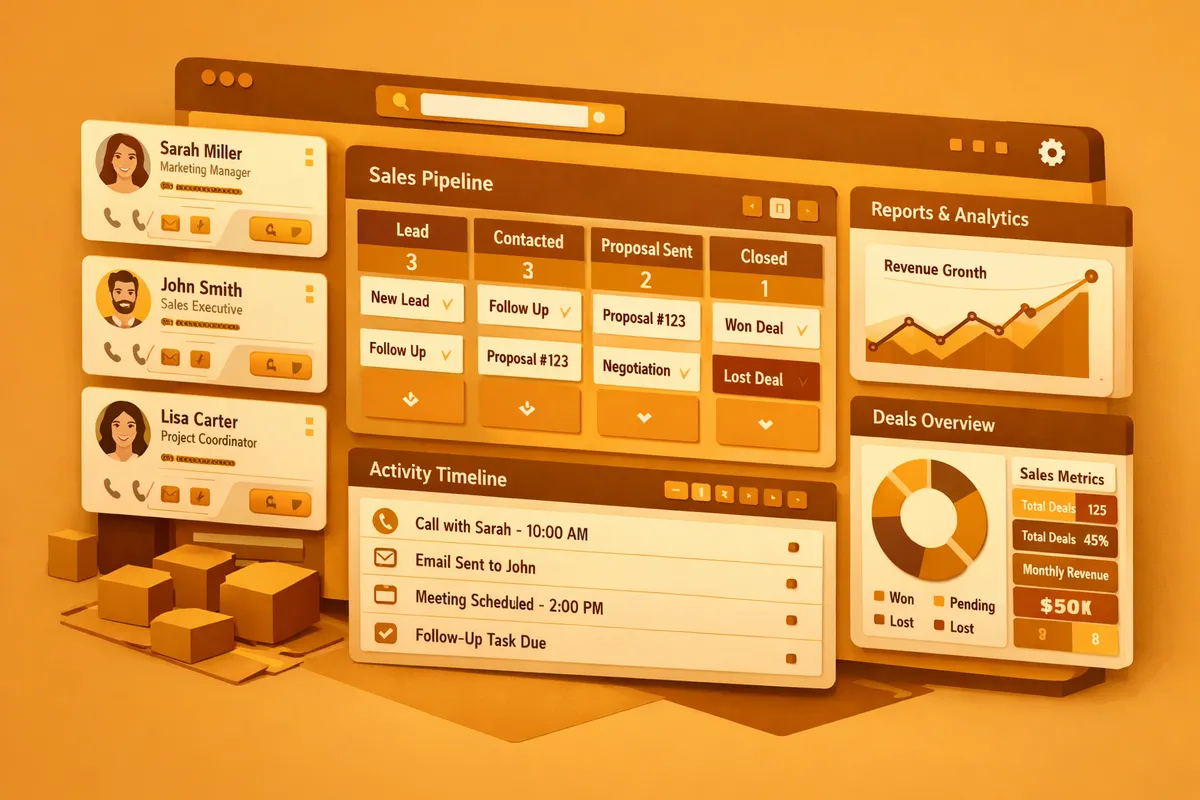
Discovery with a Beverly professional services firm starts with a walk-through of how client relationships actually work right now. We sit with the practice manager, the office administrator, and in smaller firms the owner, and document every place a client's information is recorded: intake forms, billing systems, email threads, the notes in the margins of a paper file. The gaps between those systems are where relationships fall through, and the gaps tell us what the CRM needs to catch.
For a medical practice near Ridge Park, that might mean connecting the scheduling system to the billing platform and adding a relationship layer that tracks referring physicians, patient family connections, and insurance history in one view. For an insurance agency on Western Avenue, it means building a renewal calendar into the CRM core so that no policy renewal approaches without a scheduled client outreach, and every outreach has the full relationship history attached.
We build in stages. The first stage delivers the core system: contact management, relationship mapping, activity history, and the workflows that were causing the most friction. The second stage integrates with the tools the business already uses. The third stage adds the automations that reduce manual entry: intake forms that populate the CRM automatically, calendar integrations that log every appointment, and email threads that attach to the right contact without staff intervention. Each stage is tested with real data from the Beverly business before we move to the next.
Industries We Serve in Beverly
Estate and family law practices along 95th Street manage multigenerational client relationships where knowing that a client's adult children are now also clients, or that a trust was established for a grandchild, is essential context for every interaction. A custom CRM built for this practice type maps family relationships explicitly, surfaces them when any family member calls, and tracks matter history across generations.
Insurance agencies anchored to Western Avenue live and die by the renewal cycle. A custom CRM that automatically stages renewal outreach 90, 60, and 30 days before policy expiration, tracks every client's full coverage portfolio, and flags households that represent cross-sell opportunities keeps the agency in front of its book of business with minimal administrative overhead.
Medical and specialty practices near Ridge Park and Walker Branch Library handle patient relationships across long time horizons, often through insurance transitions, family changes, and shifting health needs. A CRM layer built over the scheduling and billing system surfaces the context a care coordinator needs before a patient appointment: last visit notes, outstanding follow-ups, referral source, and family connections to other patients in the practice.
CPA and financial advisory offices on 111th Street serve clients through annual cycles that repeat with high regularity. A custom CRM that manages the tax calendar, tracks each client's service tier and history, and automates the outreach sequence for tax season preparation and year-end planning turns what is otherwise a reactive scramble into a managed workflow.
Boutique retailers along the Beverly Arts Center corridor work with regulars who expect to be recognized. A CRM that tracks purchase history, preferred product categories, and the staff member who serves each customer best makes those recognition moments possible consistently, not just when the right employee happens to be working.
Neighborhood restaurants and neighborhood institutions near Horse Thief Hollow and the 103rd Street commercial strip serve a core of regulars who account for a disproportionate share of revenue. A lightweight CRM that tracks visit frequency, reservation preferences, and occasion history turns loyalty into a system rather than a hope.
What to Expect Working With Us
1. Relationship audit and workflow mapping. We document how client relationships flow through your business right now: where information enters, where it lives, where it gets lost, and which workflows are held together by a single person's institutional knowledge. For Beverly professional services firms, this often surfaces risk in the form of knowledge that exists only in one person's head.
2. Architecture and data model design. We design the CRM structure around your specific relationship types and business workflows, not a generic contact-and-company model. A law firm's data model looks different from an insurance agency's, and both look different from a medical practice. The design phase produces a specification you review and approve before we write a line of code.
3. Build, migrate, and integrate. We build the system, migrate your existing data from wherever it currently lives, and integrate with your billing, scheduling, and email tools. The migration is handled carefully to preserve relationship history, because that history is exactly what you are building the CRM to protect.
4. Training and handoff. We train every staff member who will use the system before launch, document the workflows, and stay available for the first 90 days as the team adapts. Beverly professional services firms that have relied on spreadsheets and institutional memory often find the transition period the most valuable part of the engagement, because it surfaces process gaps that the CRM then solves.