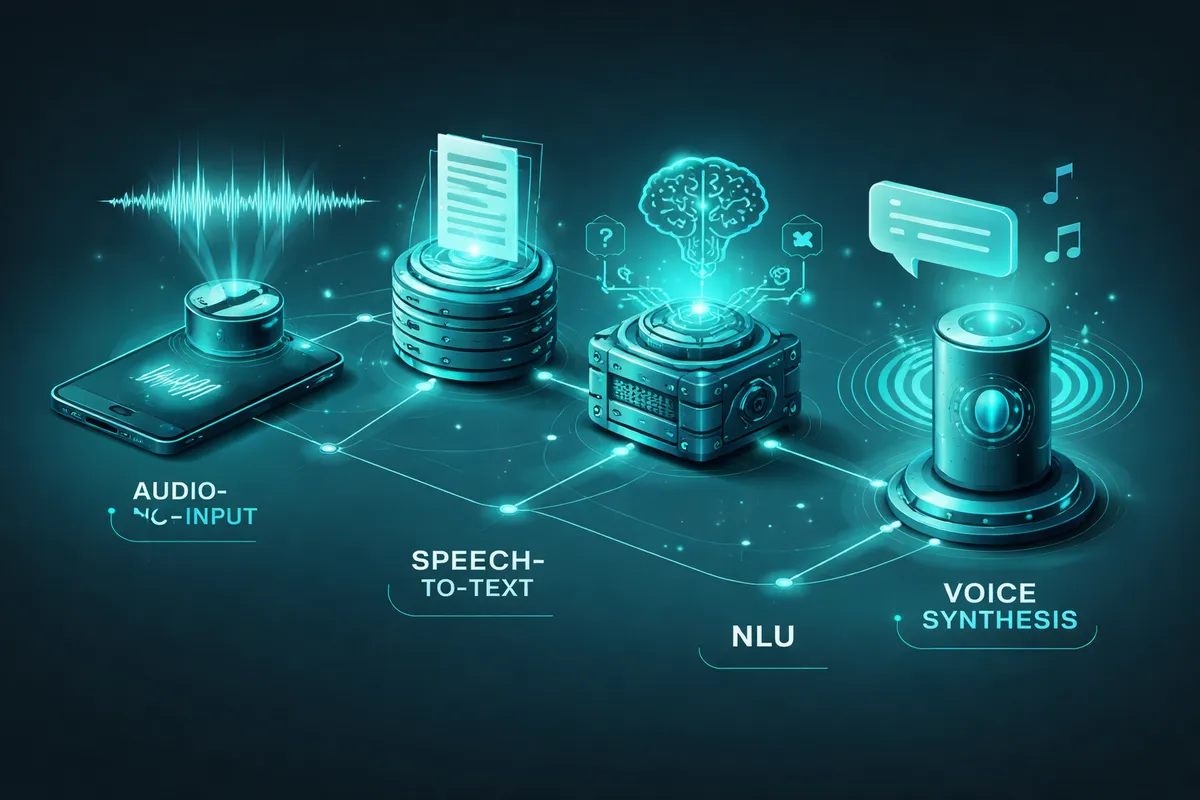
How We Build Voice AI for Avondale
Every voice AI deployment starts with a call audit. We listen to recordings of your current incoming calls, or, if you do not have recordings, conduct structured interviews with whoever handles your phones. The goal is to understand the distribution of call types: what percentage are new job inquiries, what percentage are appointment confirmations, status checks, billing questions, directions, and what is the occasional complex call that genuinely requires a human.
That distribution drives the design. A contractor on Belmont Avenue who gets 60% new job inquiry calls wants a voice AI optimized to capture lead information and schedule call-backs. A collision repair shop near Kosciuszko Park that gets 40% status check calls wants the AI to handle status queries by pulling from the repair order system in real time. The same technology serves both, configured differently.
Script and intent architecture is the creative and technical work of the build. The AI needs to understand spoken requests accurately across the full range of caller vocabulary. An inquiry about a "kitchen reno" and an inquiry about a "kitchen remodel" are the same thing, but a voice AI trained only on exact terminology will fail one of them. We build intent models that handle the natural variation in how Avondale residents actually describe what they need.
Multilingual handling is built in for Avondale's bilingual business environment. A Polish deli on Milwaukee Avenue with regular Polish-speaking callers needs a voice AI that handles Polish naturally, not one that struggles and transfers to a human whenever the language shifts. We configure language detection and bilingual response paths where the business profile calls for it.
Testing happens with live calls before full deployment. We run the system through a staged rollout period where calls are monitored and the AI's responses are reviewed. Most systems need adjustment in the first two weeks as real calls reveal edge cases the testing script did not anticipate.
Industries We Serve in Avondale
Plumbing and HVAC contractors dispatching from the Avondale corridor use voice AI to handle new service inquiry calls, appointment confirmations, and emergency service triage. The AI captures caller name, address, problem description, and urgency level, then either books the appointment or texts the dispatcher with an emergency summary. Contractors near Kosciuszko Park report that voice AI has meaningfully improved their lead capture rate for after-hours calls, which previously went to a voicemail that often was not returned until the next day.
Auto body and collision repair shops near Kosciuszko Park handle high call volume with voice AI that routes inquiry types to the right outcome: new estimate requests are scheduled, existing repair status checks are answered from the job management system, insurance calls are routed to the claims coordinator, and parts inquiries are handled by the parts desk. Four call types handled by one automated system reduces the manual call routing burden during peak hours.
Metal fabricators and specialty manufacturers along Elston Avenue receive quote inquiry calls from buyers who have found them through a directory or referral. Voice AI for this use case captures the caller's company name, product requirement description, and timeline, then sends a structured summary to the sales contact before the return call. Better-qualified leads mean more productive conversations when the fabricator calls back.
Electrical and general contractors based on Addison Street or Central Park Avenue who work primarily on commercial jobs use voice AI to handle the after-hours and weekend calls from property managers reporting issues. The AI confirms the property address, captures the issue description, and triggers an on-call notification to the right technician based on the job type and location.
Polish delis and specialty food retailers on Milwaukee Avenue that take phone orders use voice AI to handle order intake for pickup, routing completed orders to the kitchen with the full item list and pickup time. This frees counter staff to focus on in-person service during peak hours rather than taking phone orders while customers wait at the register.
Craft breweries and event venues near Avondale Park use voice AI for event inquiry calls, private event booking questions, and tap room hours and directions inquiries. A brewery that hosts events at Hairpin Arts Center or the Avondale industrial district gets repeat calls asking about upcoming events; voice AI handles those calls without pulling staff off the floor.
What to Expect Working With Us
1. Call audit and flow design. We analyze your current incoming call distribution and design the AI call flows for each call type your business receives. For contractors on Belmont Avenue who have never recorded their calls, we start with a structured conversation about what types of calls you get and what the ideal outcome is for each one. The call flow document we produce is the blueprint for everything that follows.
2. System build and intent training. We build the voice AI system, configure the intent recognition, write the conversation scripts, and set up the integration with your scheduling or CRM tools. For Avondale businesses with bilingual caller populations, we build and test the Polish or Spanish language paths in parallel with the English paths.
3. Staged rollout and live call monitoring. The system launches in a monitored mode where we listen to live calls for the first two weeks and adjust the AI's responses based on real interactions. This phase surfaces the edge cases that structured testing cannot anticipate and is what produces a finished system rather than one that handles 80% of calls correctly.
4. Performance reporting and ongoing tuning. Monthly reports cover call volume, resolution rate (calls handled without human transfer), caller satisfaction, and any call types that are trending toward the AI's boundaries. Twice-yearly tuning sessions update the AI for changes in your services, seasonal patterns, and any new call types that have emerged.