How We Build UI/UX Design for Avondale
Avondale's operational environments drive our design decisions from the start. For manufacturing and contractor businesses along Elston Avenue and the Chicago River industrial corridor, the first research question is where and how digital tools are actually used. Field research in the actual work context, not just stakeholder interviews in a conference room, reveals what matters: font size, touch target size, information density on a single screen, offline capability requirements when connectivity is limited on a job site. These findings produce design requirements that a generic UX process misses.
For Avondale's brewery and taproom businesses, the design context is dual: the taproom-facing booking and event interface that a customer uses on their phone at home, and the operations interface that taproom staff use during service. These often need to be different products with different design requirements, but they need to share a data layer. We design the customer experience and the operational experience separately, with the same underlying architecture. The customer interface on Belmont Avenue booking a private event needs to feel different from the interface a brewer uses to manage the room and staff.
For the neighborhood-facing businesses on Milwaukee Avenue that serve Avondale's mixed community, we conduct research across the neighborhood's demographic range. This means test participants from Avondale's Polish heritage community, participants from the young families who have moved into the neighborhood in recent years, and participants from the Latino and Eastern European working-class population that has been part of Avondale for decades. An interface that works only for one segment of Avondale's population is not ready for Milwaukee Avenue.
Industries We Serve in Avondale
Light manufacturers and metal fabricators along the Chicago River industrial corridor and Elston Avenue manage order complexity that generic project management software handles poorly. Custom order tracking, materials management, production timeline interfaces, and customer communication tools designed for shop-floor use: large touch targets, fast lookup, simple data entry that fits between physical tasks rather than requiring dedicated time at a desk.
Contractors and construction businesses serving Avondale and the broader Northwest Side manage project coordination, subcontractor communication, and client updates across multiple active jobs. Field-ready project management interfaces, client-facing progress portals, and invoicing tools designed for the contractor who is reviewing status on a phone at a Kosciuszko Park job site rather than in a Chicago River industrial corridor office.
Craft breweries and production beverage businesses converting Avondale's industrial spaces along Kedzie Avenue and near the Avondale Park corridor into taproom and distribution operations need both customer-facing and operations-facing tools. Taproom reservation and event management, online ordering and local delivery, production scheduling and inventory management interfaces designed for the dual audience of brewery-goers and brewery operators.
Polish delis, specialty grocers, and heritage food businesses along Milwaukee Avenue serve customer bases that span generations and language preferences. Ordering interfaces, loyalty programs, and catering request tools that serve both longtime Polish-heritage customers and the younger Avondale newcomers who discovered these businesses through the neighborhood's gentrification, with information architecture that does not require either group to adapt to a product built for the other.
Auto body shops and service businesses serving Avondale's working-class population near Belmont Avenue and Central Park Avenue depend on customer trust built over years of reliable service. Appointment scheduling, service status updates, and customer communication tools that translate that neighborhood trust into digital touchpoints, with clear status communication for customers who want to know where their vehicle is without calling.
Hairpin Arts Center and Avondale's cultural and community organizations serve the neighborhood's creative and community programming needs. Event registration, membership management, class scheduling, and community communication tools designed for the mixed Avondale population that engages with neighborhood arts and community institutions, including older residents who prefer simpler interfaces and younger participants who expect richer functionality.
What to Expect Working With Us
1. Discovery in the actual work context. For Avondale's operational businesses, research means going to where the work happens. We observe how digital tools are actually used in fabrication shops, on contractor job sites, in taprooms during service, and behind a deli counter during the lunch rush. This field research produces design requirements that stakeholder interviews alone cannot surface, and it prevents us from designing a beautiful product that fails in the actual environment where it needs to work.
2. Architecture for dual-context products. Many Avondale businesses need both a customer-facing interface and an operations interface. We design both from the start, sharing architecture where appropriate and diverging where the user contexts demand different approaches. A brewery's customer booking interface and its operations management interface share a reservation data layer but are designed for completely different use contexts: a customer on a couch at home versus a taproom manager in a loud room during service.
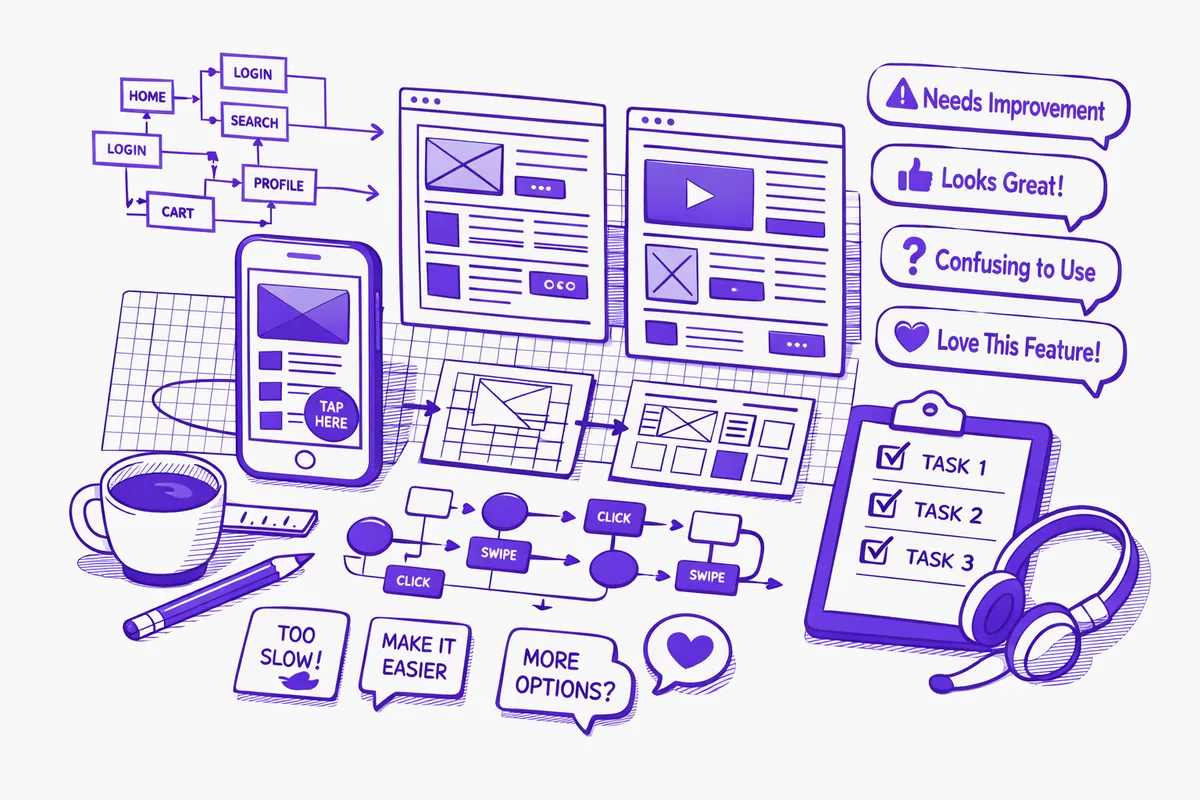
3. High-fidelity design and field-tested prototype. Figma designs built for Avondale's operational realities, with an interactive prototype that is tested in the actual environments where the product will be used, not just in a usability lab. For shop-floor and field service products, we test at the work site with participants doing realistic tasks. Findings go into the design before development begins.
4. Developer handoff built for long-term maintenance. Avondale's businesses, particularly the smaller operations on Milwaukee Avenue, need digital tools they can maintain without ongoing outside support for routine updates. Our design systems and handoff documentation are built with this in mind: clear component documentation, annotation for developer implementation, and design decisions explained so that future maintainers understand the reasoning behind them.