How We Build RAG Development for Avondale
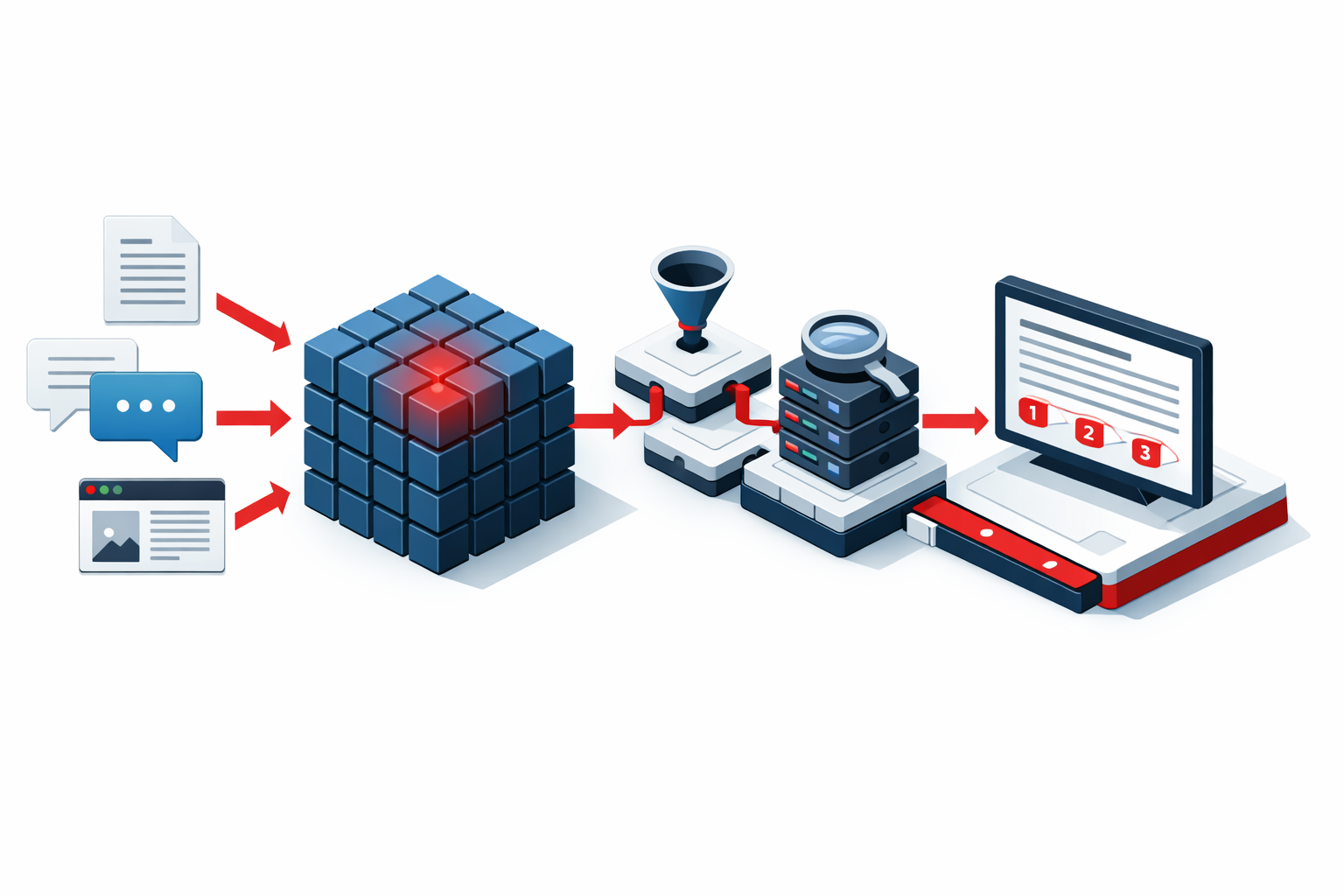
We start with a document audit, not a sales conversation. The first session is spent cataloging every type of document the business has: where it lives, what format it is in, and what questions staff members most need answered from it. For an Avondale metal fabricator, the audit typically surfaces job records, materials certifications, customer specification sheets, and supplier agreements as the highest-value document types. For a contractor, it is permit records, scope documents, building code references, and historical bids. For an auto shop, it is repair histories, parts sourcing logs, and technical service bulletins.
Once we understand the document landscape, we build an ingestion pipeline that processes your files as they exist. We do not ask Avondale business owners to reformat their archives or adopt new naming conventions before we can help them. The system handles the real state of the business's documentation, including mixed formats, inconsistent naming, and the organizational logic that makes sense to the people who created the files.
The retrieval layer is tuned to the business's specific vocabulary. A fabricator on Elston Avenue uses material grades, process names, and equipment identifiers that a generic AI system does not recognize. We configure the retrieval layer with the actual terminology the business uses so that queries in trade language retrieve from technical documents accurately. The contractor who asks about "load-bearing modifications on a Type II-B structure" gets the answer from the permit records and code references in their own archive, not a generalized answer from a construction website.
We test against real questions before deployment. The questions we test before handing over a RAG system to an Avondale contractor are the actual questions that estimators, project managers, and field staff ask regularly. Systems that fail on common questions return to refinement, not to the client.
The interface is designed for the people who will use it daily. Not software engineers. Shop floor workers. Service writers. Estimators on a job site with a phone. The query interface is simple, the answers are clear, and the source document reference is visible so staff can verify or read further when they need to.
Industries We Serve in Avondale
Metal fabricators and manufacturers near the Chicago River industrial corridor and along Elston Avenue carry decades of accumulated operational knowledge in their document archives. A RAG system built on job records, materials certifications, customer specification sheets, and supplier agreements gives floor supervisors, estimators, and sales staff instant access to historical project data. When a customer reorders a product from three years ago, the specs are available in seconds rather than retrieved through a search of a filing system only the foreman knows how to navigate.
General contractors and construction businesses working from Avondale use RAG systems to access permit records, building code references, scope documents, and historical bid data. An estimator who can ask "what did we pay for structural steel on the Addison Street project in 2022?" and receive an answer from the actual bid document works faster and quotes more accurately. We build retrieval systems that cover the full documentation footprint of a mid-size contractor operation, from permit archives to subcontractor agreement histories.
Auto body and automotive shops on Kedzie Avenue and Central Park Avenue maintain vehicle repair histories, parts sourcing logs, insurance claim records, and technical service bulletins that span years of service. A RAG system lets service writers retrieve a returning vehicle's complete repair history, check parts pricing from prior orders, and pull warranty documentation without leaving the estimate screen. The time savings per vehicle adds up to hours per week across a busy shop.
Polish delis, specialty food businesses, and family restaurants along Milwaukee Avenue near St. Hyacinth Basilica manage supplier agreements, product certifications, import documentation, and regulatory compliance records that grow more complex as the business ages. A RAG system lets buyers verify a supplier's certification status, pull pricing history for seasonal ingredients, and check compliance documentation without relying on the owner as the single point of access for all vendor knowledge.
Craft breweries and food manufacturers that have grown along the Avondale corridor maintain production logs, recipe documentation, batch records, and regulatory filings. As these businesses scale beyond the founding team, RAG systems make the institutional knowledge the head brewer carries accessible to the broader team. A production supervisor who can ask "what was the dry hop addition schedule for the Vienna lager we brewed last October?" gets the answer from the actual batch log.
Professional service firms including insurance agencies, immigration attorneys, and accountants serving Avondale's Polish heritage and broader immigrant communities manage client files, regulatory documents, and correspondence archives that become unwieldy over time. RAG development gives staff members instant access to client history, applicable regulations, and precedent cases, improving service quality and reducing the administrative overhead of manual archive searching.
What to Expect Working With Us
1. Document audit and knowledge mapping. We spend the first session understanding your document landscape: where files live, what formats they are in, and what questions your team most needs answered from them. For Avondale manufacturers and contractors, this session typically reveals that a small set of document types contains the majority of the knowledge the business needs to make accessible.
2. Ingestion pipeline and vocabulary configuration. We build the system that processes your documents, configure the retrieval layer with your business's specific terminology, and index the archive. This phase handles the technical complexity so your team does not need to reformat or reorganize existing files before the system can work.
3. Testing against real questions. We test the retrieval system against the actual questions your staff asks regularly, not against generic queries. The system must answer your real questions accurately before it ships. Retrieval failures during testing return to refinement.
4. Deployment and ongoing maintenance. We deploy the system, train the staff members who will use it, and maintain the ingestion pipeline as your document archive grows. New job records, new contracts, and new technical documentation are added on a regular schedule so the system stays current with the business.