How We Build No-Code Platforms for Avondale
The starting point is always the use case, not the tool. A contractor on Belmont Avenue who needs a way to track job status, material deliveries, and subcontractor check-ins might need Airtable, or might need a simple Notion database, or might need a Glide app that their field crews can use on their phones. We assess the use case first and recommend the tool second.
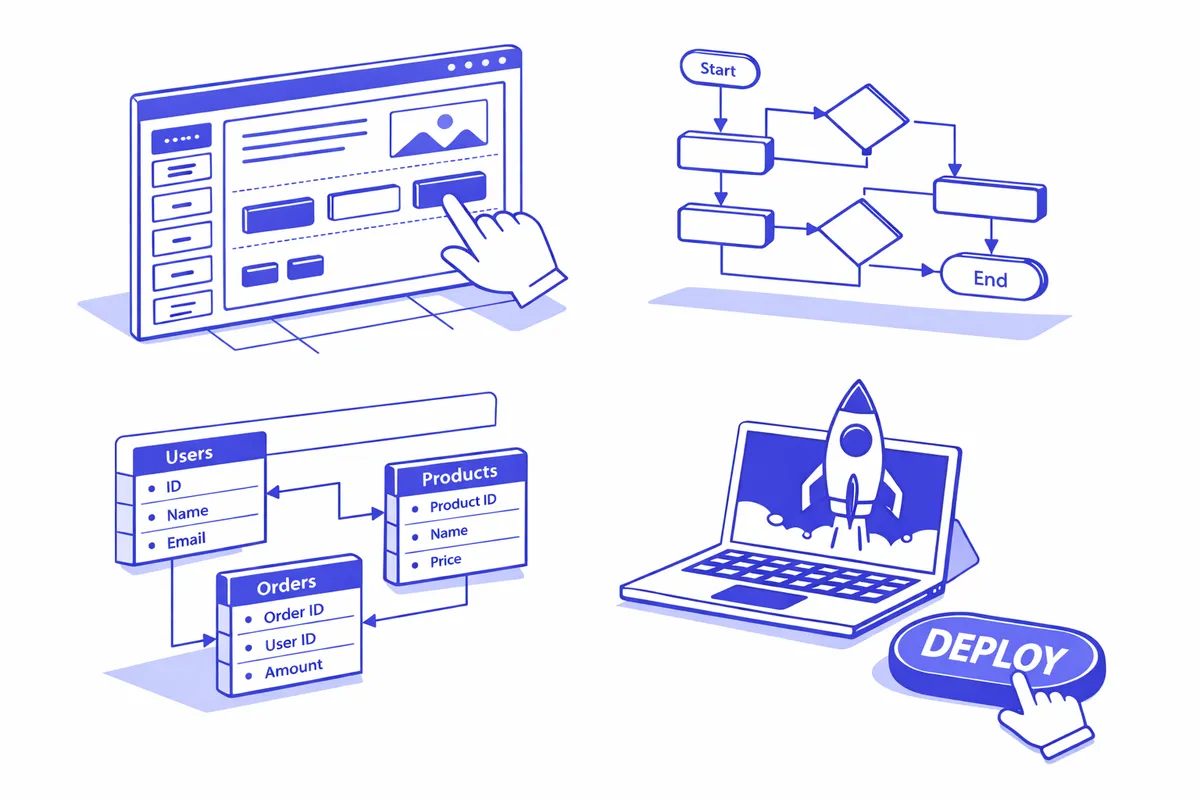
Configuration follows a blueprint phase where we document exactly what the platform needs to do. For a Milwaukee Avenue Polish deli that wants to manage wholesale customer orders, the blueprint covers the data fields required, the workflow steps from order entry to fulfillment, the notification logic, and the reporting views that management needs. That blueprint becomes the build specification.
Build time on no-code platforms is genuinely fast compared to custom development. A well-scoped Airtable base with automation, forms, and reporting views takes one to two weeks rather than two to three months. We build, validate with your team using real data, and iterate quickly because the tools are designed for rapid modification.
The training we provide is not a manual reading session. We sit with the person who will own the platform, usually an operations manager or office administrator in an Avondale business, and walk through every workflow hands-on. The goal is that they can add a record, modify a workflow, and pull a report without calling us by the end of the first session. No-code platforms are only useful if the business can operate them independently.
Industries We Serve in Avondale
Auto body and collision repair shops near Kosciuszko Park use no-code platforms to manage repair orders, track parts procurement status, and communicate job progress to insurance adjusters and customers. An Airtable base with a customer-facing form for intake and a status board for the shop floor gives the entire repair process visibility without replacing the estimating software the shop already uses.
Metal fabricators and specialty job shops along Elston Avenue handle custom orders where each job has unique specifications. A no-code job tracking system lets the shop floor team update production stage and flag quality issues in real time, while management sees a live view of every active order and its current status. The same system generates the delivery schedule shared with customers without requiring anyone to maintain a separate spreadsheet.
Contractors and construction companies based near Avondale Park use no-code tools to manage project documentation, subcontractor communications, and permit tracking without investing in enterprise project management software. A well-configured Notion workspace gives a general contractor on Addison Street a single location for drawings, contracts, change orders, and daily logs that everyone on the job can access from any device.
Polish delis and specialty food businesses on Milwaukee Avenue managing wholesale accounts alongside retail operations use no-code platforms for order management and production planning. An Airtable workflow tracks which wholesale customers have ordered, what quantity is required for the next production batch, and which orders have been delivered, all without a custom software investment.
Craft breweries and small-batch producers operating in Avondale's industrial spaces use no-code tools to track production batches, manage distributor relationships, and plan event calendars. Airtable is particularly common in this industry because it handles both structured data and flexible project-style work in the same interface.
Service businesses and tradespeople dispatching from Kedzie Avenue and Belmont Avenue use no-code scheduling and customer management tools when full field service management platforms are more than their operation needs. A Glide app built on a Google Sheets base can give a three-person plumbing company mobile job tracking capability for a minimal ongoing cost.
What to Expect Working With Us
1. Use case scoping and tool recommendation. We document what the platform needs to accomplish before recommending a specific tool. Two Avondale businesses with similar problems may need different tools depending on their team's technical comfort level, integration requirements, and long-term ownership plans. You get a recommendation with clear reasoning, not a default to the most expensive option.
2. Blueprint documentation. Before any configuration begins, we produce a blueprint that shows exactly how the platform will work: data structure, automation logic, user permissions, form flows, and reporting views. For Avondale manufacturers who value operational clarity, this document serves as the system specification that any future operator can use to understand the platform without reverse-engineering it.
3. Platform build and validation. Configuration happens against the blueprint, and validation uses your actual data and workflows. We test every automation with real records, every form with actual submissions, every report with current data. For businesses on Elston Avenue running daily operations, we cannot send you a platform that fails on your first real entry.
4. Hands-on training and ownership transfer. Training covers every role that will interact with the platform. The goal is genuine ownership: you should be able to add fields, modify automations, and create new views without our help after training. We follow up 30 days post-launch to address anything that has come up in real use and to make minor adjustments before you are fully on your own.