How We Build Legacy System Integration for Avondale
Avondale integrations start with a technical discovery focused on the specific capabilities of the legacy system. For a metal fabricator near the Chicago River corridor, that means mapping every data point the production system generates, how it structures job records, what materials tracking it maintains, and whether it supports database access, file exports, or any API connectivity. For an auto body shop on Central Park Avenue, it means understanding the shop management system's repair order structure and what data the insurance platform needs in its submission format.
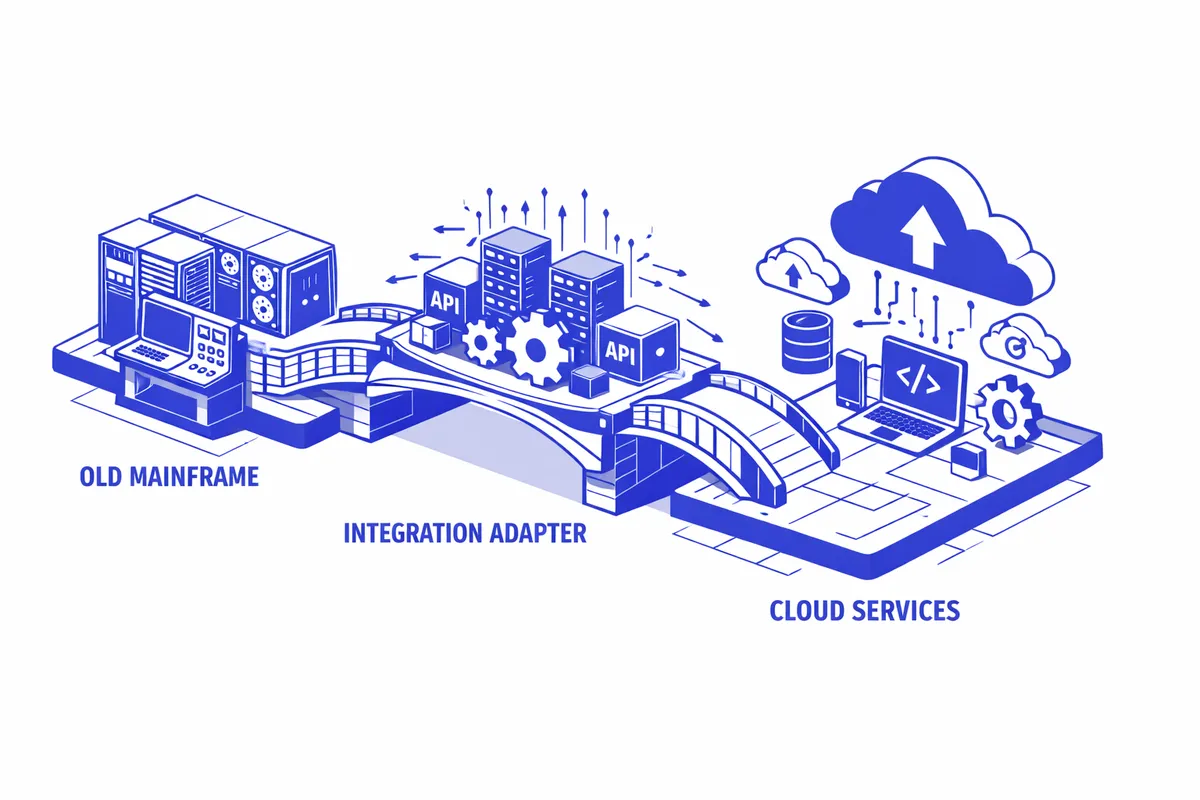
From discovery, we design the integration approach based on what the system actually supports. Avondale's manufacturing and trade businesses often run legacy platforms that predate API standards. Database-level integration, file-based exchange using the export functions the system already has, or a wrapper that creates a modern API surface on top of an older system's data are all viable approaches. We choose the method that is most reliable for the specific system, not the most architecturally interesting one.
Build and testing for Avondale's industrial and trade clients includes volume testing against the job counts and production schedules those businesses actually manage. A metal fabricator running dozens of concurrent jobs needs an integration that handles that complexity without data loss or sequence errors. Deployment includes monitoring that tracks data consistency and alerts on errors before they affect production schedules, billing, or customer communications. We maintain the integration as both the legacy system and the modern tool evolve, so the connection remains stable without requiring intervention from business staff.
Industries We Serve in Avondale
Metal Fabricators and Light Manufacturers: Avondale's industrial riverfront businesses near the Chicago River corridor use legacy production management and job tracking systems that need integration with modern customer portals, invoicing tools, and project status dashboards. We connect the production system to the client-facing layer the shop's customers now expect.
Contractors and Trade Businesses: Contractors on Elston Avenue and Addison Street tracking jobs in legacy scheduling platforms need integration with modern accounting, CRM, and client communication tools. We build connectors that carry project data between systems without disrupting the workflows the operations team has built around the legacy platform.
Auto Body and Repair Shops: Avondale's auto service businesses on Central Park Avenue use older shop management software that needs integration with insurance estimating platforms, parts supplier systems, and modern customer communication tools. We automate the data exchange that currently happens through manual entry or phone calls.
Polish Delis and Specialty Food Businesses: Milwaukee Avenue food businesses with legacy POS and inventory systems need integration with e-commerce platforms, supplier ordering tools, and modern accounting software. We connect the in-store system to the digital channels the business has added without requiring a full POS replacement.
Craft Breweries and Small Manufacturers: Avondale's emerging craft businesses near Kosciuszko Park and the Hairpin Arts Center often run a mix of newer and older platforms across production, inventory, and sales. We build the connectors that allow production data to flow into inventory management and sales reporting without manual transfer.
Auto Parts and Supply Businesses: Parts suppliers and specialty vendors serving Avondale's auto service corridor use legacy catalog and order management systems that need integration with modern B2B ordering platforms and supplier inventory feeds.
What to Expect Working With Us
1. Legacy System Discovery: We trace the actual structure and capabilities of your legacy platform: what job, inventory, or order data it holds, what export or connection capabilities it has, and how it handles the specific data types your integration needs to move. For manufacturing and trade businesses, this phase includes mapping the business logic embedded in the legacy system's configuration.
2. Integration Architecture Design: Based on discovery, we select the right approach: database-level access, file-based exchange, or a lightweight API wrapper. We design transformation logic that handles format differences between the legacy system and the modern tool, including the unit, date, and field format variations common across manufacturing and trade software.
3. Build and Testing: We build and test against production-representative data volumes, including the concurrent job counts and high-volume periods that Avondale's industrial businesses manage. Testing covers normal operations, error conditions, and reconciliation scenarios where discrepancies between systems need to be identified and resolved without manual intervention.
4. Deployment and Monitoring: We deploy with monitoring that watches for data consistency errors, connection failures, and sync delays. For manufacturing and trade businesses where incorrect job data affects production schedules and client commitments, monitoring is especially critical in the weeks after launch when the integration encounters edge cases not fully captured during testing.