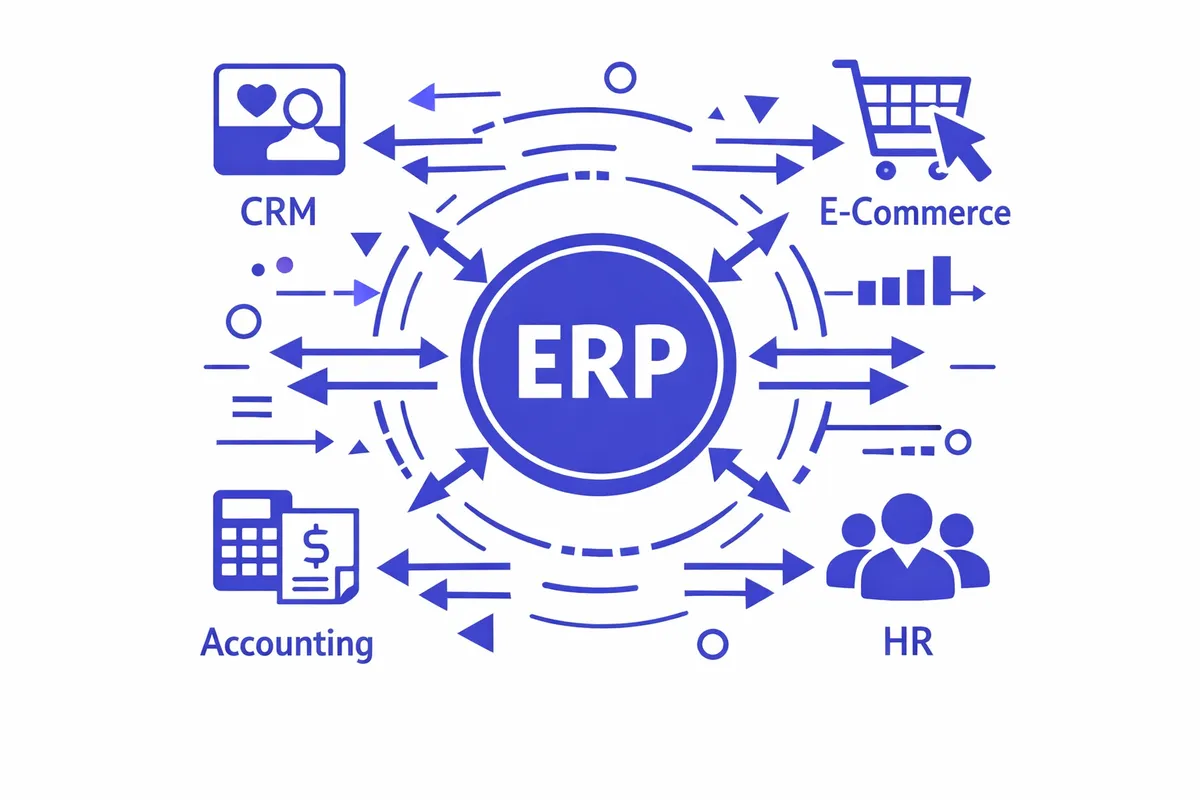
How We Build ERP Integration for Avondale
We start by mapping what you already run, because every Avondale shop's patchwork is different and the integration has to fit the shop, not the other way around. For a fabricator on Elston Avenue, we sit down and document every system in play, from the quoting spreadsheet to QuickBooks to the inventory method, and we trace how a job currently moves between them. The duplicate entry points and the reconciliation gaps are the integration's real specification.
Then we decide, with you, what gets connected versus replaced. ERP integration does not always mean buying a big new platform. Often the better path for an Avondale manufacturer is connecting the capable tools you already have so they share data cleanly, and adding a system only where a genuine gap exists. We are direct about that tradeoff. A shop near Kosciuszko Park does not need enterprise software it will use ten percent of.
We build the connections in stages so the shop keeps running. We might link quoting to inventory first, prove it on real jobs, then connect scheduling, then invoicing. Each stage is tested against actual work moving through the shop near Belmont Avenue before we move on, so there is no single disruptive cutover. Finally we train the team on the integrated flow at the shop, in plain terms, and we stay on as the inevitable edge cases surface in the first months of real use. The goal is one connected system that matches how the shop already thinks about a job.
Industries We Serve in Avondale
Metal fabricators and machine shops along the Chicago River industrial corridor gain the most from ERP integration because their work is material-heavy and quote-driven. We connect quoting, inventory, work orders, and invoicing so a quote near Elston Avenue checks real stock, a won job reserves material automatically, and the invoice reflects what actually shipped. The shop stops carrying steel it does not need and stops stalling on steel it forgot to order.
Small manufacturers and light industrial producers off Belmont Avenue run on production schedules and order pipelines that disconnected tools cannot keep aligned. ERP integration links order intake, production scheduling, inventory, and fulfillment into one flow. For a manufacturer near the industrial corridor, that means a new order updates the schedule and the material plan together, instead of three people updating three systems and hoping they match.
General contractors and trades working the gentrifying blocks near Avondale Park juggle job costing, purchasing, scheduling, and billing across separate tools, and ERP integration ties them into one job-centered view. When a change order lands on a project near Central Park Avenue, the budget, the schedule, and the invoice all reflect it. The contractor sees true job cost in real time rather than reconstructing it after the fact.
Auto body shops near Addison Street and Kedzie Avenue coordinate estimates, parts ordering, insurer billing, and scheduling, which is four systems pretending to be one. ERP integration connects them so an approved estimate triggers the parts order, the schedule reflects parts arrival, and billing pulls from the completed repair. A body shop near Kedzie Avenue moves cars through the bays faster when the systems stop fighting each other.
Craft breweries in the Elston Avenue corridor manage production batches, raw material, packaging inventory, wholesale orders, and distribution, and ERP integration aligns that chain. We connect batch planning to ingredient inventory and link wholesale orders to packaged stock and invoicing. A brewery near the industrial corridor scaling up its distribution gets a system that keeps production, inventory, and fulfillment honest with each other.
Polish delis and specialty food businesses near St. Hyacinth Basilica run purchasing, inventory, point of sale, and catering orders that rarely connect, and the holiday surge exposes every seam. ERP integration links purchasing and inventory to sales and catering, so the heavy Christmas and Easter weeks near St. Hyacinth Basilica run on a system that knows what was ordered, what is on hand, and what is promised, instead of a pile of separate notes.
What to Expect Working With Us
1. System inventory and job trace. We document every tool your Avondale shop runs and follow one real job as it moves between them. The duplicate entry points and reconciliation gaps we find become the integration plan, grounded in how your shop actually operates near Elston Avenue.
2. Connect-versus-replace decision. We work through which of your existing tools are worth connecting and where a real gap justifies a new system. We are honest that a shop near Kosciuszko Park usually needs integration more than it needs a large new platform, and we recommend accordingly.
3. Staged build with no hard cutover. We connect the systems in phases, proving each link on real jobs moving through your shop near Belmont Avenue before the next. Your operation keeps running throughout. There is no single day where everything changes at once.
4. Training and seasonal hardening. We train your team on the integrated flow at the shop, and we stay on through the first busy stretch, often the spring construction ramp near Avondale Park, when edge cases surface and the system needs real-world tuning.