How We Build Computer Vision for Avondale
We start with a production audit. We visit the facility, observe the inspection process, measure the defect rate, and document the types of defects that currently slip through. For fabricators on Elston Avenue, that might be surface finish inconsistency. For a food producer near Milwaukee Avenue, it might be fill level variation. For a brewery near the Hairpin Arts Center, it might be label placement or cap seal integrity.
From the production audit, we define the computer vision specifications: what the system needs to detect, what the acceptable false positive and false negative rates are, and where in the production flow the camera system should be positioned. We design for the actual physical environment: lighting conditions, conveyor speed, part geometry, and ambient noise.
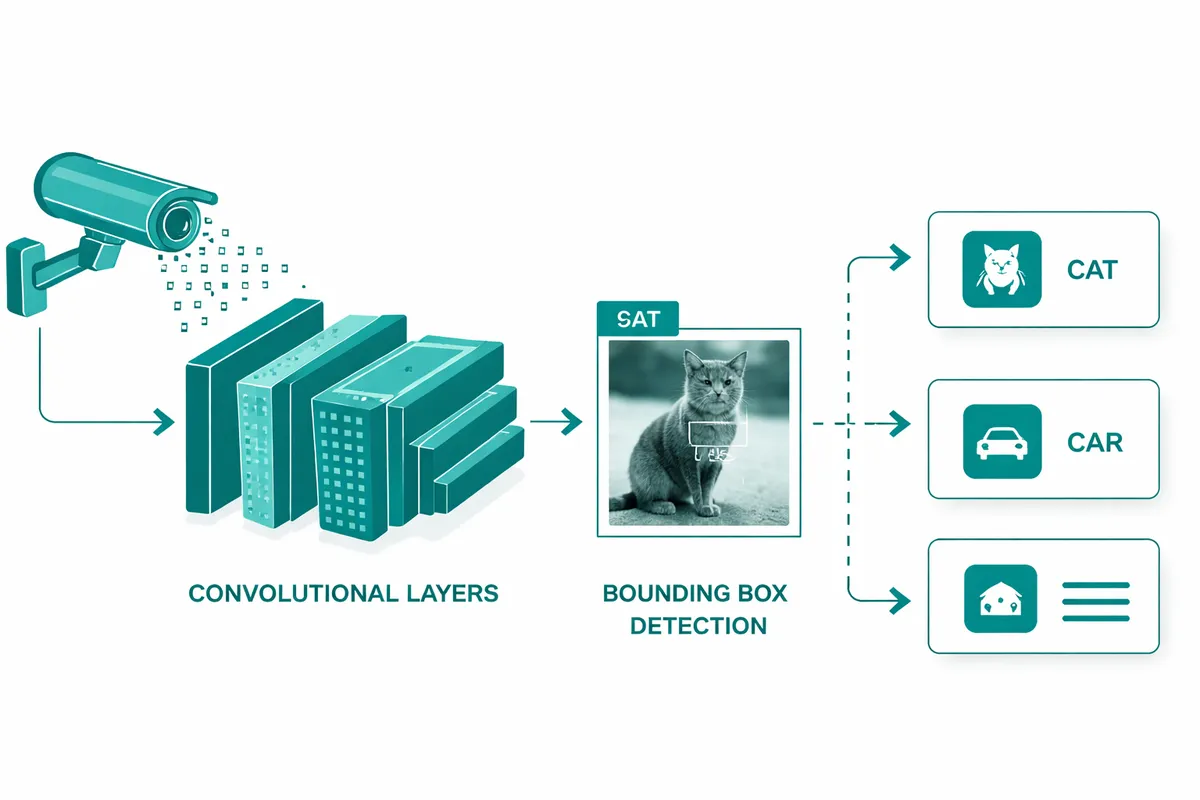
We build and train the model on real production samples. The model learns from actual defect examples from your floor, not generic training data. We validate accuracy against your defined acceptance criteria before deployment. This validation step is not optional. We do not deploy systems that do not meet the agreed specification.
Installation is coordinated with production scheduling to minimize downtime. We run parallel operation, comparing the AI system's calls against manual inspection, until the system meets accuracy targets. After deployment, we monitor performance and retrain the model as production changes. When you add a new product line or change a material, the model is updated to reflect the new production reality. Avondale's industrial businesses change and expand. The vision system needs to keep pace.
Industries We Serve in Avondale
Metal Fabricators and Stamping Shops on Elston Avenue and the riverfront industrial corridor need surface finish inspection, dimensional verification, and weld quality assessment. We deploy camera-based inspection systems that flag parts outside tolerance before they reach packaging. The Avondale fabrication corridor has shops producing custom architectural metalwork, standard stamped components, and everything between. Each requires a system calibrated to its specific defect profile.
Auto Body and Collision Repair Shops near Addison Street can use computer vision to check paint finish consistency and panel alignment before a vehicle goes back to the customer. We build end-of-process inspection systems that catch issues while the vehicle is still in the shop, eliminating the customer return that costs more than the original repair margin.
Food Manufacturers and Specialty Producers along Milwaukee Avenue and the Avondale industrial zone need fill level checking, label placement verification, and product consistency monitoring. We build vision systems for food production environments with appropriate sanitation requirements. Avondale's specialty food sector, including Eastern European producers and artisan food manufacturers, has the kind of quality differentiation that visual inspection protects.
Light Manufacturers and Assembly Operations near Central Park Avenue and Kedzie Avenue that assemble products from components need part presence verification and assembly sequence checking. Computer vision ensures components are present and correctly positioned before final assembly proceeds, catching missing components before they become customer warranty claims.
Craft Breweries and Bottling Operations in the Hairpin Arts Center area need label inspection, fill level monitoring, and cap seal verification. We deploy vision systems appropriate for beverage production lines. An Avondale craft brewery that ships a batch with label misalignment or inconsistent fill levels has a distribution problem that compounds quickly. Vision inspection catches it at the line.
Warehouse and Distribution Operations serving Avondale's industrial businesses need inventory management and receiving inspection. Computer vision can verify incoming shipment contents against purchase orders and flag discrepancies automatically, reducing the manual labor required to confirm delivery accuracy.
What to Expect Working With Us
1. Production Audit: We visit your facility, observe current inspection processes, measure defect rates and types, and produce a documented assessment of where computer vision in Avondale manufacturing would generate the highest return. The audit is the foundation for all design decisions.
2. System Design: We specify the hardware, camera placement, lighting requirements, and model architecture based on your production environment and defect types. You review and approve the design before procurement. No money is spent on hardware before the design is agreed.
3. Model Training and Validation: We train the model on real samples from your Avondale production line and validate accuracy against your acceptance criteria in controlled conditions before deployment. The model learns your specific defects, not a generic defect taxonomy.
4. Production Deployment and Monitoring: We install the system, run parallel operation, and monitor performance for 60 days post-deployment. Model retraining is included for the first six months. After that, ongoing support and retraining are available through a maintenance agreement.