How We Build Business Intelligence for Avondale
We start on the shop floor, not in a conference room. For a fabricator near the Chicago River industrial corridor, that means sitting with the owner while the job tickets get written and the invoices get cut, so we see exactly where the real numbers are born and where they leak. Avondale operators do not have a data team. They have a person who knows everything and a stack of records that only makes sense to that person. Our first job is to map that.
Then we connect the sources. Most Avondale shops are running some mix of QuickBooks, a scheduling whiteboard, supplier emails, and a spreadsheet someone built years ago. We build pipelines that pull from whatever actually exists, clean the inconsistencies, and land it all in one place. We do not ask a metal shop on Belmont Avenue to rip out its tools and start over. We meet the data where it lives.
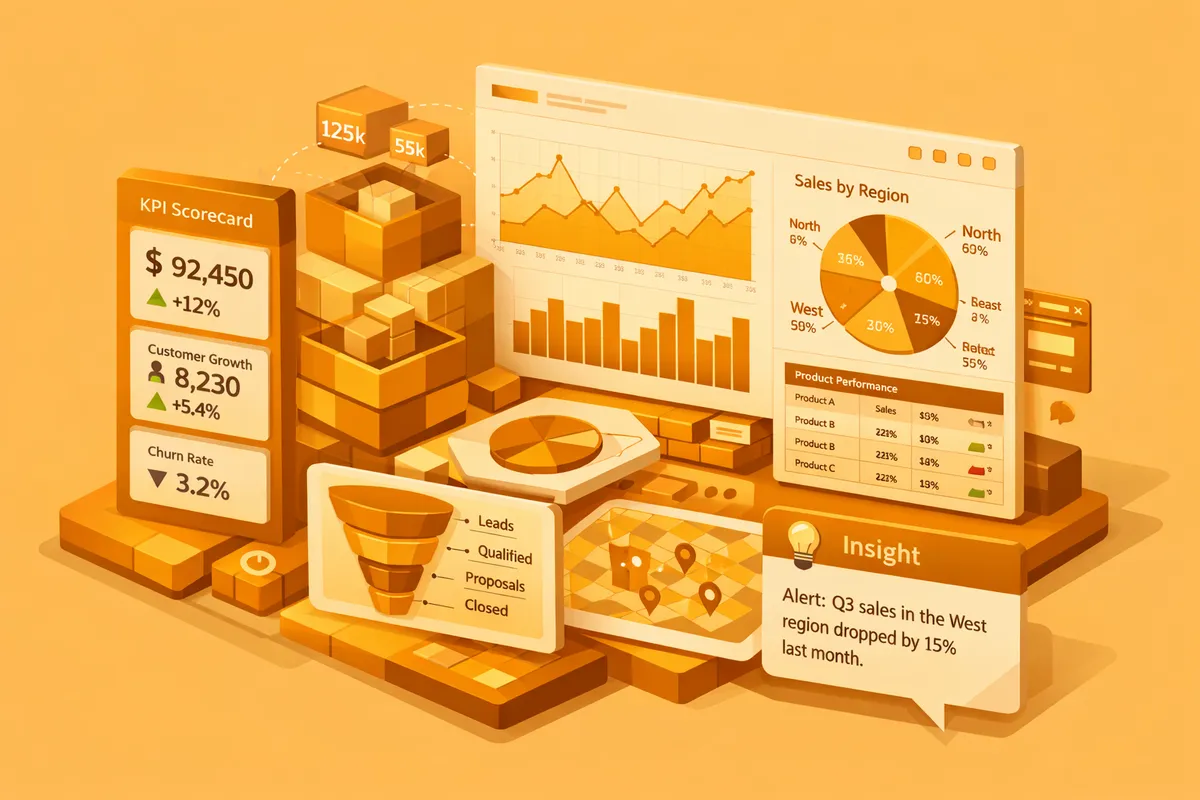
The dashboard itself gets designed for how an Avondale owner actually works: glanceable, honest, and built around the three or four numbers that drive the business. Job profitability, cash position, capacity utilization, customer concentration. No vanity metrics. We test it against real questions the owner brings in from a job site near Kosciuszko Park, refine the views, and only then hand it over. Training happens at the shop, in plain language, because a dashboard nobody trusts is a dashboard nobody opens.
Industries We Serve in Avondale
Metal fabricators and machine shops along the Chicago River industrial corridor use business intelligence to see job-level profitability that paper tickets hide. We build dashboards that compare quoted hours to actual hours, flag the job types where rework eats the margin, and show which of the shop's regular customers are genuinely profitable once setup time is counted. For a fabricator quoting steady work, that visibility is the difference between growing and just turning the lights on.
Auto body shops near Addison Street and Kedzie Avenue run on insurance estimates, parts timing, and bay throughput, and business intelligence ties those threads together. We give the owner a clear read on cycle time per job, which insurers pay slowest, and how many bay-hours sit unbilled in a typical week. Instead of guessing whether the shop is keeping pace, the owner sees it on one screen between estimates.
General contractors and trades working Avondale's gentrifying blocks around Avondale Park juggle several jobs at once, and the cash picture gets murky fast. Business intelligence pulls job costing, change orders, and receivables into a single view, so the contractor knows which projects near Central Park Avenue are bleeding and which are funding the others before the bank balance tells the story too late.
Craft breweries in the Elston Avenue corridor use business intelligence to read demand instead of reacting to it. We build dashboards tracking which accounts reorder, how taproom nights perform against their costs, and where kegs and packaged inventory tie up cash. A brewery deciding whether to add a canning line gets that decision grounded in numbers rather than optimism.
Polish delis and food businesses anchored near St. Hyacinth Basilica operate on thin margins and heavy holiday swings, and business intelligence makes the seasonality legible. We track which products carry margin, how the pre-Christmas and Easter rushes compare year over year, and where waste quietly erodes the week. The owner can plan staffing and ordering around real patterns instead of last year's rough memory.
Small manufacturers and light industrial operations off Belmont Avenue use business intelligence to connect production, inventory, and fulfillment into one read. We surface which product lines actually pay, where raw material sits idle, and how lead times drift across the season. For a manufacturer weighing whether to take on a larger contract near the industrial corridor, that clarity decides the answer.
What to Expect Working With Us
1. Floor walk and source mapping. We spend time in your Avondale shop watching how work actually gets recorded, from the job ticket to the invoice. We catalog every place a number lives, including the spreadsheets and the email threads, so nothing important gets left out of the picture.
2. Pipeline and cleanup. We build the connections that pull your scattered records into one consolidated dataset. This includes reconciling the inconsistencies that creep into any shop's books over the years, so the dashboard rests on numbers you can defend.
3. Dashboard design around your real questions. We design views around the three or four metrics that actually move your business, not a generic template. You bring the questions you ask yourself driving back from a job near Kosciuszko Park, and we build the screen that answers them.
4. Handover and shop-floor training. We train your team in plain language, at your counter, until the dashboard is something people open without being told to. We stay on to adjust the views as your Avondale operation changes and new questions surface.