How We Build Workflow Agents for Avondale
We start every engagement by mapping the specific workflows that cost your business the most time. For a fabricator near the Chicago River industrial corridor, that is typically quoting and order tracking. For a general contractor on Kedzie Avenue, it is often client communication, subcontractor coordination, and documentation. For a Polish restaurant near St. Hyacinth Basilica, it might be reservation management and catering inquiry processing. We do not prescribe a generic solution. We map the actual process first.
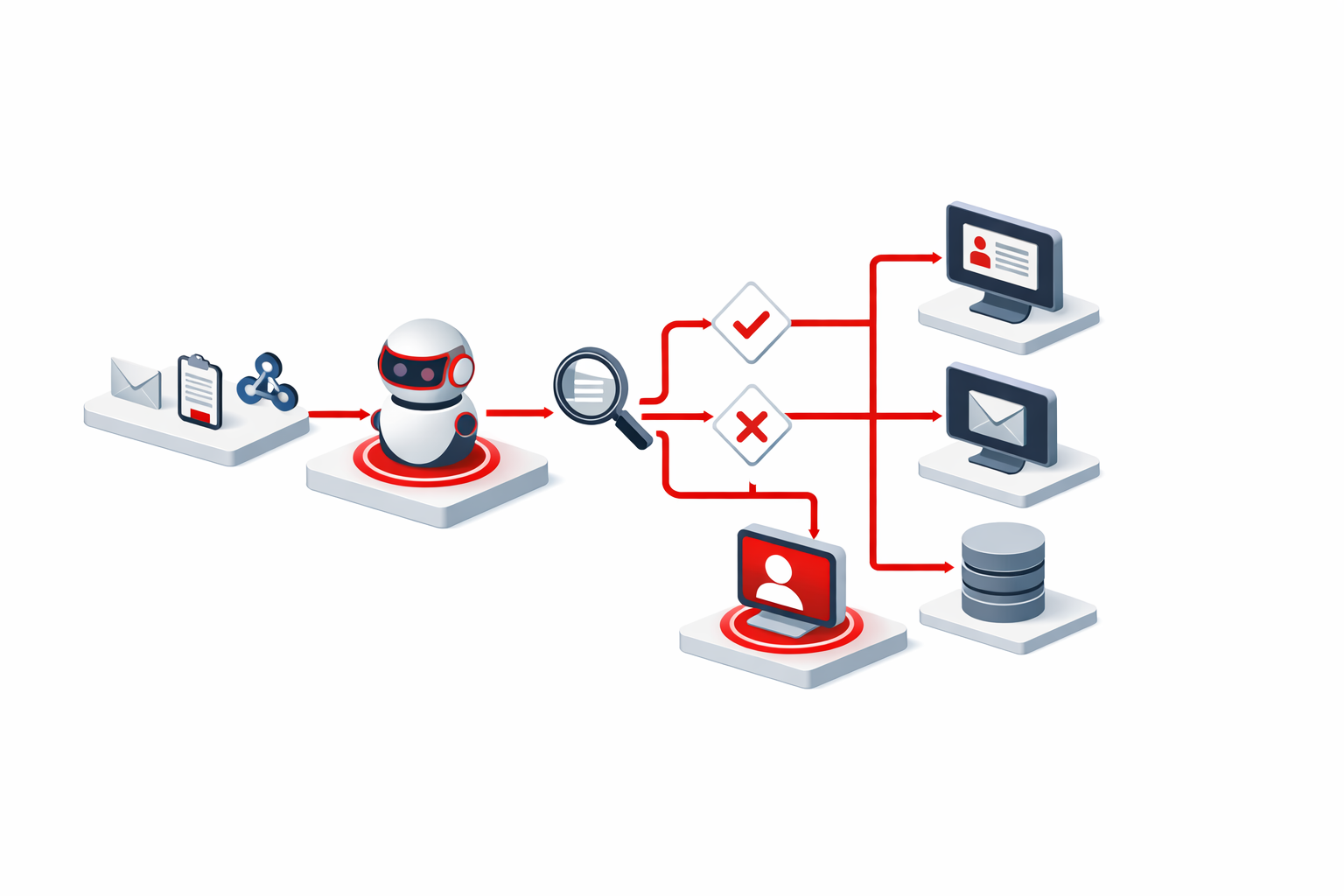
Once we understand the sequence, we design an agent that handles each step: receiving the trigger, processing any required information, calling the appropriate tools or systems, and generating the output. Each agent is tested against your real data and real scenarios before deployment. We do not release an agent that cannot handle the edge cases your business actually encounters.
Integration is handled by us. If your business uses a scheduling tool, a CRM, an email provider, or any other operational software, we connect the agent to those systems. For Avondale businesses that still manage operations in spreadsheets and email, we build lightweight infrastructure around the agent rather than forcing you to replace systems that already work.
We also build in transparency. Every action the agent takes is logged, so you can see exactly what it did and when. If a step fails or an unusual situation arises, the agent surfaces it for human review rather than guessing. The point is not to remove human judgment from your business. It is to remove the mechanical repetition that crowds out that judgment.
Industries We Serve in Avondale
Metal fabricators and manufacturers along the Chicago River industrial corridor deploy workflow agents to handle the quoting pipeline from inquiry to approval. When a new RFQ arrives, an agent processes the specifications, generates a structured quote from your pricing logic, and routes it for review. Follow-up sequences run automatically. Status updates to clients go out on schedule. The production team stays focused on the floor.
General contractors and construction trades based near Elston Avenue and Addison Street use agents to manage the project communication lifecycle. New project inquiries receive an automated response with qualification questions. Approved projects trigger a documentation sequence. Subcontractor coordination emails are generated from project data rather than composed by hand each time. Progress updates to clients run on a defined schedule without manual input.
Auto body shops and auto service businesses on Central Park Avenue and Kedzie Avenue use agents to handle service scheduling, repair status updates, and post-service follow-up. An agent that automatically contacts customers after a set number of months to schedule seasonal maintenance can replace a manual outreach list that never actually gets worked.
Polish heritage restaurants and catering operations along Milwaukee Avenue near St. Hyacinth Basilica use agents to handle catering inquiry processing, reservation confirmations, and event follow-up. A catering inquiry that arrives on a Friday evening gets an acknowledgment and a next-step prompt within minutes, not the following Monday when the owner is back in the building.
Small manufacturers and wholesale suppliers in Avondale's industrial zones use agents to automate order confirmation sequences, shipping notifications, and invoice generation. These processes are entirely deterministic once the order data exists, which makes them ideal candidates for full automation without any quality loss.
Craft breweries and event-based businesses along the Milwaukee Avenue corridor use agents to handle ticket inquiry responses, event registration confirmations, and post-event follow-up sequences. Consistent post-event communication is one of the highest-return marketing activities for hospitality businesses, and it is almost never done manually with the consistency it deserves.
What to Expect Working With Us
1. Workflow audit and process mapping. We spend the first phase understanding which administrative processes in your Avondale business consume the most time and are most repetitive. We map the exact sequence of steps, the data involved, and the tools currently in use. This audit determines which workflows are best suited for autonomous agent automation.
2. Agent design and system integration. We design the agent logic, connect it to your existing tools and data sources, and configure the trigger conditions and output formats. For Avondale businesses using common tools like Google Workspace, QuickBooks, or industry-specific software, most integrations are handled without requiring you to change platforms.
3. Testing and controlled deployment. Before any agent touches live business operations, we run it against test data and real-world edge cases specific to your business. We then deploy it in a monitored mode where you can review outputs before they go out, and we move to full autonomous operation only when both parties are confident in the behavior.
4. Ongoing monitoring and iteration. Agents are maintained, not installed and abandoned. We monitor performance, handle failures, and update logic as your business changes. Avondale businesses evolve: new services, new pricing, new customer segments. The agents evolve with them.