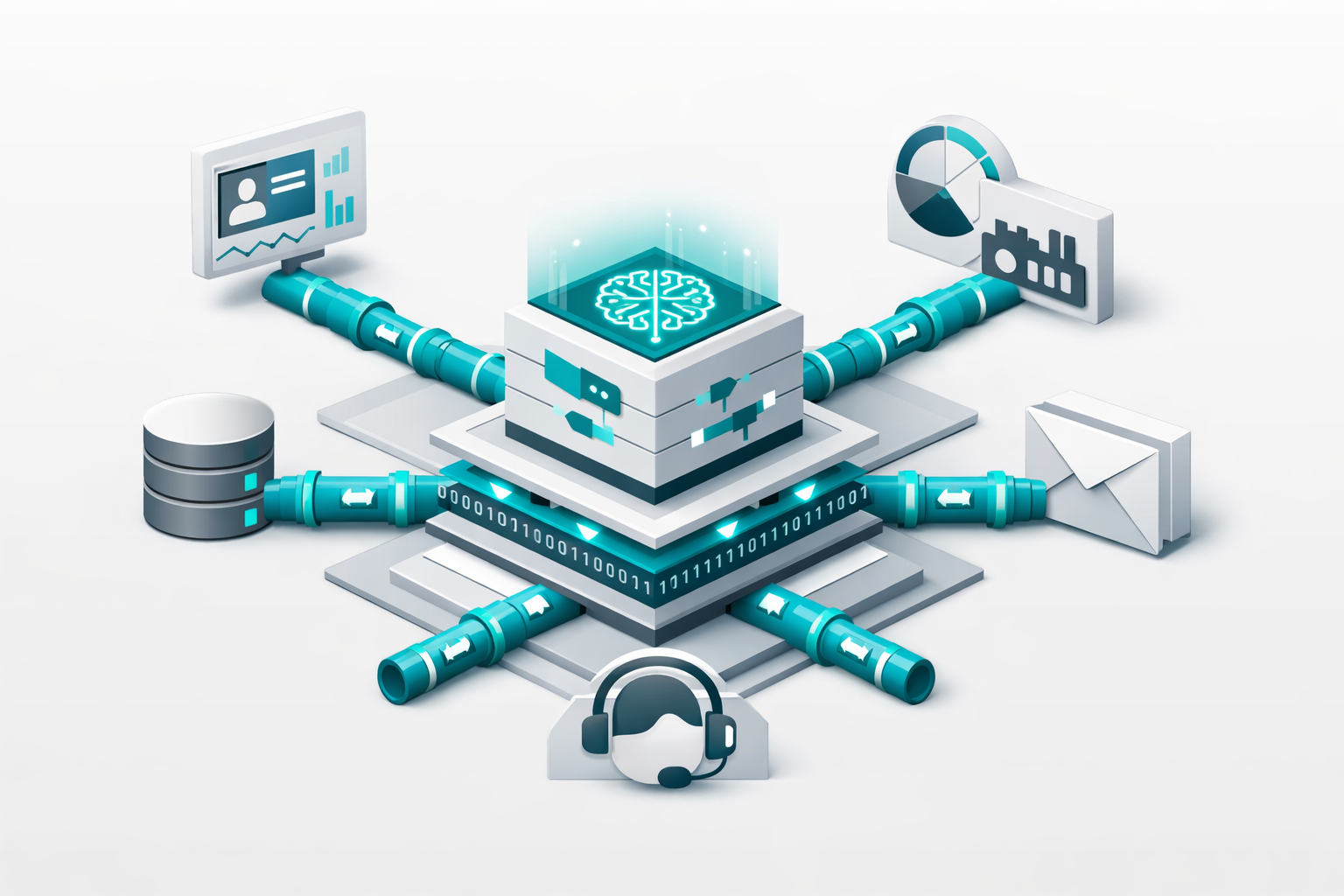
How We Build AI Integrations for Avondale
Integration work for Avondale businesses begins with a systems assessment. We map every tool your business uses, the data each one holds, and the manual steps your staff currently takes to move information between them. For a contractor working off Addison Street who manages jobs in one system and invoices in another, this reveals exactly where human bridging is happening and how much it costs each week.
From that map, we design integrations that prioritize by business impact. The best integration for an Avondale fabricator is the one that eliminates the most manual work or prevents the most expensive errors. We build with proper authentication, error handling, retry logic, and monitoring from the start. Integrations that fail silently create data problems that surface weeks later. Ours surface problems through immediate alerts.
For older systems common in Avondale's manufacturing corridor, including platforms that predate modern API standards, we use database-level integrations, file-based data exchange, and middleware layers that translate between legacy and current formats. A metal shop on the Chicago River industrial corridor does not need to replace its ERP to get AI capabilities. We build the bridge.
Once integrations are live, we deploy AI capabilities on top and test with real Avondale business scenarios rather than demo data. A Polish deli on Milwaukee Avenue that connects its supplier management to its accounting system in phase one gets AI-powered cost variance alerts in phase two because the data foundation is already there.
What We Connect and How
CRM integration connects AI tools to your customer relationship management system, giving AI access to contact history, communication records, purchase history, and account status. For a contractor in Avondale, this means an AI assistant that can pull up a customer's project history, past bids, and payment record before any call or email. For a restaurant, it means marketing AI that segments customers by visit frequency and spend level to send relevant offers rather than generic messages.
Accounting system integration connects AI capabilities to your financial data. QuickBooks, Sage, and similar platforms hold the financial truth of the business. Connecting AI to this data enables automated invoice anomaly detection, cash flow forecasting, and job profitability analysis. For a Polish deli on Central Park Avenue managing tight margins, an AI layer that flags cost variances by supplier is a practical tool, not an enterprise luxury.
ERP and production system integration connects AI to the operational core of Avondale's manufacturing businesses. A fabricator on Elston Avenue whose production system talks to its procurement system, and whose procurement system is visible to an AI planning layer, can optimize job scheduling against real capacity and real materials in ways that manual planning cannot match.
Industry-specific platform integration handles the specialized tools Avondale businesses use that general platforms often cannot connect cleanly. Restaurant POS platforms. Auto repair management systems. Construction project management tools. Brewing production software. We build custom integrations using direct API connections, database-level integrations, or file-based exchange for legacy systems.
Webhook and event-driven automation makes AI responses immediate. When a new inquiry arrives in your CRM, a webhook triggers an AI analysis that routes it with context attached. Events drive automatic actions in connected systems without waiting for a nightly sync.
Industries We Serve in Avondale
Metal fabricators and manufacturers in Avondale's industrial corridor and along Elston Avenue need AI integrations connecting production systems with procurement, CRM with estimating, and accounting with job costing. An AI layer on connected manufacturing data identifies scheduling conflicts before they become missed deadlines, flags supplier price increases before they erode margins, and surfaces the job types that produce the most profit. These capabilities require connected data.
General contractors and trades businesses based in Avondale serve job sites across Chicago's Northwest Side, including Logan Square, Hermosa, and Portage Park. They need integrations connecting project management with billing, procurement with job costing, and subcontractor management with accounts payable. AI on top of connected project data helps contractors flag projects approaching budget limits before they exceed them and forecast completion dates based on actual progress.
Polish heritage restaurants and family businesses along Milwaukee Avenue and Central Park Avenue, with community anchors near St. Hyacinth Basilica and Kosciuszko Park, benefit from integrations connecting POS with accounting, reservation systems with CRM, and supplier management with inventory. An AI layer on connected restaurant data surfaces relationships between staffing, cover counts, and revenue per service that operators cannot easily quantify without connected systems.
Craft breweries and hospitality businesses near Belmont Avenue and the Chicago River run production tools, taproom POS, distribution management, and event scheduling in separate systems. Integration connects these into a single operational picture. AI on top of connected brewing data models which products to brew more of based on sales velocity, production cost, and tap longevity simultaneously, which is impractical to do manually across disconnected platforms.
Auto body and repair businesses in Avondale benefit from integrations connecting repair order management with parts procurement, insurance portal integrations with billing, and customer history with scheduling. AI on connected repair shop data prioritizes the appointment queue based on parts availability and insurance pre-authorization status.
Small retailers and neighborhood businesses on Addison Street and throughout Avondale's commercial corridors benefit from integrations connecting in-store POS with online sales channels, inventory with purchasing, and customer history with marketing tools. For a single-location shop that added an online store recently, integration connects what were two separate businesses into one operational view.
What to Expect Working With Us
1. Systems assessment and integration mapping. We document every software tool your Avondale business uses, the data each one holds, and the manual steps currently required to move information between them. This reveals the highest-value integration opportunities clearly.
2. Integration design and AI capability planning. We design the specific integrations and the AI capabilities they enable, prioritizing by business impact. The best integration for an Avondale contractor is the one that eliminates the most manual work or prevents the most costly errors, not the most technically sophisticated one.
3. Build, testing, and monitoring infrastructure. We build integrations with proper authentication, error handling, retry logic, and monitoring built in from the start. Integrations that fail silently create data problems that surface weeks later. Ours surface problems through immediate alerts.
4. AI layer deployment and optimization. Once integrations are live and data is flowing correctly, we deploy the AI capabilities on top, test with real business scenarios, and optimize based on actual output quality rather than demo performance.