How We Build AI Data Pipelines for Avondale
We start with a data audit: mapping every system in your business that generates data, the format it lives in, how it is currently accessed, and what decisions it informs or should inform. For an Avondale manufacturer, this typically reveals production data, procurement data, and billing data living in separate systems with no automatic exchange between them. For a Milwaukee Avenue restaurant, it reveals POS, delivery platform, accounting, and reservation data running in parallel silos.
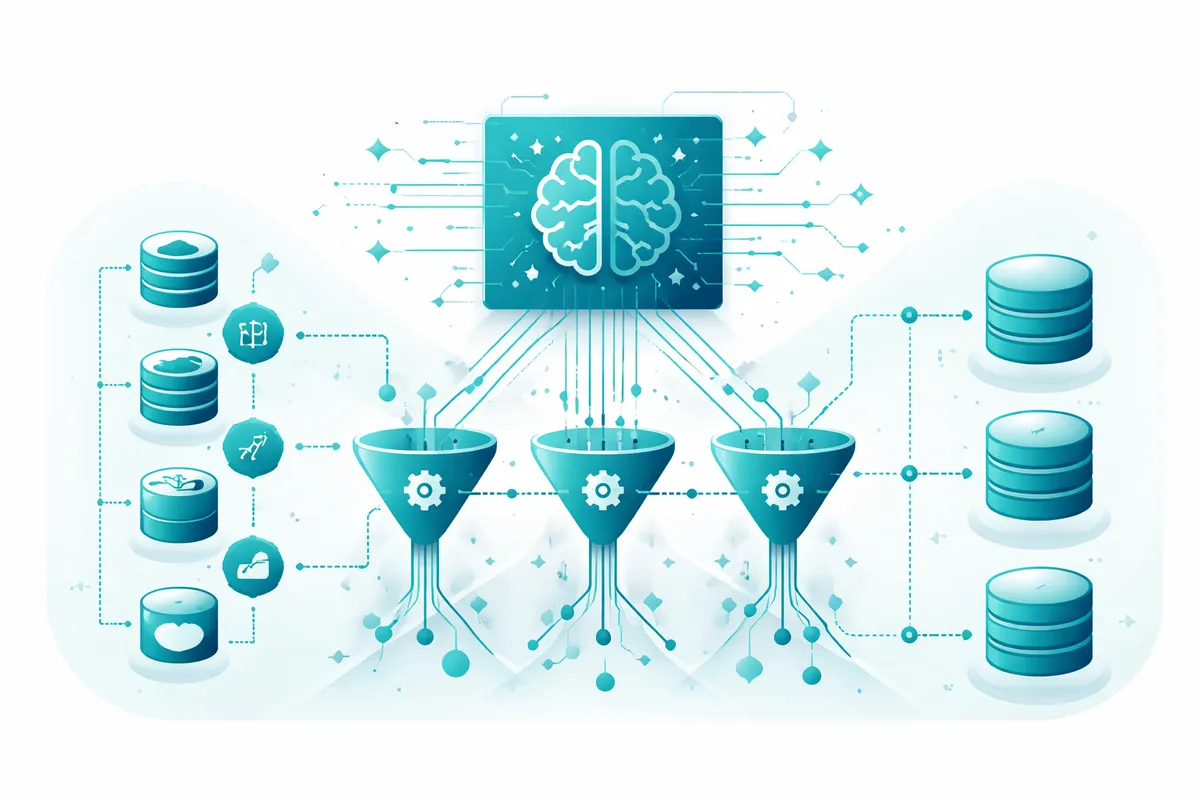
From the audit, we design a pipeline architecture that connects your sources, handles the transformation and cleaning required to make the data useful across systems, and delivers it to a reporting environment your team can actually use. We are not building infrastructure for its own sake. Every pipeline decision is driven by the business decisions the data needs to support.
The AI layer adds capabilities that rules-based pipelines cannot deliver. AI detects anomalies in the data stream that indicate problems in source systems, often before a human would notice. It intelligently merges data from sources with inconsistent formats without requiring manual mapping rules for every edge case. It learns from historical patterns to predict data quality issues before they propagate. For a manufacturer reviewing production reports, this means the AI flags when numbers fall outside historical norms and routes the exception for review rather than letting bad data corrupt a cost analysis.
We handle the technical implementation and deliver a working pipeline with documentation and a monitoring setup your team can understand. Most Avondale businesses do not have an internal data engineering team. We build pipelines that run reliably without daily technical management and that surface problems through alerts rather than silent failures.
Industries We Serve in Avondale
Metal fabricators and manufacturers in Avondale's Chicago River corridor and along Elston Avenue benefit from pipelines that connect production scheduling with materials procurement, machine monitoring with maintenance planning, and job costing with customer billing. An AI layer on connected manufacturing data surfaces patterns that inform capacity planning, predictive maintenance, and job pricing. A shop that understands its actual cost per production hour, updated continuously, prices jobs more accurately than a shop relying on estimates assembled monthly.
General contractors and trades businesses operating from Avondale out across the Northwest Side need pipelines that connect project management with job costing, subcontractor billing with accounts payable, and materials purchasing with project budget. When these flows run automatically, the contractor reviews a current financial picture of every active job rather than a spreadsheet compiled by hand the week before a billing cycle.
Polish heritage restaurants and family dining businesses along Milwaukee Avenue and Central Park Avenue benefit from pipelines that connect POS transaction data with reservation history, supplier invoice data with menu costing, and delivery platform performance with in-house sales. The combined view reveals what the disconnected systems cannot: which menu items drive profit, which delivery platforms produce margin after fees, and which supplier relationships need renegotiation.
Craft breweries and newer hospitality businesses that have opened along Belmont Avenue and near the Chicago River bring modern software but fragment it quickly as they add tools for production tracking, taproom sales, distribution, and events. Pipelines built early consolidate this data before it becomes a reconciliation problem, and give owners real-time visibility into production cost, sales velocity, and event profitability from a single view.
Auto body and repair businesses in Avondale deal with data from repair order systems, insurance portal integrations, parts procurement, and customer history that rarely connect automatically. A pipeline that links repair order completion with billing, parts cost with job profitability, and customer history with retention outreach turns disconnected records into actionable business intelligence.
Small retailers and neighborhood businesses on Addison Street and throughout Avondale's commercial corridors benefit from pipelines that connect in-store POS with online sales, inventory tracking with purchasing, and customer purchase history with marketing tools. For businesses without a dedicated analyst, a pipeline that maintains a current, accurate view of inventory and sales by category is the difference between reacting to stockouts and preventing them.
What to Expect Working With Us
1. Data audit and source mapping. We document every system generating data in your Avondale business, the format that data lives in, and the decisions it needs to inform. This takes one to two working sessions and produces a clear map of what we are connecting and why.
2. Pipeline design and architecture. We design the data flow, transformation logic, and destination environment based on your actual business questions, not a theoretical data model. Every architectural decision is justified by the reporting or automation it enables.
3. Build, integration, and testing. We build the pipeline, connect your source systems, and test with real data before anything runs in production. We validate output accuracy against your existing reports and reconcile discrepancies before launch.
4. Monitoring, alerting, and handoff. We configure monitoring and alerting so failures surface through notifications rather than silent data problems. We document the pipeline and train whoever manages it on how to recognize and escalate issues.