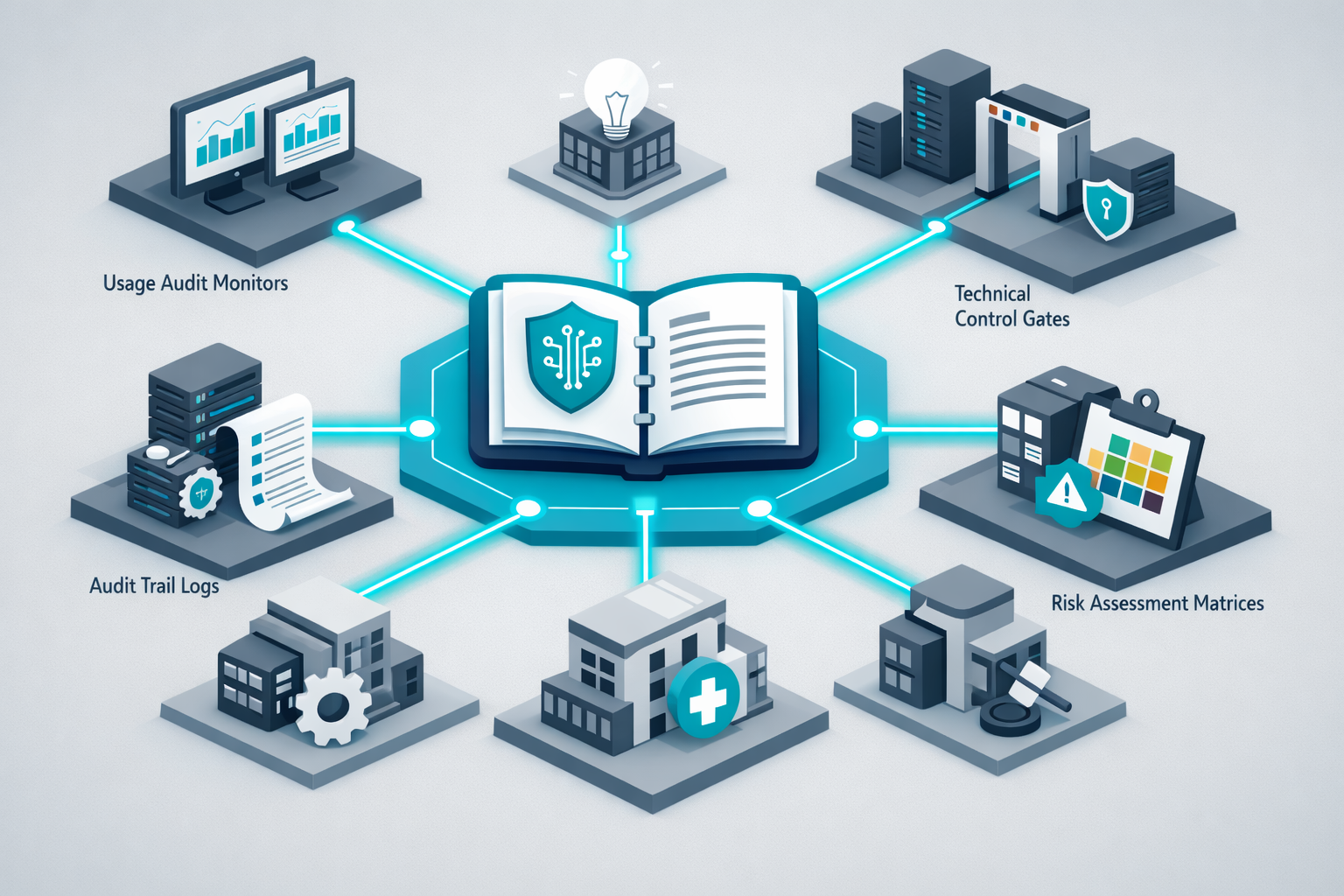
How We Build AI Governance for Avondale
Building a proportionate governance program for an Avondale business starts with an honest inventory, not a template. We begin by mapping every AI tool your operation uses: dedicated AI software, embedded AI features in existing platforms, and AI-enabled vendor services. Most Avondale fabricators and contractors are surprised by how many tools fall into this category once we look closely. A quality control platform along the Elston Avenue corridor may use AI for defect detection. A scheduling tool used by contractors on Kedzie Avenue may optimize assignments algorithmically. We document each system, assess the data it handles, and identify which regulatory frameworks apply.
From that inventory, we build policy documents written for your actual business, not copied from enterprise templates. A Milwaukee Avenue restaurant needs different policies than a Chicago River industrial manufacturer. Both need clear standards for human oversight, vendor accountability, and incident response, but the specifics of each policy reflect how your operation actually works. We write in plain language your team can read and follow without a legal department standing by.
We then work through your vendor relationships. Your compliance obligations do not transfer to the vendors whose AI tools you use. If a vendor's system processes customer data without appropriate consent, your Avondale business can bear legal responsibility regardless of what the vendor's terms claim. We assess vendor contracts and help you negotiate provisions that allocate risk appropriately before an enforcement action forces the issue. Finally, we integrate compliance steps into your operational workflows and train relevant team members on what the program requires. Near Avondale Park and along the industrial riverfront, the businesses that come out of this process feel less like they have added compliance overhead and more like they have built protection they can rely on.
Industries We Serve in Avondale
Metal fabricators and industrial manufacturers along the Chicago River corridor and Elston Avenue use AI tools in production, quality control, and scheduling. We build governance programs that address the specific regulatory exposure of industrial AI applications, including documentation requirements for automated quality decisions and data handling standards for production system data.
Auto body shops and contractors on Kedzie Avenue and Belmont Avenue that use AI for estimating, scheduling, or customer communication need straightforward data handling policies and vendor due diligence frameworks. We keep governance proportionate for trade businesses that need protection, not enterprise compliance infrastructure.
Staffing agencies and employment services anywhere near Milwaukee Avenue or Addison Street face direct exposure under Illinois's AI Video Interview Act and EEOC guidance. We build compliant hiring AI frameworks that include required disclosures, human oversight checkpoints, and bias monitoring for any AI involved in employment decisions.
Family restaurants and food businesses along Milwaukee Avenue that use AI for loyalty programs, reservations, or customer communication are processing consumer data that carries legal handling obligations. We build simple, practical policies and consent mechanisms that protect the business without requiring legal expertise from the owner.
Professional services firms and agencies operating in Avondale's commercial corridors who use AI in client work need client data governance frameworks, appropriate contract language for AI use, and policies that protect both the firm and its clients.
General contractors and renovation businesses serving the Avondale residential market, especially those using AI for project estimation or client communication, need basic AI use policies and data handling standards that hold up if a client or counterparty ever raises questions.
What to Expect Working With Us
1. AI inventory and risk assessment. We begin with a structured review of every AI tool your business uses, how it processes data, and what decisions it influences. Most Avondale businesses discover they have more AI exposure than they assumed. The assessment produces a clear map of your compliance obligations and risk areas.
2. Policy and documentation development. We draft governance policies and documentation workflows calibrated to your specific business. You review, adjust, and approve before anything is finalized. We write in plain language that your team can actually read and follow.
3. Vendor review and contract guidance. We assess your key AI vendors against your compliance requirements and identify any contractual gaps that need to be addressed. We provide model contract language and guidance on how to raise these issues with vendors.
4. Training and program launch. We train your relevant team members on the governance framework, build compliance steps into your operational workflows, and deliver a governance program that is live and functional, not just documented.