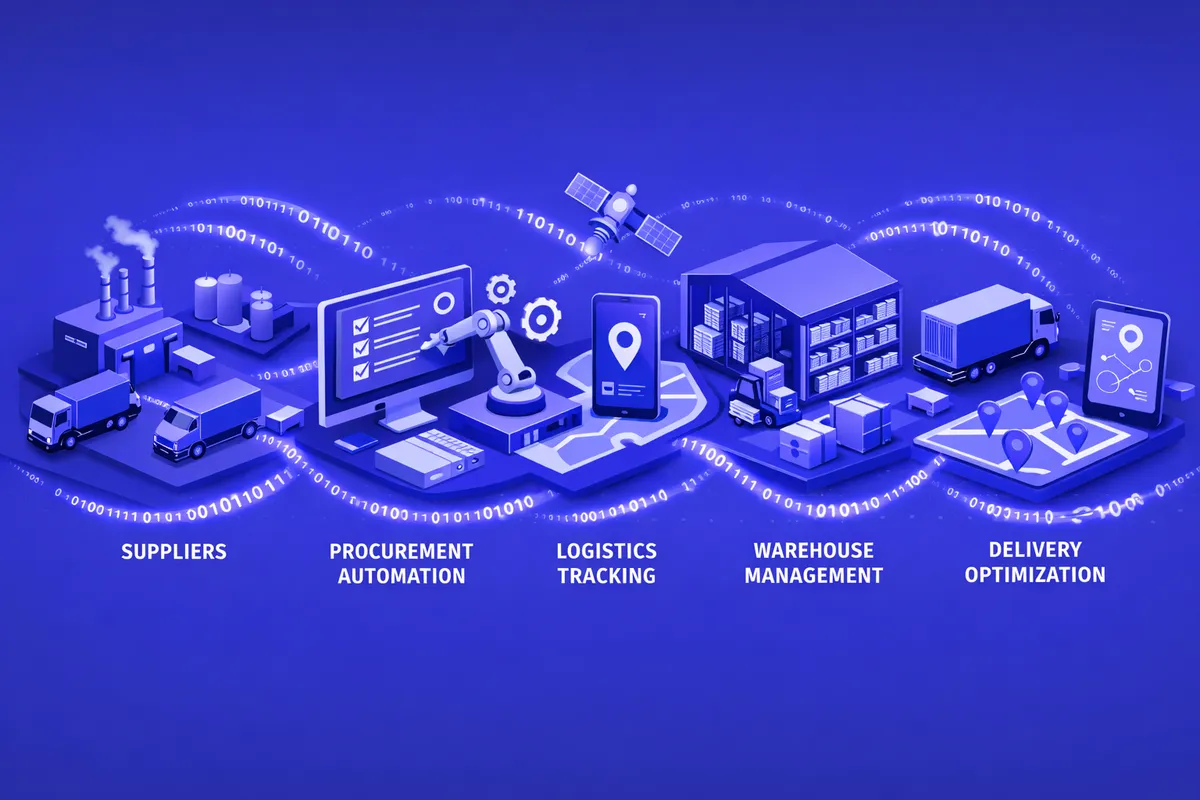
Our Supply Chain Automation Services for Andersonville
- Supply chain process mapping and automation opportunity assessment for Andersonville business types
- Procurement workflow automation: demand-triggered purchase order generation, approval routing, and supplier acknowledgment management
- Supplier communication automation: order confirmations, delivery updates, and exception alerts
- Inventory management automation: demand-driven replenishment triggers, safety stock management, and low-stock notifications
- Product receiving and put-away workflow automation
- Supplier relationship management and communication tracking
- Integration with QuickBooks, Xero, POS platforms, and inventory management tools common in Andersonville's business community
- Perishable goods management automation for Andersonville food businesses with expiration tracking and FIFO enforcement
- Performance reporting: purchasing cycle times, fill rates, carrying costs, and order accuracy
Industries We Serve in Andersonville
Independent Retail Boutiques: Clark Street boutiques managing multi-supplier product catalogs need automation that monitors inventory levels, triggers reorders at the right threshold, and manages the supplier communication workflows that keep shelves stocked without over-investing in slow-moving inventory.
Specialty Food and Cafe Businesses: The specialty food retailers and cafes on Foster Avenue and Clark Street manage perishable inventory with daily ordering cycles and supplier relationships that benefit from automated ordering triggers, delivery tracking, and the FIFO management that reduces waste.
Restaurants: Andersonville's independent restaurants manage food, beverage, and supply inventory across multiple supplier relationships. Automated purchasing workflows, delivery confirmation tracking, and the reconciliation between received goods and invoices reduce the administrative burden and the errors that manual processes accumulate.
Specialty Retailers and Booksellers: Women and Children First and specialty retailers with complex, diverse catalogs manage inventory and supplier relationships that benefit from automation of the routine reorder cycles, allowing staff to focus on the curation and customer relationships that define the business.
What to Expect
We begin with a process assessment mapping your current supply chain workflows, identifying the highest-cost bottlenecks, and producing a prioritized automation roadmap. Integration architecture design follows, defining the connections between your existing systems and the automated workflows. We implement highest-priority automations first and test against your actual operational scenarios. Post-launch monitoring and optimization improve performance as the automated footprint grows.