Your Cart (0)

Your cart is empty

Andersonville, Chicago

Legacy System Integration in Andersonville

Legacy System Integration for businesses in Andersonville, Chicago. We know the neighborhood, the customers, and what it takes to compete locally.

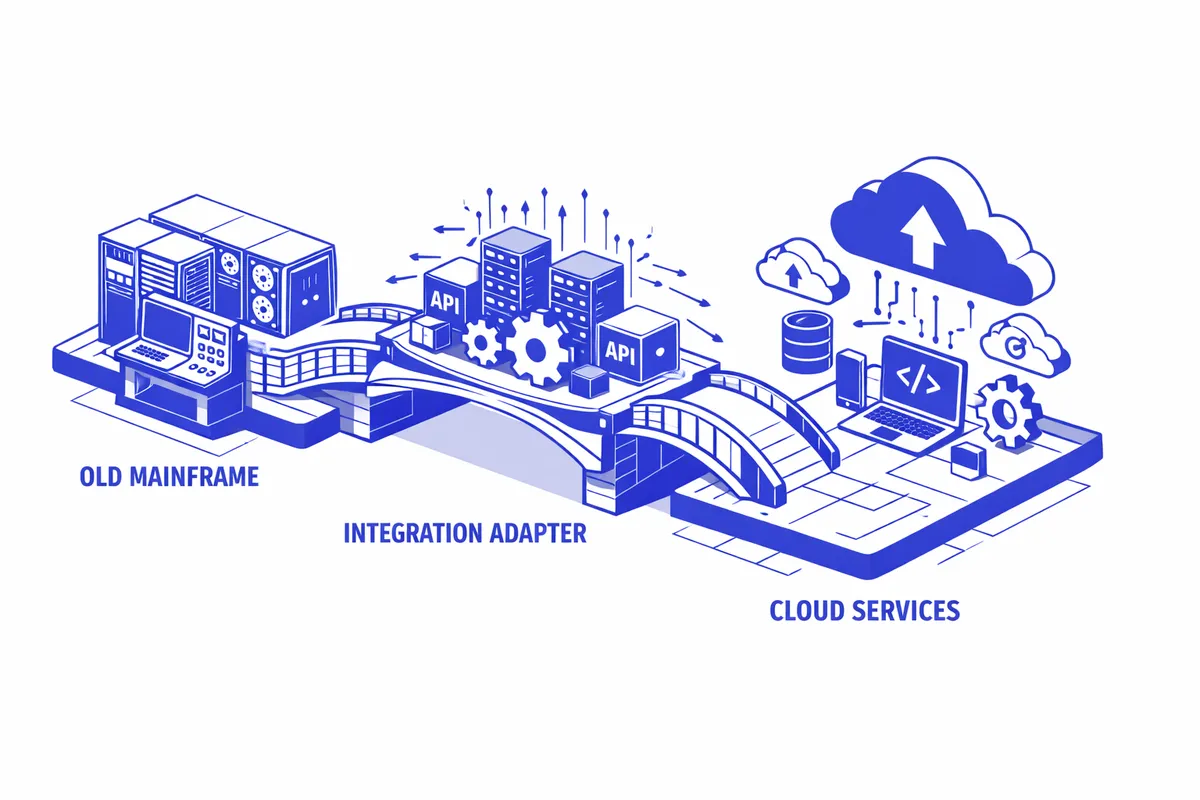
Legacy System Integration in Andersonville service illustration

Our Legacy System Integration Services

  • Legacy system discovery: documentation of data structures, integration capabilities, and performance characteristics
  • Integration architecture design for the right approach: API wrapper, database-level access, file-based exchange, or screen-based automation
  • API wrapper creation for systems with no native API connectivity
  • File-based and batch integration for systems that cannot support real-time connection
  • Database-level integration for direct data access where appropriate
  • Data mapping and transformation logic between legacy and modern data formats
  • E-commerce integration connecting legacy inventory to Shopify, WooCommerce, and marketplace channels
  • Accounting system connectivity for legacy billing and financial platforms
  • CRM and customer data integration for legacy customer management systems
  • Modern web interfaces built on top of legacy data
  • Reconciliation and consistency monitoring
  • Post-launch monitoring and maintenance support

What to Expect

We begin with a discovery phase that documents the legacy system's actual behavior: data structures, existing integration points, communication capabilities, and performance characteristics. For systems without documentation, this phase builds the understanding needed to design reliable integration without guessing. Integration architecture design follows, selecting the right approach and designing data transformation and error handling. We build and test the integration layer, then deploy with monitoring active. Legacy integrations require sustained monitoring because legacy systems have behaviors that only surface under specific conditions.

Frequently Asked Questions

API-less systems are common in Andersonville's established businesses that have been running the same software for years. We use multiple approaches depending on what the system supports. Database direct access reads and writes data at the database level, bypassing the application layer. File-based integration uses the export capabilities most legacy systems have, even if limited to batch processing. Screen-based automation handles interactions with the legacy system's user interface when no other integration point exists. We assess each system's specific capabilities during discovery and select the most reliable approach.

Yes. This is one of the most valuable patterns for Andersonville's independent retailers. The legacy inventory system continues running unchanged. We build an integration layer that exposes your inventory data through a modern interface. Your Shopify store, your loyalty program, or your online ordering platform connects to that integration layer and receives accurate, real-time inventory data. Customers see current availability without you manually updating two systems. Your staff continues using the legacy system they know.

Legacy systems accumulate data quality issues over time: duplicate records, inconsistent formatting, incomplete fields, and entries that made sense when they were created but no longer reflect current business logic. We assess data quality during discovery and build data cleaning and transformation logic into the integration layer. For significant data quality problems that affect integration reliability, we discuss remediation options and their cost before proceeding with integration design.

We design integration architecture with security as a foundational concern. Access to legacy system data through integration points is controlled by role and logged for audit. Data flowing between systems is encrypted in transit and at rest. For Andersonville healthcare and wellness practices, we design to HIPAA technical safeguard requirements. The integration adds connectivity without reducing the security posture of either connected system.

A single point-to-point integration between a legacy system and a modern platform typically takes 6 to 12 weeks. Systems without documentation or APIs take longer because the discovery phase must substitute for documentation. More complex integrations with multiple connected systems or significant data transformation requirements take 14 to 20 weeks. We scope conservatively to account for the discoveries that legacy systems regularly produce.

Legacy integrations require ongoing monitoring as both connected systems evolve. The legacy system may receive updates that change data structures. The modern platform receives regular updates that affect API behavior. We monitor integration health post-launch and offer maintenance retainers that cover monitoring, error resolution, and updates triggered by changes in either system. The integration is designed to be maintainable by design, with comprehensive documentation and clear change management processes. Learn more about [legacy system integration across Chicago](/chicago/legacy-system-integration) or explore other [digital services in Andersonville](/chicago/andersonville).

Ready to get started in Andersonville?

Let's talk about legacy system integration for your Andersonville business.