How We Build Document Management for Andersonville
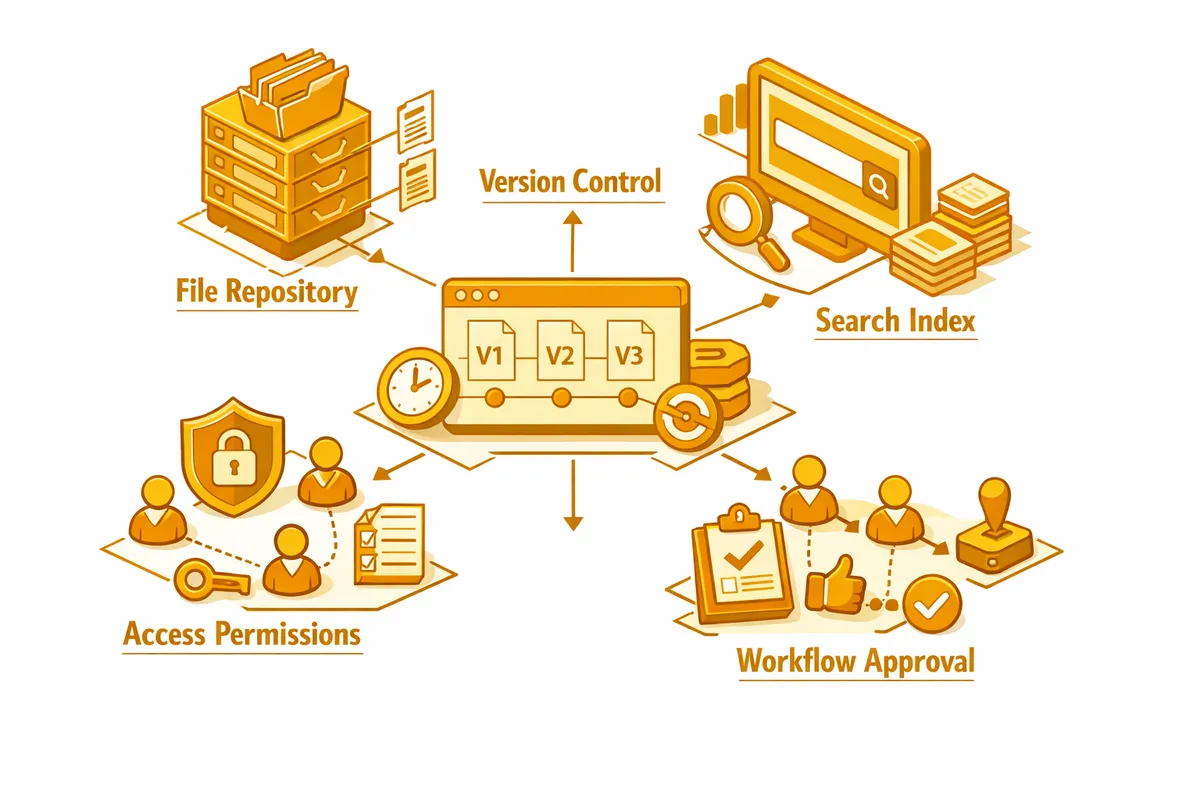
We start with an audit of your current document environment. Where do documents live now? How many are there? What types exist? What compliance requirements apply? What integrations with existing software are necessary? For Andersonville professional firms, the audit typically reveals that documents live in at least four places: a shared drive, individual hard drives, email attachments, and a physical filing cabinet. The audit produces a clear picture of what needs to be consolidated and how.
Document taxonomy design is the foundation of a useful system. The naming conventions, folder structures, and metadata schemas that make documents findable years after they are created. For a law practice serving the residential community along Foster Avenue, that means matter-centric organization where every document traces to a client and matter. For an accounting firm on Ashland Avenue, engagement-centric organization where each client's work papers are organized by tax year and engagement type. We design the taxonomy based on how your practice actually retrieves documents, not how software vendors typically organize their templates.
Migration from current storage is handled carefully. We reorganize documents into the new taxonomy during the move rather than copying existing chaos into the new system. Every document arrives in the new system correctly categorized, versioned, and accessible. We validate completeness before retiring access to the old storage.
Industries We Serve in Andersonville
Independent law practices and legal professionals serving the Andersonville and Far North Side residential community need matter-centric document organization where every file, correspondence, and court document is immediately locatable by matter, client, and document type. A solo practitioner managing fifty active matters cannot spend twenty minutes finding a specific version of a contract. Version control with complete history, conflict checking that surfaces related documents automatically, and client portal integration that delivers documents without full system access are the core capabilities that matter most for this community.
Accounting firms and financial advisors on Ashland Avenue manage multi-year client relationships where document continuity is both a professional obligation and a service differentiator. Tax returns, financial statements, planning documents, and correspondence need to be accessible for the prior seven years at minimum. A client who calls asking about their 2019 return should have their accountant able to pull it in thirty seconds. Engagement-centric organization, retention policy automation, and integration with accounting software are the foundations of document management for this practice type.
Wellness and therapeutic practices near Bryn Mawr Avenue serve clients whose records are protected health information subject to HIPAA requirements. For the independent therapy practices, integrative health businesses, and specialized wellness providers that Andersonville supports, document management must combine HIPAA-compliant architecture with the practical usability that solo and small-team practices need. Access logs, encryption, retention policies, and client record portability for practices that refer out or end therapeutic relationships are the specific requirements we design for.
Independent retailers and specialty shops on Clark Street manage operational documents that are often the last category any business thinks about until something goes wrong: vendor contracts, insurance certificates, lease agreements, employee records, and operational procedures. Women and Children First, the home goods boutiques, and the specialty shops that line Clark Street between Foster and Bryn Mawr all accumulate years of operational documentation that lives in filing cabinets or scattered across drives. A properly organized document repository makes audits, insurance claims, and vendor negotiations faster and less stressful.
Creative and consulting businesses serving the broader Andersonville and Edgewater community often manage complex project documentation across multiple active engagements. Proposals, contracts, deliverable files, revision histories, and client communications that span months or years per engagement. Document management designed around project and client context keeps this material accessible and organized without the manual effort of keeping multiple folders synchronized across a team.
Nonprofit and community organizations connected to Andersonville's civic infrastructure manage board documents, grant records, program documentation, and financial records across leadership transitions that can otherwise result in institutional memory loss. Proper document management ensures that a new executive director can access the full history of grant commitments, vendor relationships, and board decisions from their first day without depending on institutional memory that walks out the door with departing staff.
What to Expect Working With Us
1. Document environment audit: We catalog your current document types, volumes, locations, and compliance requirements. For most Andersonville professional firms, the audit takes one to two weeks and produces a clear map of what needs to be addressed.
2. Taxonomy and architecture design: We design the document organization structure, access control model, retention policies, and integration requirements. For regulated industries, compliance architecture is designed into the system before implementation begins.
3. Migration and implementation: We migrate from your current storage, reorganizing documents during the move. Your team receives training before go-live and has a named contact for questions through the stabilization period.
4. Ongoing support: Policy updates, taxonomy adjustments, and integration maintenance as your Andersonville practice evolves. Document management is not a set-it-and-forget-it system. As your business grows and regulations change, the system needs to evolve with you.