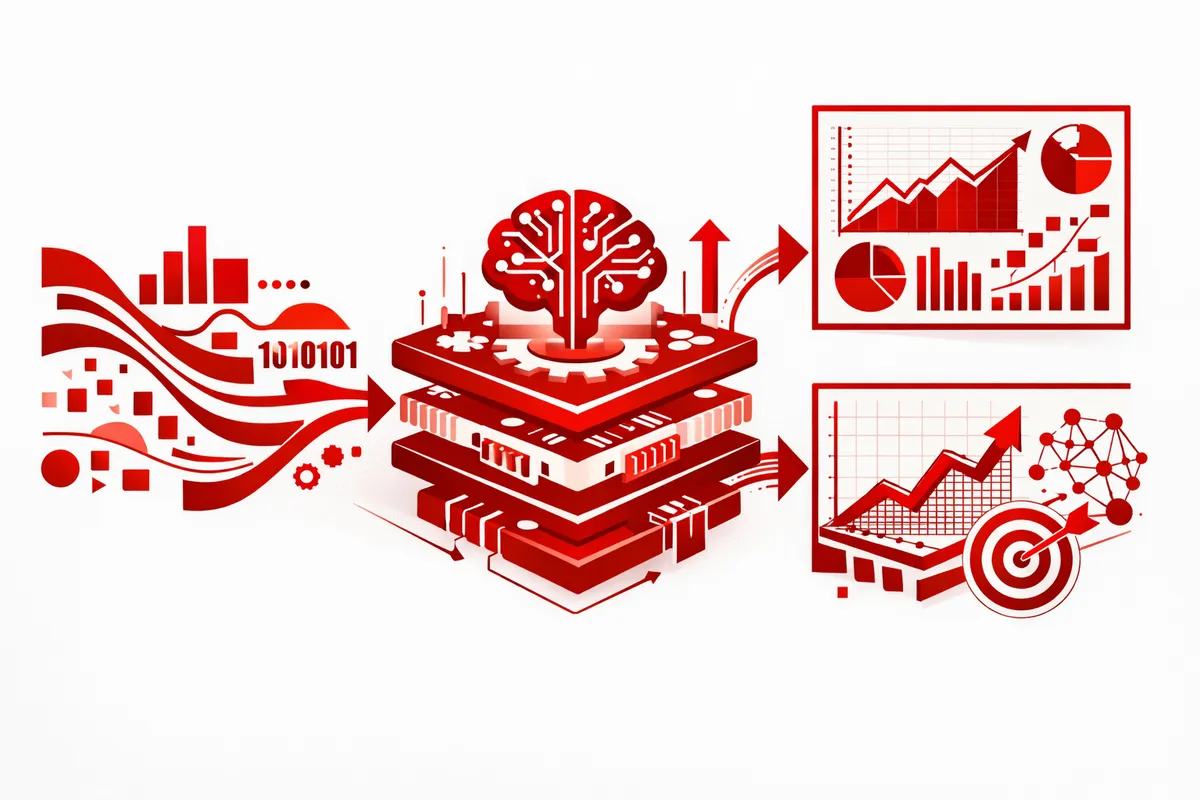
How We Build Analytics and AI for Andersonville
We start by understanding the specific decisions you need to make better and mapping the data that exists to support them. This guides everything that follows: which data sources to connect, which analyses to build, which insights to surface first.
Data connections are built as automated pipelines updating daily. Your POS, booking platform, e-commerce store, and marketing tools each contribute their piece without requiring manual exports or transfers. For Andersonville businesses with years of transaction history in their current systems, we often build retrospective analysis from historical data immediately, giving insight into patterns before the new system has run for a full month.
Dashboard design follows the standard that a busy Andersonville business owner can glance at their dashboard for sixty seconds and know what they need to know. Metrics connect to specific decisions. Charts that require explanation get redesigned. Automated summaries arrive in email on a schedule that fits your operational rhythm.
Industries We Serve in Andersonville
Restaurants and wine bars along Clark Street use analytics to optimize menus, staffing, and promotional programming. Which dishes have the highest margin per cover? Which evenings show the most consistent revenue? Does the Thursday tasting event cannibalize Saturday business or grow the overall customer base? These questions have answers in your POS and reservation data. Analytics surfaces them automatically. A wine bar near Hopleaf Bar that knows its Friday evening event programming drives a 35 percent revenue premium compared to non-event Fridays makes programming decisions very differently than one operating on intuition.
Independent retailers between Foster and Bryn Mawr use product performance analytics to inform buying, merchandising, and inventory decisions. Which categories are growing as a share of total revenue? Which items have been on the floor for more than sixty days? Which promotional events drive the strongest attach rates? For a Clark Street boutique managing hundreds of SKUs, category-level performance data turns seasonal buying from an exercise in educated guessing into an evidence-based process.
Wellness studios and fitness businesses near Bryn Mawr need class utilization data, instructor performance metrics, and client retention analytics to make scheduling and staffing decisions. A yoga studio that knows its 8 AM Saturday class fills to 90 percent while its 10 AM Sunday class runs at 45 percent has the information it needs to reallocate scheduling time. A studio that can identify clients who have not visited in thirty days has the data it needs to run effective re-engagement campaigns before those clients decide not to renew.
Queer-owned and community-rooted businesses throughout Andersonville's commercial district serve customer communities whose patterns deserve analysis on their own terms. Analytics built for the specific purchasing patterns, visit frequencies, and loyalty behaviors of Andersonville's distinct customer community surfaces insights that generic industry benchmarks obscure. The patterns of a loyal LGBTQ+ customer base shopping on Clark Street are not identical to the patterns of any other retail community, and analytics designed around actual data rather than industry averages reflects that.
Professional services on Ashland Avenue use analytics to track utilization rates, client profitability, and pipeline health. An accounting practice that can see which client relationships are consuming more than their billing justifies, and which service lines are growing as a share of revenue, has the information it needs to make strategic decisions about pricing, capacity, and growth direction. These are the management decisions that most small professional practices make annually based on gut feeling rather than data.
Specialty food producers and artisan goods businesses serving the Andersonville market and broader Chicago distribution need channel profitability analytics that show gross margin by revenue stream, not just total revenue by channel. A specialty food producer selling through farmers markets, restaurant wholesale accounts, and an e-commerce store needs to know which channel is driving the most profit per hour of operational effort, not just which channel has the highest gross revenue. AI-assisted demand forecasting can also predict seasonal demand patterns that inform production planning.
What to Expect Working With Us
1. Discovery and decision mapping: We identify the specific decisions you need to make better and map the data that exists to support them. Most Andersonville businesses are surprised by how much usable data already exists in their current software.
2. Implementation: Data connections, analytics dashboards, and reporting configured and tested with your actual data. Historical data is often used to build retrospective analysis immediately, giving you insight before the system has run for a full month.
3. Delivery: Working dashboards and automated reporting from the first weeks of the engagement. The system delivers value from the start rather than requiring a long implementation before any benefit appears.
4. Ongoing refinement: As you use the analytics, you develop better ideas about what is most useful. We build in refinement cycles to make the system fit your actual decision-making process rather than the theoretical process we designed around.