How We Build Custom ERP for Andersonville
We spend two to three weeks in structured conversations with your team, including direct observation of your actual operational workflows. We document every process, data requirement, and integration point before architecture begins. For Andersonville businesses with complex multi-channel operations, this discovery process typically surfaces requirements that were not obvious at the start: the specific way batch traceability needs to work, the multi-currency pricing that wholesale international accounts require, the production yield calculation that affects cost-of-goods reporting.
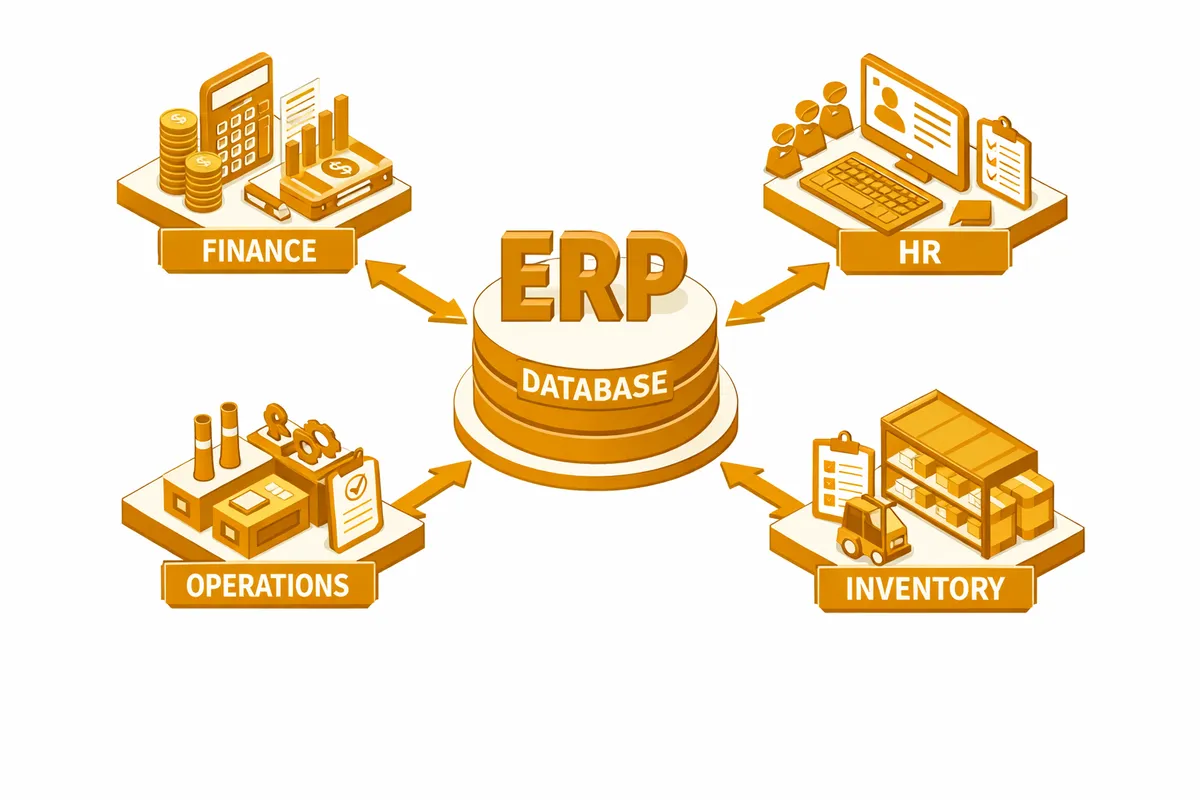
Architecture puts your highest-friction processes first. The module that saves the most owner time or eliminates the most consequential errors is built first and delivered while the rest of the system is under development. For a Clark Street food producer, that might be inventory management and order processing. For an event business, it might be booking management and client communication. You have working, valuable software within fourteen to twenty weeks while the complete system is built alongside.
Data migration from current systems happens with quality improvement during migration rather than carrying existing errors forward. For Andersonville food businesses with batch and lot history, we migrate that history so traceability continuity is maintained from the first day of live operation.
Industries We Serve in Andersonville
Specialty food producers and artisan goods makers who have grown from local market sales into wholesale distribution need ERP built for the specific operational requirements of food production: batch traceability from ingredient sourcing through production to distribution, allergen tracking that satisfies regulatory requirements, expiration date management across channels, yield calculation from raw material to packaged unit, and distributor relationship management that handles multiple accounts with different pricing, delivery schedules, and invoicing requirements. Standard ERP templates address none of these accurately.
Multi-channel retailers on Clark Street operating a physical store alongside an e-commerce presence and potentially a wholesale catalog need a single inventory truth that allocates correctly across channels and eliminates the overselling problem that emerges when channels maintain separate counts. A boutique home goods shop near the Swedish American Museum that sells in-store, online, and to a handful of Scandinavian-heritage hospitality accounts needs ERP that connects all three without requiring manual reconciliation at the end of each day.
Wine bars and hospitality businesses with wine club memberships, event programming, and multi-tier pricing models need operations platforms that handle the specific complexity of membership-based hospitality. Wine allocation to members, event ticketing for tastings and dinners, supplier relationship management, and the specific inventory tracking that wine businesses require are all operations that generic hospitality software handles inconsistently. Custom ERP built for the specific model serves the business that actually exists.
Event venues and hospitality businesses managing venue availability, catering inventory, staff scheduling, event profitability, and vendor relationships need a system built for event operations. The Broadway Armory Park area draws events of various scales that require different operational infrastructure. Event businesses serving this community need ERP that tracks profitability per event, manages vendor relationships and delivery scheduling, and handles the client communication and documentation workflows that build repeat business.
Independent home goods and specialty retail shops that define Andersonville's distinctive shopping experience often manage complex vendor relationships with specialty suppliers in Scandinavia and Northern Europe alongside domestic inventory. Import lead times, currency management, and the specific reordering logic for seasonal goods require operations software that understands the business model rather than treating it as a generic retail operation.
Nonprofits and community organizations with program delivery, grant compliance, and membership management needs that exceed what standard nonprofit software handles. Andersonville's civic infrastructure includes organizations managing complex program budgets, grant reporting requirements, membership databases, and event operations simultaneously. Custom ERP built for the specific operational model handles these requirements in a single system rather than a collection of partially-integrated tools.
What to Expect Working With Us
1. Discovery and documentation: Two to three weeks mapping your actual workflows, interviewing the team members who do the daily work, and identifying the specific integration and reporting requirements that define the project scope. The output is a complete specification you review and approve.
2. Architecture and phased delivery plan: We design the module structure, data model, and integration approach. The highest-impact modules are sequenced first so you have working, valuable software as early as possible.
3. Implementation: Fourteen to twenty weeks to your first live module. Additional modules delivered in subsequent phases. Every module is tested with your actual data before going live.
4. Migration and training: Data migration from current systems with quality improvement during migration. Hands-on training for your team before each module goes live, not a one-time session before everything launches simultaneously.