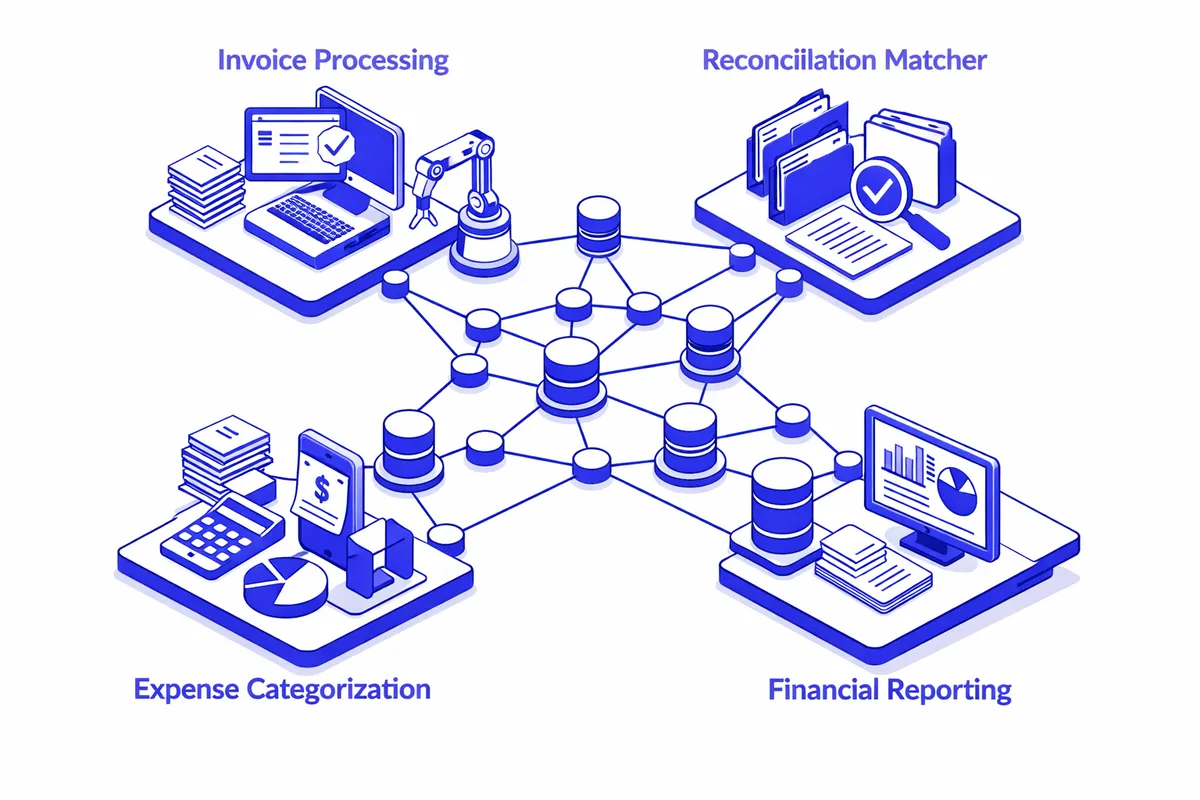
How We Build Accounting Automation for Andersonville
We begin by understanding your current accounting processes, software environment, and the specific pain points your team experiences most frequently. For most Andersonville businesses, the highest-friction areas are daily sales reconciliation, vendor invoice processing, and monthly close. We map the manual steps, identify the automation opportunities, and deliver a prioritized roadmap with specific time savings estimates before any implementation begins.
Implementation happens within your existing accounting environment. We configure and connect automation between the platforms you already use rather than requiring you to replace working software. Real integrations with your live systems, real test cases drawn from your transaction history, and hands-on training before go-live ensure the automation works correctly before your team depends on it.
We phase the work to deliver early wins quickly. The automation that saves the most time or eliminates the most consequential errors goes live first. Most Andersonville businesses see their first meaningful time savings within the first sixty days of an engagement.
Industries We Serve in Andersonville
Independent restaurants and bars along Clark Street deal with daily revenue from multiple sources: POS sales, delivery apps like DoorDash and Grubhub, bar tabs, gift cards, and event tickets. We automate the daily reconciliation of all these streams against bank deposits, flag discrepancies automatically, and push categorized transactions into QuickBooks or Xero. The nightly process that currently requires an hour of management or bookkeeper time becomes a same-morning review of an automatically assembled reconciliation. Monthly close goes from a multi-day project to an afternoon.
Specialty retailers between Foster and Berwyn need to track cost of goods sold against sales, manage purchase orders, and reconcile vendor invoices against receipts. A Clark Street home goods retailer sourcing from Scandinavian suppliers manages purchase orders in multiple currencies, vendor invoices with variable lead times, and inventory costs that need to flow automatically as sales occur. We connect inventory management systems to accounting software so that cost of goods flows without manual journal entries, and purchase order matching catches discrepancies before payment goes out.
Wellness studios and service businesses on Bryn Mawr Avenue often have complex billing: membership fees, per-session billing, package sales, and the occasional insurance reimbursement. We connect scheduling and membership platforms to accounting software so that revenue posts automatically by category, membership renewals generate invoices automatically, and the reconciliation between booking revenue and bank deposits runs without manual oversight. A yoga studio processing fifty membership renewals per month gains back hours of administrative time.
Queer-owned and community-rooted businesses throughout Andersonville's commercial district often manage hybrid business models that complicate accounting: product sales alongside service offerings, event revenue alongside ongoing memberships, wholesale accounts alongside retail customers. We build automation that handles each revenue type correctly and separately, giving these businesses the financial clarity to understand each part of their model rather than looking at a blended picture that obscures what is working.
Professional services on Ashland Avenue including accountants, attorneys, and consultants generate invoices on predictable schedules based on time worked, project milestones, or monthly retainer arrangements. We connect time tracking software to invoicing and push approved invoices automatically, shortening the time between work performed and invoice delivered. Accounts receivable aging runs automatically, and payment reminders go out at defined intervals without a staff member monitoring an AR spreadsheet.
Specialty food shops and bakeries manage purchasing from multiple suppliers, track perishable inventory costs carefully, and need cost of goods to flow into accounting correctly despite the variability in yield and waste that food businesses experience. We connect purchasing, inventory, and accounting systems so that supplier invoices post with appropriate categorization automatically, and cost of goods tracking reflects actual food costs rather than estimated averages.
What to Expect Working With Us
1. Discovery: We spend one to two weeks understanding your current accounting processes, software environment, and the specific pain points your team experiences. We map the manual steps that consume the most time and carry the highest error risk.
2. Strategy: We deliver a prioritized automation roadmap with specific time savings estimates for each initiative. We sequence work to deliver early wins within the first sixty days.
3. Implementation: We configure and connect automation within your existing accounting environment. Real integrations with your live systems, real test cases drawn from your transaction history, and hands-on training before go-live.
4. Ongoing support: Tax law changes, new software additions, and new business lines create accounting automation updates. We handle them so your team does not have to track regulatory changes and software updates simultaneously.