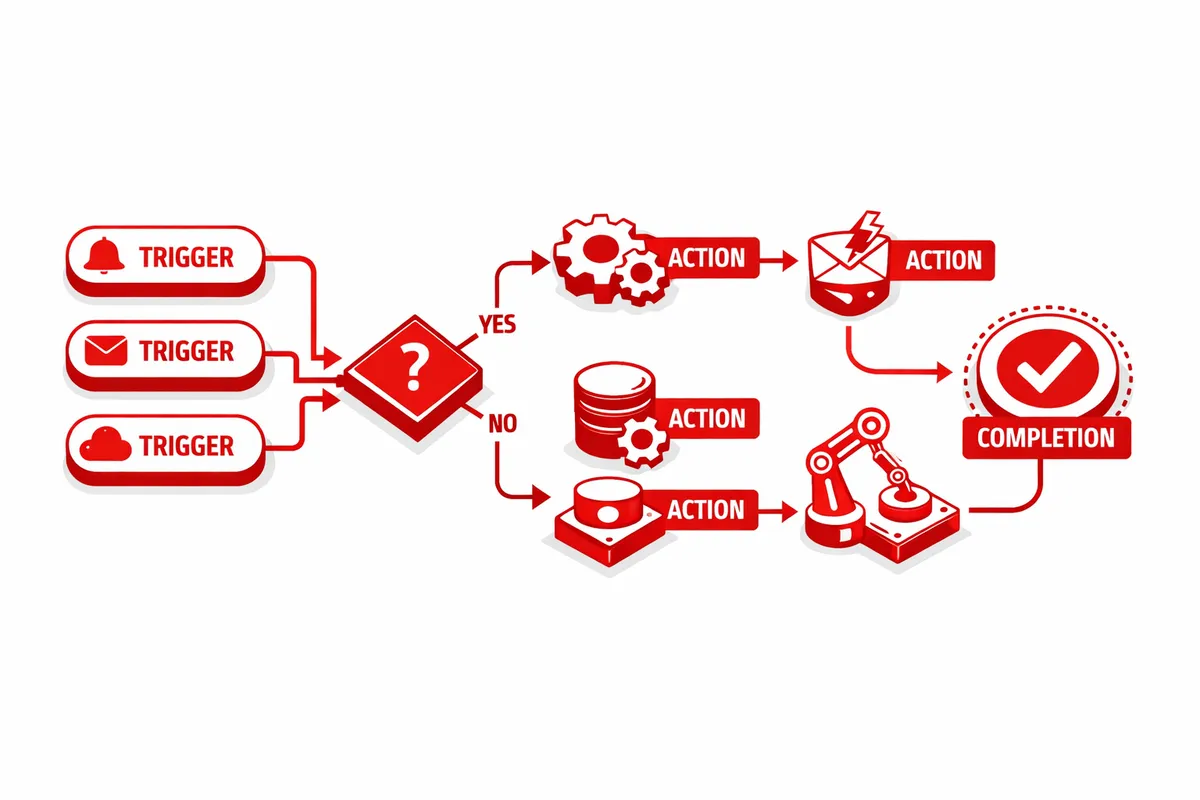
How We Build Workflow Automation for Albany Park
Albany Park businesses require automation that works across language and cultural contexts. We build notification templates that support bilingual output for businesses that communicate with customers in Korean, Arabic, Spanish, or English. We design workflow logic that accounts for the specific supplier relationships, community networks, and seasonal patterns that characterize this neighborhood.
The process starts with a documentation phase. We map every manual workflow your business performs: the daily tasks, the weekly reconciliations, the monthly reporting, the client communications. For each workflow, we estimate the time cost and error rate, then rank them by automation value. For most Albany Park businesses, the highest-priority automations involve supplier ordering, client intake and follow-up, and administrative deadline tracking. Those go first.
Integration connects your existing tools. Most small Albany Park businesses operate across three to seven platforms: a point-of-sale or practice management system, accounting software, an email platform, a scheduling tool, and sometimes a separate inventory system or case management database. We connect these platforms so data flows between them without requiring manual re-entry. A new case intake form in the immigration practice automatically creates the client record, triggers the document checklist email, schedules the consultation, and sets the deadline reminders for each required filing date.
We build workflows that handle the variability that Albany Park businesses actually encounter. Immigration case types differ in their required documents and filing timelines. Grocery suppliers have different order minimums and lead times. Medical insurance verification processes vary by payer. The automation accommodates those variations through conditional branching rather than forcing a single rigid process onto a complex operation.
Industries We Serve in Albany Park
Korean groceries and specialty food retailers on Kedzie Avenue automate inventory tracking, supplier order generation, delivery scheduling, and sales reporting. When stock levels fall below configured thresholds, reorder workflows trigger automatically across each supplier's preferred ordering channel. Daily sales data flows from the point-of-sale system to the accounting platform without manual reconciliation. Owners manage purchasing strategy rather than executing individual orders.
Immigration attorneys and legal aid offices on Lawrence Avenue automate case intake, document checklist distribution, filing deadline tracking, appointment reminders, and client status updates. When a new case opens, the automation creates the matter file, assigns deadlines based on the case type, sends the client a documented checklist, and schedules escalating reminders as each deadline approaches. Attorneys track their docket from a single dashboard rather than cross-referencing multiple calendars.
Middle Eastern and Latin food businesses along the Lawrence corridor automate supplier ordering, end-of-day sales consolidation, customer loyalty tracking, and catering inquiry response workflows. Catering inquiries received through the website trigger an automated response with pricing information and a booking link, reducing the time between inquiry and conversion. Loyalty workflows identify high-value customers and trigger targeted outreach before key community holidays.
Small medical and dental practices on Pulaski Road automate appointment reminders, post-visit follow-up sequences, referral tracking, and insurance verification workflows. Practices using manual call lists for appointment reminders typically recover 20 to 30 minutes of staff time per day by switching to automated outreach, with higher confirmation rates from patients who prefer text messages to phone calls.
Auto repair shops along the Albany Park commercial corridors automate service estimates, work order status notifications, parts order tracking, and customer follow-up campaigns. When a vehicle enters the shop, the workflow sends the owner an estimate for approval, confirms approval before work begins, notifies the owner when the vehicle is ready, and schedules a satisfaction follow-up one week after pickup. Shops reduce the phone volume that interrupts technicians while improving customer communication.
Family-run taquerias and neighborhood restaurants automate table reservation confirmations, supplier order scheduling, shift coverage notifications, and end-of-week payroll preparation workflows. Shift coverage requests that currently require a manager to text through a personal contact list route automatically to available team members in priority order, with responses logged to the schedule.
What to Expect Working With Us
1. Process mapping and priority ranking. We spend the first week documenting every manual process your team manages, estimating the cost in time and errors, and identifying the automations that will deliver the fastest return. For most Albany Park businesses, the top priority automations involve supplier ordering, client intake, and deadline or appointment follow-up. We build a ranked list and execute in that order.
2. Platform integration and data alignment. We connect your existing software platforms and map how information should flow between them. This phase resolves the data inconsistencies that make manual re-entry necessary. Once your practice management system, email platform, and scheduling tool share the same client records, automation becomes straightforward and reliable.
3. Core automation deployment. The first wave of automations goes live within two weeks, covering the high-frequency, rules-based tasks: order generation, notification routing, appointment reminders, sales data synchronization. Your team starts recovering time immediately rather than waiting for a full system build.
4. Advanced workflows and multilingual configuration. Multi-step automations with conditional logic deploy in weeks three through six. For Albany Park businesses serving Korean, Arabic, and Spanish-speaking customers, we configure bilingual notification templates and ensure that customer-facing communication reflects the language preferences stored in your customer or client records.